What is the name for the concept central to solar system creation driven by gravitational collapse of a nebula?
Answer
The Nebular Hypothesis
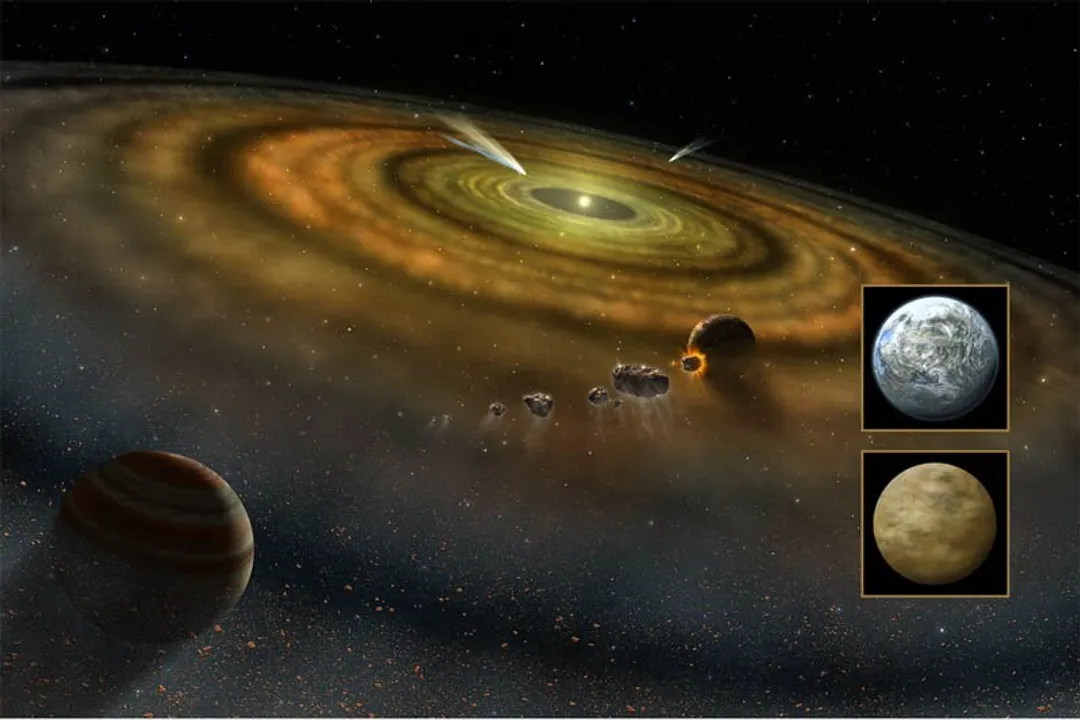
The Nebular Hypothesis is the central concept explaining how solar systems arise from these massive gas and dust clouds. This process is initiated when gravity overcomes internal pressures, causing the nebula material to contract. As this inward pull continues, the material concentrates, heats up, and eventually ignites nuclear fusion in the core, resulting in the birth of a star accompanied by a surrounding protoplanetary disk. The entire sequence hinges upon the dominance of gravity in condensing the initial diffuse matter.
Related Questions
What is the main force dictating the eventual fate and change of a massive nebula?What cosmic structures are nebulae described as the fundamental building blocks for?What is the name for the concept central to solar system creation driven by gravitational collapse of a nebula?What resistance force exerted by the gas itself works to counteract gravitational compression in a nebula?What physical law dictates that shrinking clumps of material within a nebula begin to spin faster?During core formation, what energy conversion drives the tremendous heating of the central contracting mass?What type of nebula is characterized by being lit up by nearby energetic, hot stars?What event marks the successful transition of the hot, contracting core mass into a star?What observable phenomenon suggests gravity is the currently prevailing large-scale force organizing a region of gas and dust?During the initial creation of a solar nebula, what force works alongside gravity to shape the structure before collapse dominates?