What is the main force that caused the solar nebula to collapse?
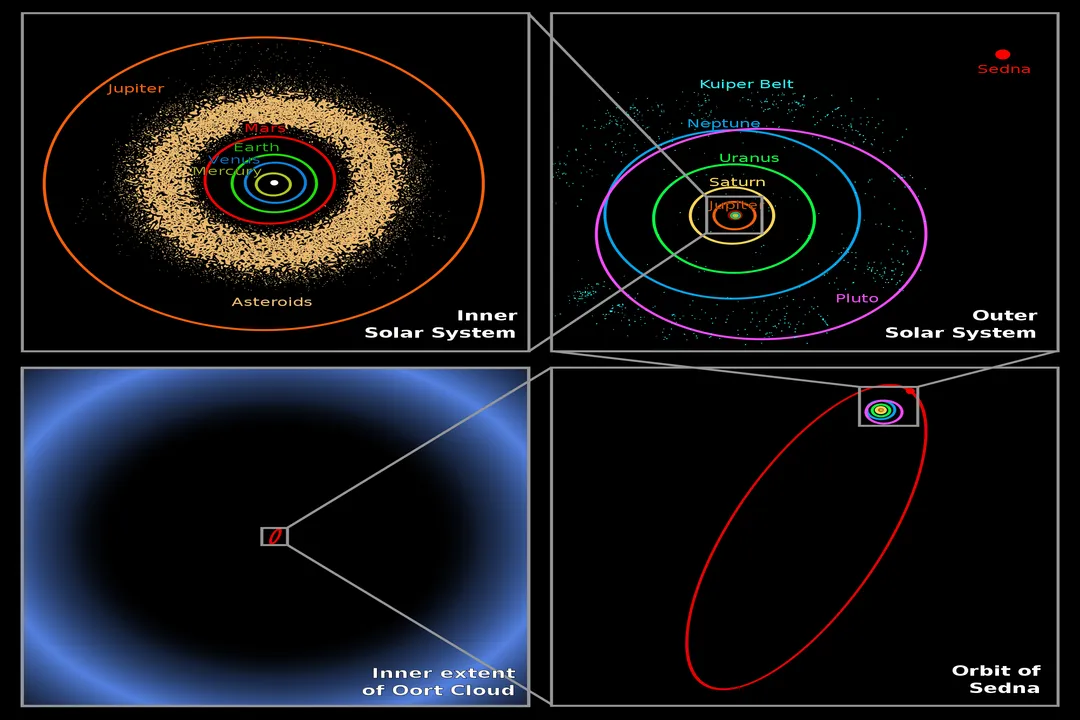
The birth of our solar system began as a vast, quiet, and diffuse cloud of gas and dust floating through space. For a very long time, this cloud—known as the solar nebula—likely existed in a state of delicate equilibrium. The primary force responsible for pulling this massive cloud together and initiating its transformation is gravity [^1.2]. While the nebula contained the basic building blocks for planets and our Sun, it lacked structure until gravity began its relentless work, drawing inward the scattered atoms of hydrogen, helium, and heavier elements forged in the death of previous stars [^1.2].
# Gravity
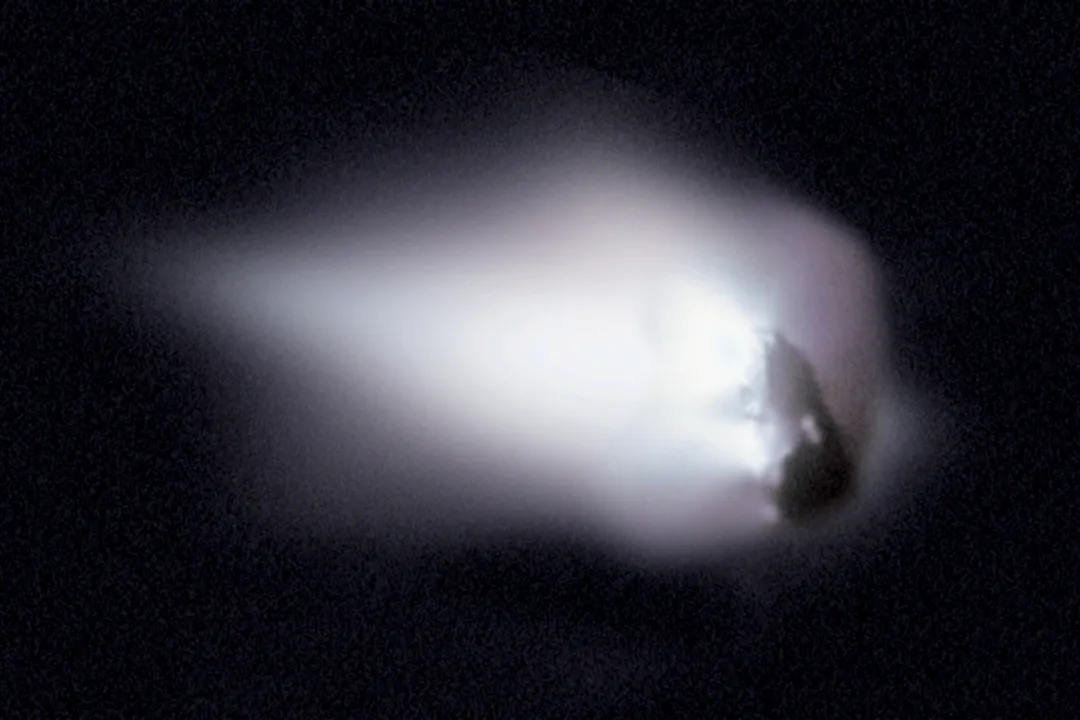
Gravity is the fundamental architect of the cosmos. In the case of the solar nebula, gravity was the primary engine of collapse [^1.3]. At its most basic level, gravity is an attractive force that pulls every particle of matter toward every other particle. In a massive, diffuse cloud, this attraction is initially weak across the immense distances between particles. However, once a local area of the cloud becomes slightly denser than the surrounding space, that density creates a stronger gravitational pull.
This creates a runaway effect. The denser region pulls in more material from its surroundings, which increases its mass, which in turn increases its gravitational pull, drawing in even more matter [^1.3]. As this gravitational contraction continued, the nebula began to shrink. It was not a sudden explosion, but a slow, steady gravitational fall. The particles within the cloud were not moving toward a single point like a rock dropped on Earth; rather, the entire volume of gas and dust was collapsing inward toward its common center of mass [^1.2].
# The Initial Trigger
While gravity provided the force for the collapse, it often requires a trigger to break the initial stability of a massive, cold gas cloud. Think of a rock resting on the side of a hill; gravity is constantly pulling on it, but the rock stays in place until something—a gust of wind or a nudge—sets it in motion.
Scientists theorize that the solar nebula may have remained a diffuse cloud indefinitely if not for an external disturbance. A nearby supernova—the violent explosion of a massive star—could have sent a shockwave crashing through the interstellar medium [^1.2]. This compression wave would have squeezed sections of the nebula, increasing the density of gas and dust in specific areas. Once those areas reached a critical density, gravity took over, and the collapse became self-sustaining. Another possibility is the simple, natural motion of the cloud within the galaxy, where collisions with other clouds or passing through spiral arms of the galaxy provided the necessary perturbation to initiate the process.
# Conservation of Angular Momentum
As the solar nebula collapsed, it began to spin. This phenomenon is a direct result of the law of conservation of angular momentum. Imagine an ice skater spinning on the ice. When they pull their arms inward, they spin faster. The solar nebula experienced a similar effect on an astronomical scale.
The cloud likely had a very slight, almost imperceptible rotation before the collapse began. As the material fell inward toward the center, the radius of the rotating mass decreased significantly. To conserve angular momentum, the cloud had to rotate faster [^1.3]. This rotation had a dramatic effect on the shape of the nebula. While gravity pulled the material toward the center, the rotation pushed material outward in the equatorial plane. The result was that the spherical cloud flattened into a disk, often described as resembling a spinning pancake [^1.2]. This disk formation is why the planets in our solar system today orbit in roughly the same plane.
# Heating the Nebula
The collapse of the solar nebula was not just about motion and shape; it was a violent conversion of energy. As the cloud shrank, the gravitational potential energy of the particles was converted into kinetic energy. As these particles fell inward, they collided with each other with increasing frequency and intensity [^1.3].
These collisions generated immense heat. This process, known as Helmholtz contraction, caused the temperature in the center of the disk to skyrocket [^1.3]. At the center, where the density was highest and the most material was accumulating, the heat became intense enough to eventually ignite the nuclear fusion that powers our Sun. While the center became a star, the outer parts of the disk remained cooler, allowing different types of matter to condense based on their distance from the newly forming Sun.
# Material Distribution
The temperature gradient created by the central proto-Sun determined the composition of the planets that would later form. We can visualize the distribution of materials in the early solar nebula as a series of temperature zones:
| Distance | Temperature | Material State | Common Elements |
|---|---|---|---|
| Inner Nebula | High (>1000 K) | Gas/Vapor | Metals, Silicates |
| Middle Nebula | Moderate (~300 K) | Solid Grains | Carbon, Silicates |
| Outer Nebula | Low (<200 K) | Ices | Water, Methane, Ammonia |
This temperature-dependent condensation is known as the condensation sequence [^1.3]. Near the center, only materials with high melting points, such as iron, nickel, and aluminum, could remain solid. Farther out, where it was cooler, silicates could solidify. Even further, in the frigid outer reaches, volatile compounds like water, methane, and ammonia froze into ices. This is why the inner planets (like Earth) are rocky and metallic, while the outer planets (like Jupiter and Saturn) are rich in gases and ices.
# Original Analysis of Collapse Dynamics
To better visualize how the solar nebula operated, consider the relationship between the forces at play. We often treat gravity as the dominant force, but the interplay between gravity and internal gas pressure is what ultimately dictated the timeline of the collapse.
Gravity tries to compress the gas, while the thermal pressure from the gas tries to push outward. For a cloud to collapse, gravity must overcome this thermal pressure. This state is known as the Jeans instability. When a cloud becomes large enough and cold enough, its internal pressure is insufficient to support its own weight against gravity, and collapse is inevitable.
We can analyze the "speed" of this process through the free-fall time. The free-fall time is the time it would take for a cloud to collapse to a point if there were no other forces—like rotation or magnetic fields—to slow it down. The formula for free-fall time is inversely proportional to the square root of the density of the cloud. This means that as the cloud collapses and its density increases, the collapse accelerates. It starts slowly, but gains momentum as it proceeds, turning a diffuse cloud into a dense, stellar core in a remarkably short astronomical timeframe—often within tens of millions of years [^1.2].
# Comparing Scales
It is helpful to compare the collapse of the solar nebula to other gravitational systems. A common misconception is that a star collapses because it "runs out of energy," similar to a battery dying. In reality, star formation in a nebula is the opposite: it is the birth of an energy-generating engine.
| System | Primary Force | Outcome |
|---|---|---|
| Solar Nebula | Gravity | Compression, Spinning, Disk Formation |
| Main Sequence Star | Fusion/Gravity Balance | Stability |
| Dying Star (Supernova) | Gravity (No Fusion) | Collapse/Explosion |
In the solar nebula, gravity was building up potential energy. In a dying star, gravity is the force that takes over when the energy production that once held it up against its own weight stops. The solar nebula was a cloud "falling" into itself, whereas a collapsing stellar core is a body that has lost its internal support mechanism.
# The Legacy of the Collapse
The collapse of the solar nebula did more than just form the Sun and the planets; it established the chemical and structural blueprint of our entire neighborhood. The dust grains that solidified during this cooling phase became the building blocks of planetesimals—the small, rocky bodies that eventually accreted to form the planets we see today [^1.3].
Some of these ancient building blocks have survived to this day. Meteorites, for instance, are essentially time capsules that contain materials unchanged since the early days of the solar system [^1.3]. By analyzing the composition of these rocks, scientists have been able to reconstruct the sequence of events during the collapse. We can see high-temperature inclusions in carbonaceous meteorites that formed when the nebula was still incredibly hot, surrounded by materials that condensed later as the nebula cooled. This confirms that the collapse was not a uniform event, but a dynamic, evolving process that lasted long enough for the chemistry of the nebula to shift significantly.
The spinning disk, or protoplanetary disk, also acted as a filter. As the Sun grew hotter and its solar wind began to blow, it cleared away much of the remaining gas. This defines the difference between terrestrial planets, which formed where gas was too hot to accumulate, and gas giants, which had enough mass to capture the remaining hydrogen and helium before the wind swept it away [^1.2].
Ultimately, the collapse of the solar nebula was a transformative event triggered by gravity and sculpted by the physics of rotation and thermodynamics. Every mountain on Earth, every crater on the Moon, and every ring of Saturn can be traced back to this initial gravitational event. What began as a diffuse, anonymous cloud became a complex, structured system, organized by the simple, universal laws of physics. The solar nebula didn't just collapse; it organized itself into the system that eventually made the existence of our world possible.
Related Questions
#Citations
Collapse of the Solar Nebula - Teach Astronomy
Mysteries of the Solar Nebula | NASA Jet Propulsion Laboratory (JPL)