What makes emission nebulae glow?
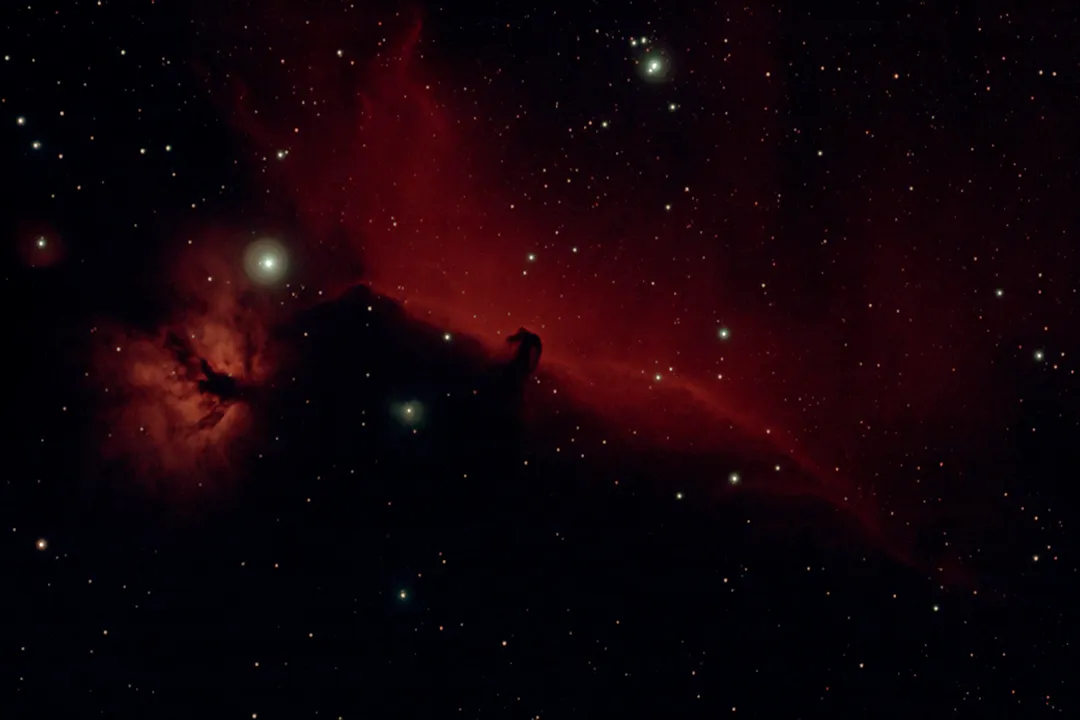
The vibrant clouds scattered across the night sky, often appearing in brilliant shades of crimson, emerald, or sapphire, are known to astronomers as emission nebulae. These vast interstellar nurseries are not merely reflecting the light of nearby stars; rather, they are actively producing their own glow through a specific, energetic process involving gas and intense radiation. [1][3] Understanding this luminescence requires delving into atomic physics on a cosmic scale, where scorching hot, newly formed stars act as powerful lighthouses illuminating the surrounding molecular material. [5][8]
# Atomic Excitation
The fundamental secret behind an emission nebula’s light lies in how the gas atoms within it interact with powerful ultraviolet radiation emanating from massive stars. [3] These nebulae are primarily composed of hydrogen, with trace amounts of other elements like oxygen and sulfur mixed in. The process begins when the gas cloud is situated close enough to one or more very hot, very young stars—typically spectral types O or B. [5]
These massive stars emit enormous amounts of high-energy photons, particularly in the ultraviolet spectrum. [8] When a photon with sufficient energy strikes an atom in the nebula, it can knock an electron completely free from the atom's nucleus; this state is called ionization. [8] For instance, a hydrogen atom loses its single electron, becoming a positively charged proton. [8] A cloud composed mainly of these ionized atoms is often classified as an H II region.
The light production mechanism is completed by the subsequent return of these free electrons to the ions, a process known as recombination. [8] As an electron, which is now orbiting at a high, energetic level, falls down to lower energy levels within the atom, it releases the excess energy as a photon of light. [2][4] The specific color—or wavelength—of that emitted photon depends entirely on the energy difference between the initial and final energy states of the electron. [2][8]
If we consider hydrogen, for example, the most common element in these clouds, the transition that produces the familiar deep red hue is the Balmer series, specifically the transition to the second energy level, which results in the emission line known as Hydrogen-alpha ().
# Color Fingerprints
The palette displayed by emission nebulae is a direct spectroscopic readout of their chemical composition. [3] Just as different gases produce different colors in a terrestrial neon sign, the variety of elements present in a nebula dictates its overall appearance when viewed through a telescope. [4]
For example, the presence of doubly ionized oxygen () often generates a distinct blue-green glow, while doubly ionized sulfur () can contribute to reddish or deep red emissions, sometimes blending with hydrogen light. When astronomers analyze the light from these regions, they see a bright spectrum dominated by these specific, sharp spectral lines rather than a continuous rainbow. [2]
A helpful way to visualize the composition differences lies in comparing the primary emission lines:
| Element / Ion | Typical Wavelength (nm) | Observed Color Contribution | Source Energy Requirement |
|---|---|---|---|
| Hydrogen () | 656.3 | Deep Red | Moderate UV |
| Doubly Ionized Oxygen () | 500.7, 495.9 | Blue-Green | High UV (more energetic than H) |
| Doubly Ionized Sulfur () | ~672.1 | Deep Red/Near-Infrared | High UV |
The energy of the ionizing star directly influences which elements get excited enough to glow. A slightly cooler O or B star might only be energetic enough to ionize hydrogen, resulting in a predominantly red nebula. Conversely, a hotter, more massive star can strip two electrons from oxygen, leading to stronger blue-green emissions dominating the image. [8]
It's interesting to note how this contrasts with the physical mechanism of reflection nebulae, which appear blue because they simply scatter the blue light from nearby stars more efficiently, similar to how Earth's atmosphere scatters sunlight. [5] Emission nebulae, however, are generating their own light from the atomic structure of the gas itself. [5]
# The Power Source
The condition for an emission nebula to exist is the presence of a source powerful enough to maintain the necessary ionization. [5] This power comes exclusively from young, massive stars that have recently condensed out of the very gas cloud they now illuminate. [1][3]
These stars are typically more than several times the mass of our Sun, possessing extremely high surface temperatures—often exceeding $20,000$ Kelvin. [5] The immense energy they release is predominantly in the form of short-wavelength, high-energy ultraviolet (UV) radiation, which travels outward and bombards the surrounding neutral gas. [8]
The proximity of the star dictates the extent of the glow. The region immediately surrounding the star where the gas is completely ionized is called the H II region. The boundary between this ionized zone and the surrounding neutral gas is where the recombination activity is most intense, producing the visible glow. [8] The entire structure is intrinsically unstable; the nebula will only glow as long as the massive star continues to shine brightly, which, for these giant stars, is a relatively short astronomical lifespan. When the star exhausts its fuel and dies, the UV radiation ceases, and the gas cools, extinguishing the nebula’s light over time. [8]
One remarkable consequence of this dynamic interplay is the creation of distinct shapes. While the ionization field from the central star is generally spherical, density variations, magnetic fields, or the presence of dark dust clouds within the nebula can sculpt the glowing gas into complex, sometimes ominous-looking structures, such as pillars or columns that point back toward the ionizing source. [1]
# Spatial Context
Emission nebulae are almost universally associated with star formation regions. [3] They are the visible, glowing side effect of stellar birth. [5] Astronomers often use the term H II region interchangeably with emission nebula, particularly when discussing the ionized hydrogen component.
Consider the scale. The Orion Nebula (), one of the most famous examples, is a massive stellar nursery where thousands of new stars are currently forming. [1] The bright pinkish glow observed is the collective emission from vast clouds of hydrogen gas energized by the Trapezium Cluster of young, hot stars at its heart. [1]
When observing images taken through narrow-band filters, which isolate the light from specific elements, the true structure becomes clearer. For instance, mapping only the emission shows where the bulk of the hydrogen gas is being excited, while mapping Oxygen-III emission might reveal where the most energetic radiation from the hottest stars is penetrating. [2] This analytical separation allows researchers to map the temperature gradients and density profiles within these clouds with impressive detail. [8]
To truly appreciate the energy budget involved, imagine a single, very hot star. If we take a relatively cool star like our Sun () and compare it to a scorching O-type star (), the difference in UV photon output is astronomical—not just mathematically, but literally. [5] The O-star emits an energy flux many orders of magnitude higher in the ionizing spectrum than the Sun, which is why the Sun's energy is insufficient to ionize a typical interstellar cloud around it, leaving the local space predominantly dark or weakly reflecting. [5] This comparison underscores that the phenomenon is not about any nearby star, but specifically about the hottest, rarest stars that happen to form within or adjacent to these gas reservoirs. [3]
# Observational Challenges
While beautiful, these glowing structures present challenges for observational astronomy. They are often embedded within or adjacent to very dark dust clouds that absorb visible light, sometimes obscuring the central ionizing stars. [1] Furthermore, the appearance in amateur or older telescope images can be subtle compared to the processed, vivid images captured by instruments like the Hubble Space Telescope. [1]
Hubble’s deep-field views, for example, utilize specialized filters that isolate the light emitted by specific ions, which are then mapped to the red, green, and blue channels of a final color image. [1] This is known as "false color" or "representative color" imaging, as the human eye cannot perceive the exact infrared or near-ultraviolet wavelengths that might be strongest in the emission. [2] The resulting image is an accurate map of where the light is coming from, but the colors are deliberately assigned to represent different elemental emissions, making the structures much clearer for scientific interpretation. [1]
For example, in many famous Hubble images, the color scheme adheres to a set of standard conventions where hydrogen emission is mapped to red, sulfur to blue, and oxygen to green, which is a scientifically useful, standardized way to present the data, rather than a true representation of how the nebula appears to the naked eye. [1]
# Stellar Life Cycle Linkage
The existence of an emission nebula provides direct, visible evidence of ongoing star formation. [3] When we look at the Orion Nebula, we are not just looking at a static cloud; we are witnessing a moment in the cosmic lifecycle where raw material is being processed into solar systems. [5] The gas cloud is the parent material, and the young, hot stars are the products.
The material expelled by older, less massive stars (like planetary nebulae) or during supernova explosions (like supernova remnants) can sometimes contribute to the gas that forms these nebulae, but the glow itself is a signature of the newest, hottest stellar inhabitants. [8] Therefore, the nebula serves as a dynamic marker, highlighting the locations in the galaxy where the most recent generation of massive stars has ignited. [3]
This process is continuous across galactic arms. The Milky Way is dotted with these luminous beacons wherever dense molecular clouds have collapsed under gravity to form stars in the O and B classes. [5] They are fundamental components of the interstellar medium's chemical cycle, absorbing high-energy photons and re-radiating that energy back out, albeit at longer, safer wavelengths, enriching the cosmic background light. [8] The entire structure essentially functions as a colossal, natural solar radiation shield, absorbing the most dangerous UV photons before they can travel further into the galaxy.
The endurance of the visible glow depends on the balance between the ionizing radiation rate and the rate at which the gas dissipates or recombines into cooler, non-glowing neutral states. For the brightest, most concentrated regions around young clusters, the recombination rate is very high, maintaining the spectacular luminosity for thousands or even millions of years until the massive stars run out of fuel. [3]
#Videos
What Makes Emission Nebulae Glow In Distinct Colors? - YouTube
What Makes Emission Nebulae Glow So Brightly? - Physics Frontier
Related Questions
#Citations
Emission nebula - Wikipedia
Hubble's Nebulae - NASA Science
What Makes Emission Nebulae Glow In Distinct Colors? - YouTube
Emission Nebula | COSMOS
ELI5: Why are nebulae colorful? : r/explainlikeimfive - Reddit
Emission Nebulae - Scott's Astronomy Page
A Christmas tree 80 light-years wide appears in space - ScienceDaily
18.2 Emission Nebulae