What makes nebulas blue?
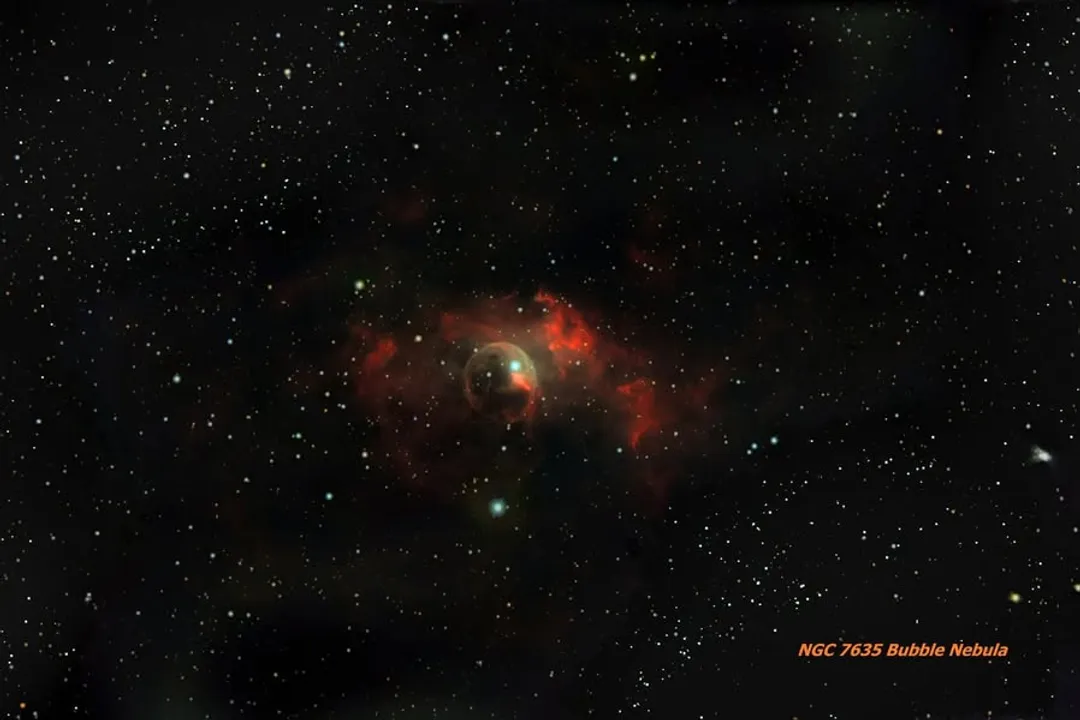
The deep cosmos is speckled with ethereal clouds, some glowing with fierce reds, others softly bathing in pale greens, but perhaps none are as immediately striking as the nebulae washed in vibrant shades of blue. These celestial watercolors are not random splashes of pigment against the black backdrop; they are the direct result of complex physical interactions between starlight and microscopic matter floating in interstellar space. [1][2] Understanding the blue hue requires looking closely at what is lighting up the cloud and what is doing the lighting.
# Light Scattering
The phenomenon that paints many nebulae blue is fundamentally the same process that makes our daytime sky appear blue here on Earth: scattering. [1] In the context of space, we are specifically discussing reflection nebulae. [2] These are massive clouds composed primarily of interstellar dust—tiny solid particles—that do not generate their own visible light through atomic excitation, unlike their red counterparts. [3][5] Instead, they act as gigantic cosmic mirrors, catching the light from nearby, usually very hot and bright, stars and redirecting it toward our telescopes. [1][5]
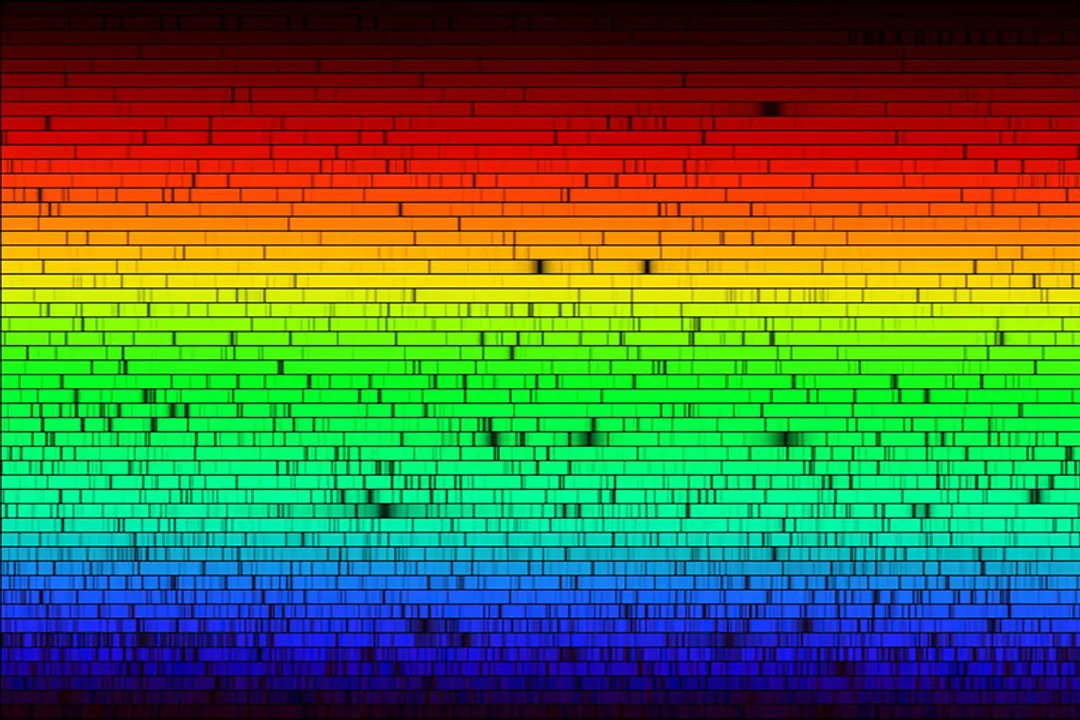
This redirection isn't uniform across the spectrum of light. Shorter wavelengths of light are scattered much more efficiently than longer wavelengths. [1] Visible light is a spectrum, moving from violet/blue (short wavelengths) to red (long wavelengths). [3] Because the dust particles within the nebula are preferentially scattering the blue end of the spectrum toward our line of sight, the overall impression we receive is a bright, luminous blue. [1][3] It is important to note that the size of these dust grains plays a critical role here; if the dust grains were significantly larger, they would scatter all colors of light more equally, and the nebula would instead appear white or gray, merely reflecting the star's true color rather than tinting it blue. [7]
# Blue Clouds
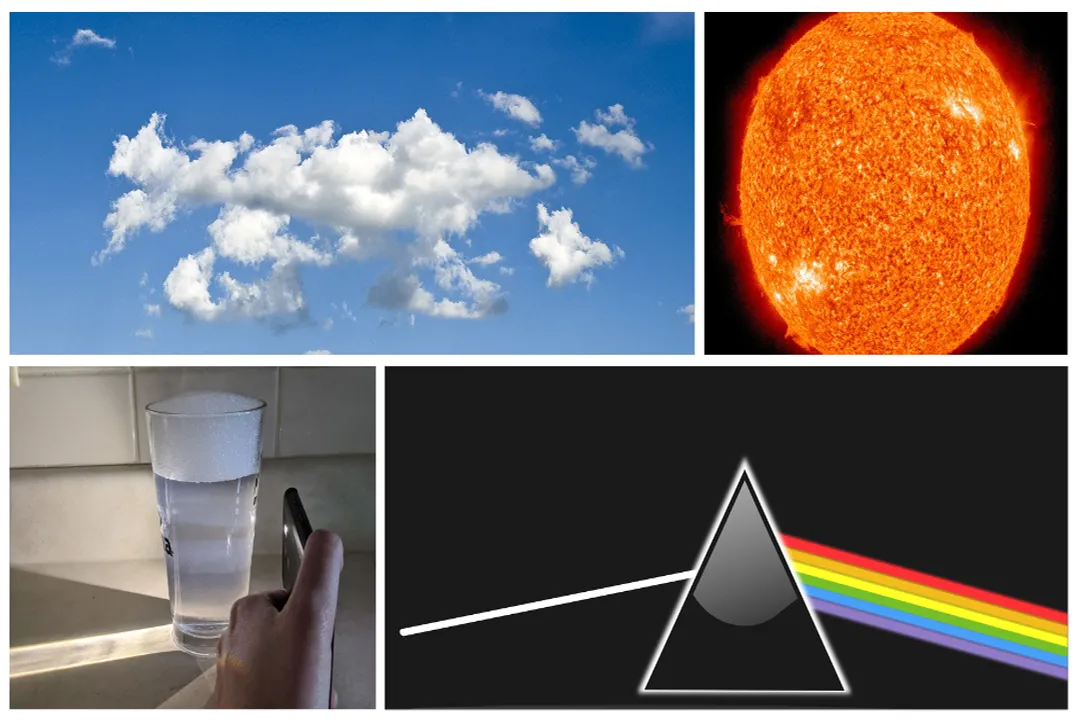
A reflection nebula must meet specific conditions to exhibit this signature blue coloring. First, there must be a source of intense starlight nearby to illuminate the dust cloud. [5] Second, the cloud itself must contain a significant concentration of fine dust particles, as these are the agents of the scattering. [3] The density of the dust has to be just right; if the cloud were too dense with dust, too much of the blue light would be scattered away before it reached us, potentially making the cloud appear dimmer or even darker against the background stars. [7] This creates a delicate recipe for a blue nebula: a bright, blue-light-emitting star shining onto a moderately dense patch of fine interstellar grit. Think of it as a cosmic analogy to sunlight piercing a patch of particularly fine, dry fog—the fog seems to glow blue against the surrounding gloom. [1]
For instance, areas near young, massive stars, which burn hot and emit copious amounts of blue and ultraviolet light, are prime candidates for forming these brilliant blue reflection nebulae. [3] The star's light streams outward, hitting the surrounding material, and we see the scattered blue wash over the region surrounding the star. [5]
# Color Contrast
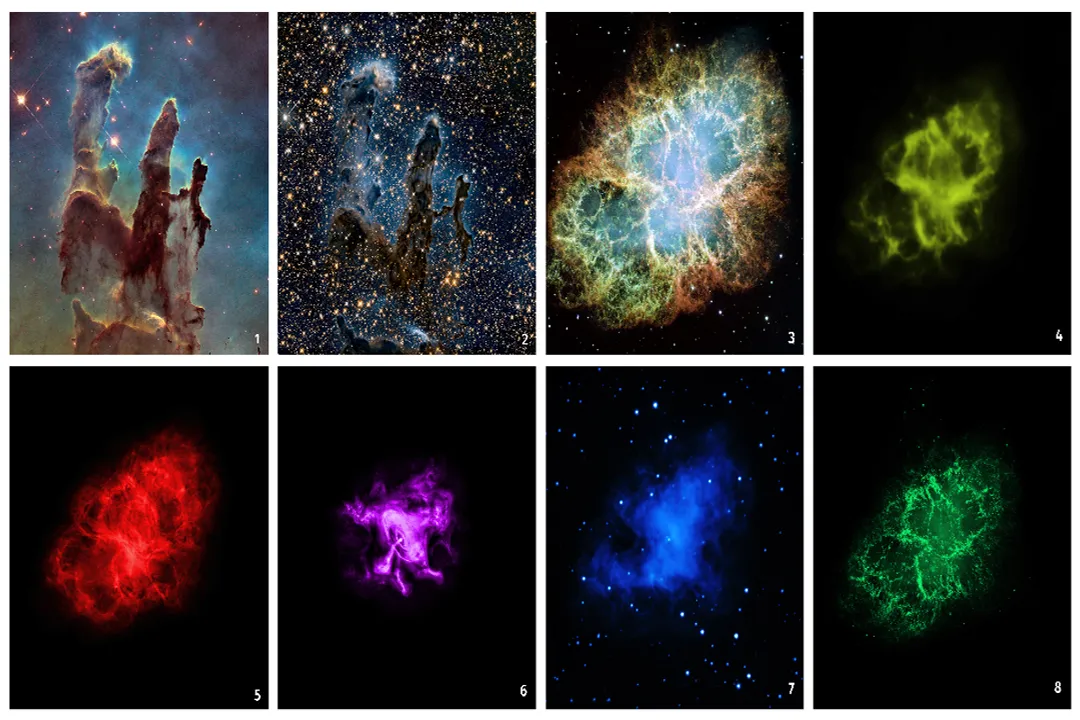
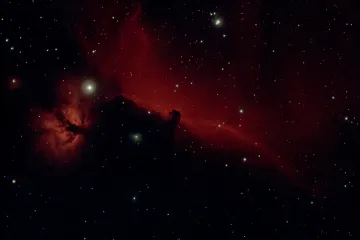
To truly appreciate why the blue ones are blue, it helps to contrast them with the other common color we see in nebulae: red. [5][9] The nebulae that shine red are typically emission nebulae. [5][9] These clouds are fundamentally different in composition and lighting mechanism. While reflection nebulae are dust clouds scattering starlight, emission nebulae are primarily composed of vast quantities of gas—mostly hydrogen—that are energized by intense ultraviolet radiation from nearby hot, young stars. [3][5]
When this energetic radiation strips electrons from the hydrogen atoms, the atoms become ionized. [3] As the electrons recombine with the hydrogen nuclei, they release energy in the form of light at very specific wavelengths. [3] For hydrogen, the most dominant visible line produced in this process is the H-alpha emission, which falls squarely in the red part of the spectrum, around 656 nanometers. [3][9] Therefore, if you see a nebula glowing red, you are seeing the gas itself emitting light, whereas if you see one glowing blue, you are seeing dust reflecting starlight. [5][9] When both processes occur simultaneously in proximity, as is common in active star-forming regions, you often observe regions dominated by the reflected blue light near the hot star, grading into the glowing red light further out where the gas emission dominates, creating magnificent multicolored scenes. [2][5]
# Seeing Space
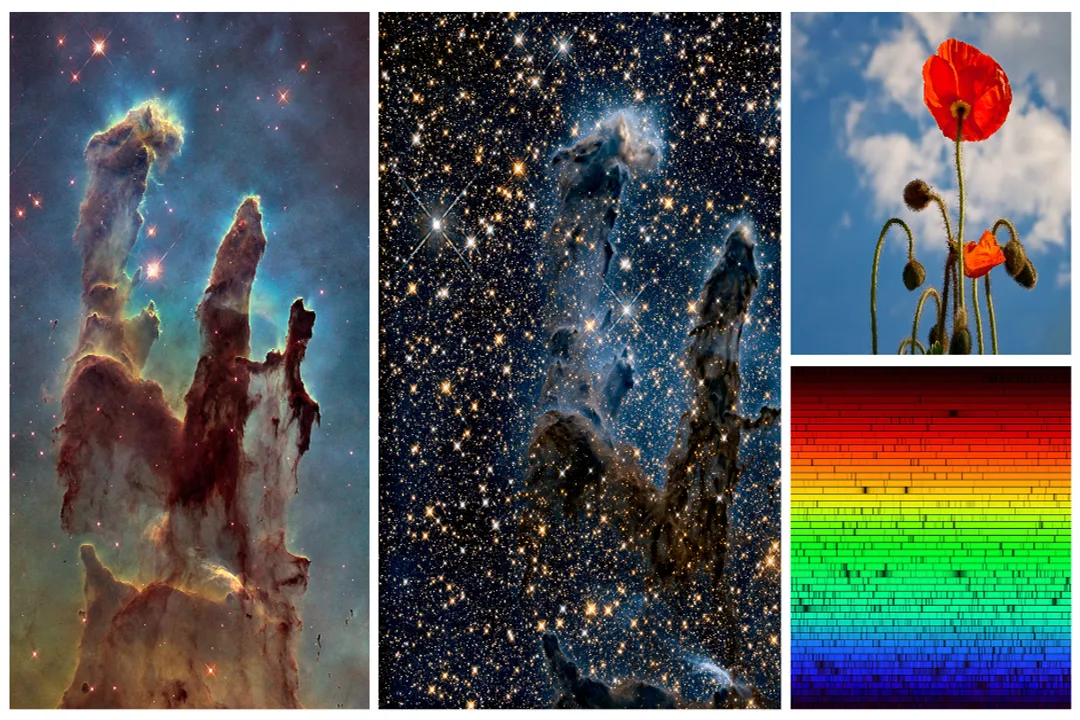
The colors we observe in images of space, even those taken by legendary instruments like the Hubble Space Telescope, are often representations of the underlying physics, but they are not always what the human eye would see unaided. [4] While the physical scattering dictates that blue light is dominant in reflection nebulae, the raw data captured by cameras often needs to be processed to highlight these features for scientific study and public appreciation. [4][6] Telescopes are excellent at collecting photons, but translating those measured light intensities into vibrant, recognizable colors requires careful calibration and often false-coloring or narrowband imaging techniques. [4][6]
When scientists assign colors to specific emissions or scattering efficiencies, they often map the most intense blue scattering to the blue channel of a final image, allowing us to clearly distinguish the dust-dominated regions from the gas-dominated ones. [4] This is crucial because different nebulae might look pale or washed out when viewed directly, but advanced imaging techniques peel back the layers of physics to reveal the distinct chromatic fingerprints left by either gas or dust. [6] In essence, a blue nebula is a testament to the presence of fine, light-scattering dust, standing in contrast to the glowing hydrogen signature that creates red nebulae. [5][9] The sheer distance light must travel also means that the colors we perceive are a record of events that happened long ago, light that has journeyed across vast gulfs of space just to reveal the composition and structure of these stellar nurseries. [8]
#Videos
What Makes Reflection Nebulae Appear Blue? - Physics Frontier
Why Are Reflection Nebulae Blue? - Physics Frontier - YouTube
Related Questions
#Citations
ELI5: Why are nebulae colorful? : r/explainlikeimfive - Reddit
What Makes Reflection Nebulae Appear Blue? - Physics Frontier
Hubble's Nebulae - NASA Science
Lighting Up the Universe - Bell Museum
Gas colors in nebulas explained - Facebook
Why do different nebulae have different colors? - Quora
Nebula and its colors - Astronomy Stack Exchange
Differences between red nebulas and blue nebulas?