What process makes an emission nebula glow?
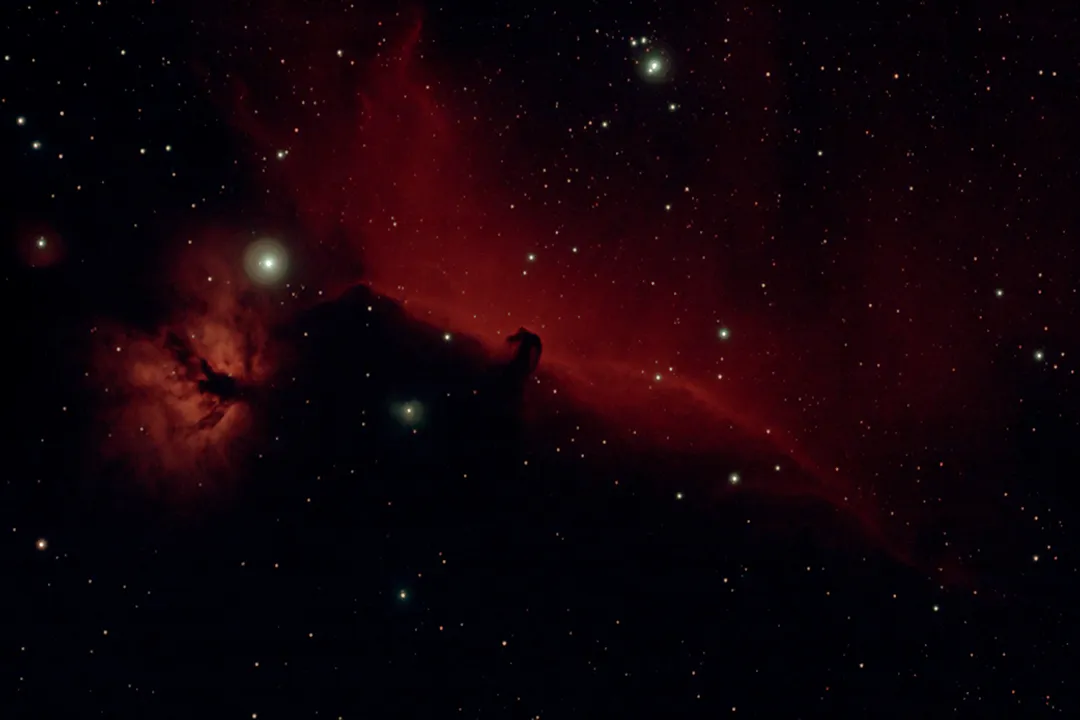
The radiant spectacle of an emission nebula is one of the most breathtaking sights in the night sky, a cloud of luminous gas that paints the cosmos in vibrant hues of red, pink, and sometimes blue or green. Unlike a reflection nebula, which merely scatters the light of nearby stars, an emission nebula creates its own light through a fascinating, energetic atomic process. To understand how these cosmic canvases glow, one must examine the dramatic interaction between the raw material of space—interstellar gas—and the most energetic newborns in the galaxy: massive stars.
# Defining Light Clouds
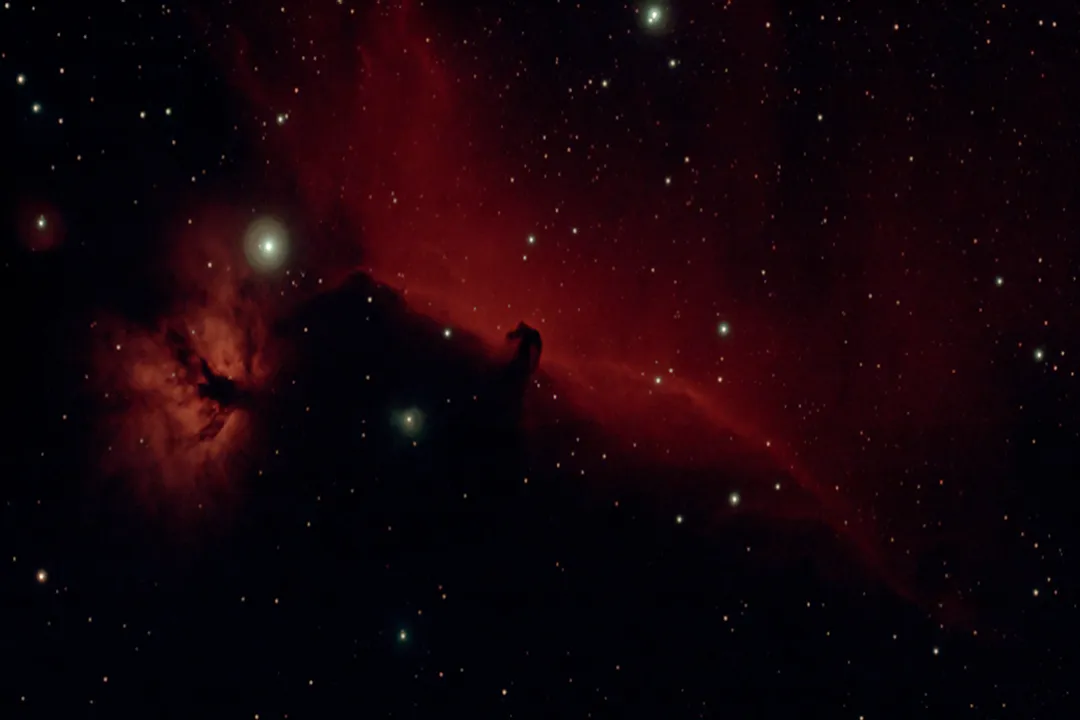
Historically, any fuzzy patch of light observed through a telescope was dubbed a nebula, a Latin word for cloud. Modern astronomy has sorted these objects, revealing that many bright ones are composed of clouds of interstellar gas and dust. The ones that truly shine from within are called emission nebulae. These objects are fundamentally different from their neighbors, the dark nebulae that block background light, or the reflection nebulae that simply bounce light back toward us.
Emission nebulae are largely composed of gas—primarily hydrogen, making up roughly 90 percent of the atoms by number, followed by about 9 percent helium, with all heavier elements comprising the final one percent. They are often referred to by astronomers as HII regions, signifying that the hydrogen gas is ionized, or lacking an electron. These regions are intimately connected to stellar birth; they are the very nurseries where new stars are actively forming. In terms of physical state, they are extremely diffuse, typically holding only a few hundred particles per cubic centimeter (), which is vastly less dense than the air we breathe on Earth, which contains trillions of molecules per cubic centimeter. The gas within these glowing clouds generally hovers around a temperature of about .
# Stellar Power Source
The process that transforms these cool, diffuse clouds into glowing spectacles requires a tremendous input of energy, and that energy comes from the hottest, brightest stars in the universe. The presence of an emission nebula almost always signals the recent formation of massive, luminous stars, usually of spectral types O or B.
These stellar titans emit vast quantities of extremely high-energy radiation, specifically in the ultraviolet (UV) band of the electromagnetic spectrum. This intense UV flux streams outward from the central star, acting as the initiator for the entire glowing mechanism. It is the sheer power of this radiation, far exceeding what the gas can absorb without consequence, that dictates whether a cloud will glow as an emission nebula or merely reflect light.
# Atomic Excitation
The crucial step that begins the light show is ionization. As the powerful ultraviolet photons from the O or B star travel through the surrounding hydrogen and helium gas, they possess enough energy to knock electrons clean away from their parent atomic nuclei. This process strips the gas of its normal neutrality, transforming the atoms into positively charged ions and creating a sea of free electrons. This state of energetic, electrically charged matter is known as plasma.
The energetic photons essentially "excite" the atoms by removing their electrons. This ionized cloud, now rich in protons and free electrons, is what fundamentally distinguishes an emission nebula from a purely reflective one.
# Recombination Glow
Ionization is only half the story; the nebula only glows when this excited state decays back to stability. In the relatively sparse environment of the nebula, the free electrons will inevitably be recaptured by the hydrogen nuclei (protons) in a process called recombination.
When an electron is recaptured, it does not immediately settle into the atom's lowest possible energy level. Instead, it usually lands in a higher, excited orbital. The atom is unstable in this state and rapidly sheds the excess energy to settle back down to its ground state. This energy is released not as heat, but as a discrete packet of light—a photon.
Because the energy difference between the allowed electron levels is fixed for each element, the emitted photons have very specific wavelengths, which correspond to distinct colors. It is this cascade of emitted photons, generated by billions of recombination events across the cloud, that we perceive as the nebula's self-generated, visible light.
# Compositional Colors
While hydrogen is the most abundant element, the overall color of an emission nebula is a composite spectrum determined by all the ionized elements present, each emitting light at its own characteristic wavelengths.
The most dominant color seen across most emission nebulae is a rich reddish hue. This signature red comes specifically from the transition known as the line, which occurs when a hydrogen electron drops from the third to the second energy level, emitting light at in the red portion of the visible spectrum. Because hydrogen gas forms the bulk of the cloud, its emission usually overpowers the contributions from other elements.
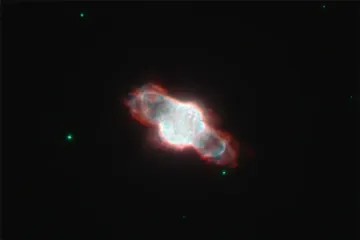
However, in regions closer to the hottest stars, or in specific types of emission nebulae like planetary nebulae, other elements shine through. For instance, doubly ionized oxygen () can produce distinct green or blue light. This elemental fingerprinting allows astronomers to map the physical and chemical makeup of these vast structures, moving beyond simple observation to detailed analysis.
# Nebula Comparison
To truly appreciate the glowing mechanism of emission nebulae, it helps to contrast them with their reflective cousins. A reflection nebula contains dust, but the nearby illuminating star lacks the ultraviolet energy required to ionize the hydrogen gas. Instead, the light from the star is merely scattered by the fine dust particles within the cloud. This scattering process, known to also make Earth’s sky blue, is far more efficient for shorter (bluer) wavelengths of light, which is why reflection nebulae often appear distinctly blue. A classic example of this difference can be seen in the Trifid Nebula region, where a central red emission nebula is often accompanied by surrounding blue reflection regions.
The difference boils down to excitation energy: Emission nebulae are bathed in high-energy photons that cause ionization and subsequent emission, while reflection nebulae rely on lower-energy visible light scattered by dust grains.
# Temporal Dynamics
The longevity of an emission nebula is intrinsically linked to the life cycle of its energy source. The massive O and B stars that possess the necessary UV output to create these glowing regions are extremely fuel-hungry and burn through their lives very quickly, often lasting only a few million years. This fact leads to an interesting insight: the brilliant, glowing phase of an emission nebula is cosmically ephemeral. We see these dramatic structures only because we are observing them during the brief window where massive stars exist within the gas cloud. As these short-lived stars evolve or simply disperse the surrounding cloud material via intense radiation pressure and stellar winds, the ionization source vanishes, and the visible glow fades relatively quickly on the timescale of the galaxy’s age. Thus, every emission nebula captures a fleeting moment of stellar infancy.
# Spectral Fingerprints
The study of these nebulae relies heavily on their spectrum, which tells a fascinating story about the conditions of their existence, conditions vastly different from anything reproducible on Earth. When astronomers analyze the light from these clouds, they sometimes find spectral lines that were unexplainable using terrestrial lab data, leading to the temporary invention of elements like "nebulium".
The key to resolving this mystery lies in the extreme low density of the nebula. Many of these observed lines are now known as forbidden lines, such as the characteristic green glow from doubly ionized oxygen. In a laboratory setting on Earth, the gas is far too dense; atoms collide trillions of times per second, knocking excited electrons out of the specific long-lived state required to produce that green photon before it can be emitted. In the near-vacuum of a nebula, however, particles rarely collide, allowing the ion to remain undisturbed for many hours until it emits its unique photon. This is a powerful piece of evidence demonstrating that the interstellar environment operates under physical laws governed by vastly different particle densities than we experience daily. If we were to simply compare the required energy input, we might miss the subtle but crucial effect of density on the resulting spectrum. The observation of these forbidden lines confirms that the gas is not only hot but also incredibly thin, a fact that would be obscured if the nebula's density were comparable to terrestrial gases.
The light from emission nebulae, therefore, is the product of a precise three-part cosmic equation: an abundant supply of gas (mostly hydrogen), an intense source of high-energy UV photons from young stars, and the low-density environment necessary for the recombination process to emit its full characteristic spectrum.
#Videos
How Does Ionization Cause Emission Nebulae To Glow? - YouTube
What Makes An Emission Nebula (HII Region) Glow? - YouTube
Related Questions
#Citations
How Does Ionization Cause Emission Nebulae To Glow? - YouTube
Hubble's Nebulae - NASA Science
Reflection nebula - Wikipedia
Emission Nebulae - Scott's Astronomy Page
Emission Nebula | COSMOS
18.2 Emission Nebulae
Emission Nebula Facts For Kids | AstroSafe Search - DIY.org
Emission nebula - Oxford Reference