What is a bright object in the western sky?

The appearance of a surprisingly brilliant point of light low in the western sky, particularly around twilight, prompts countless inquiries. This luminous object is most frequently the planet Venus, an astronomical celebrity often dubbed the "Evening Star" when it shines after sunset, or the "Morning Star" before sunrise. [9] It stands out dramatically because, among the natural, non-solar objects visible to the unaided eye, Venus is unparalleled in brilliance. [2]
# Venus Brightness
For many observers, the object they are spotting is Venus. It holds the distinction of being the third brightest natural object visible in our sky, surpassed only by the Sun and the Moon. [2] Its intense glare easily outshines even the brightest stars, often appearing to possess a steady, almost glaring quality against the deepening twilight. [9][1]
The reason for this spectacular visibility lies in a combination of proximity and reflectivity. Venus possesses an extremely dense atmosphere, which is largely composed of carbon dioxide, acting like a highly efficient mirror reflecting sunlight back towards Earth. [2] Furthermore, when Venus is positioned favorably in its orbit relative to us—a configuration called greatest elongation—it presents its fully illuminated face toward our world while simultaneously being relatively close, maximizing its apparent magnitude. [2]
# Planetary Visibility
While Venus dominates the show, it is important to remember that other celestial bodies, namely the other major planets, can also put on a dazzling display, particularly if Venus is not currently well-positioned for evening viewing. [1] A check of current sky conditions is often necessary, as the visibility of the five naked-eye planets—Mercury, Venus, Mars, Jupiter, and Saturn—changes over time. [1][6]
Jupiter, for instance, is another giant that can appear exceptionally bright, often rivaling Venus when it is at its closest approach, though it generally lacks the piercing intensity of Venus. [1][5] Mars, while often noted for its distinct reddish hue, can also be quite bright during periods of opposition, when it is nearest to Earth. [1] Mercury, being the innermost planet, is trickier to spot as it remains very close to the Sun in the sky, meaning it's only briefly visible low in the west just after sunset or low in the east just before sunrise. [1]
If an observer reports two very bright lights in the western sky, the scenario likely involves Venus being present alongside Jupiter, or perhaps Venus paired with a very favorably placed Mars or Jupiter alone if Venus is below the horizon or too close to the Sun. [5][7]
# Distinguishing Features

How can one be sure it is a planet and not just an unusually bright star? Stars twinkle, a phenomenon called scintillation, caused by Earth's turbulent atmosphere refracting their pinprick light unevenly. [1][9] Planets, being much closer, present larger apparent discs. While their light is still affected by the atmosphere, the distortion is less noticeable, making them generally appear as steadier, more constant sources of light compared to their twinkling stellar neighbors. [1][9]
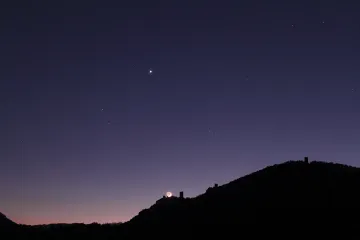
When observing an unidentified bright object, a quick mental comparison is often the most immediate test. If the object seems to outshine everything nearby by a significant margin and holds a very steady glow—especially if it’s showing a slight yellowish or white brilliance near the horizon just after the Sun has dipped below it—you are very likely looking at Venus. [9] If the object has a distinctly orange or reddish tint, you should then consider Mars, provided it is currently in a favorable viewing period. [1]
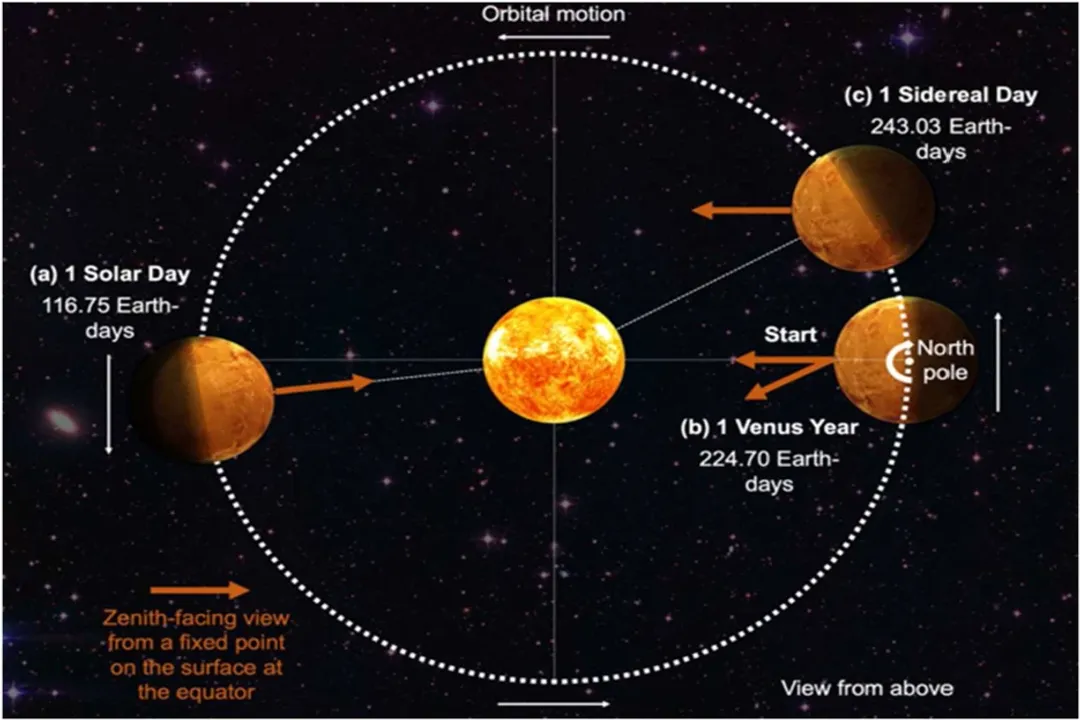
It is also useful to remember that Venus itself exhibits phases, much like our Moon, depending on its orbital position relative to the Earth and Sun. [8] While these phases are usually only visible with a telescope, the brightness changes dramatically as it cycles through these phases, offering a clue even without optical aid—it will be brightest when it appears as a half-phase, not when it is fully illuminated from our perspective. [8]
# Timing Observation
The western sky context is crucial for identification. Since planets orbit the Sun, their appearance in the evening sky is governed by their orbital path relative to Earth's view of the Sun. [9] If you see the bright object in the west shortly after the sun has set, it is an "Evening Star". [9] If it is visible before sunrise in the east, it is a "Morning Star". [9] If the object remains visible hours after sunset, it is either a very bright planet low on the horizon or perhaps a very bright, non-twinkling star, though the latter is less common for the "brightest object" description. [1]
For those wishing to become more adept at sky identification, the most valuable actionable step is establishing the local sunset time for any given evening. Knowing precisely when the sun disappears allows you to frame your search window. If the object sets within an hour or so of the Sun, it is almost certainly Venus, as its proximity to the Sun in the sky limits its visibility window dramatically when compared to an outer planet like Jupiter, which can transit high overhead long after the Sun has gone down. [1] This timing eliminates many false positives quickly.
Another valuable technique involves using real-time sky mapping tools or apps. While the question often arises from casual observation, cross-referencing the object's position with a reliable sky chart—which factors in your specific latitude and the date—removes all guesswork. For instance, an app can tell you if Jupiter is the brightest object in the west tonight, or if Venus is hiding below the horizon entirely due to its own orbital cycle. [1] Relying solely on memory of past alignments is often misleading because the planetary configuration shifts rapidly from week to week.
# Asteroids and Satellites
While planets account for the vast majority of these sightings, it is worth briefly considering other possibilities, although they rarely reach the sheer brilliance of Venus or Jupiter. Very bright artificial satellites, such as the International Space Station (ISS), can be stunningly bright and move quickly across the sky, but their movement is usually steady and directional, unlike the seemingly fixed positions of planets relative to the background stars over a few hours. [3] True asteroids, unless they are a very rare, exceptionally close fly-by event, will not possess the luminosity of a planet seen in the twilight hours. [5]
Therefore, if the light is steady, strikingly bright, and situated near the horizon where the sun recently vanished, your celestial visitor is almost certainly the planet Venus putting on its scheduled appearance. [2][9]
Related Questions
#Citations
Visible planets and night sky guide for December - EarthSky
Why is Venus so bright in the night sky? - Cool Cosmos
What's that very bright light in the western sky? - Eugene - Reddit
What's been in the night sky west by southwest? - Facebook
What Are Those Two Bright Lights on the Western Horizon?
The brightest planets in December's night sky: How to see them (and ...
What is in the sky? There are two star-like objects in the western sky ...
Venus - Wikipedia
That bright light you can see in the western sky? That's Venus