What is the bright blinking star in the sky?
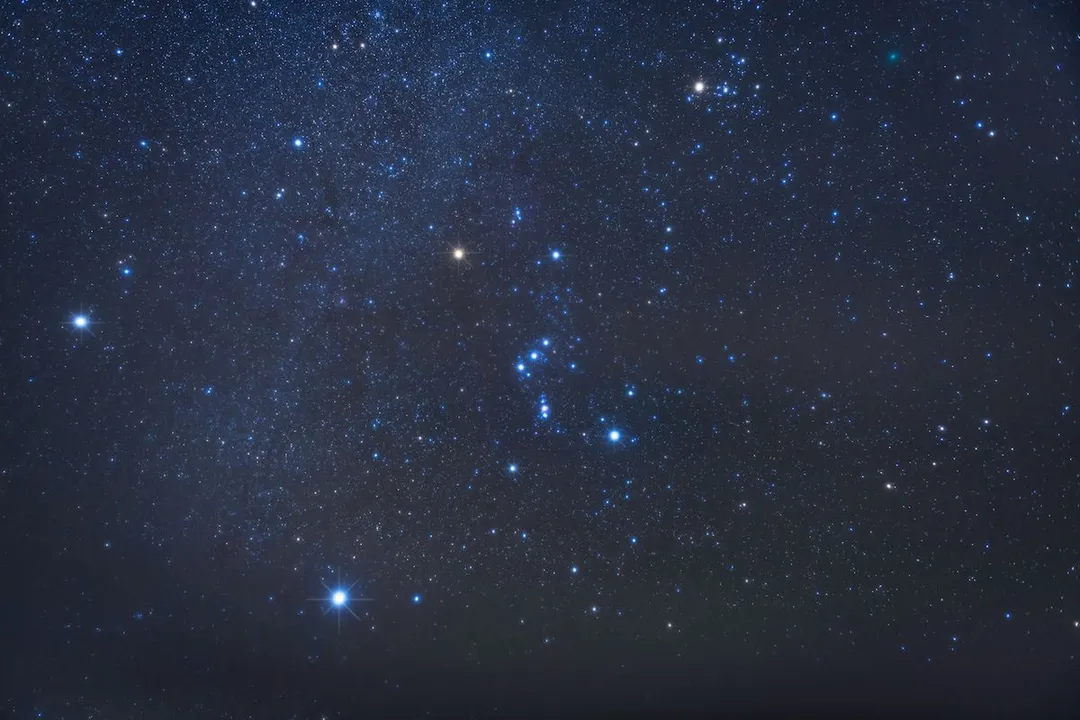
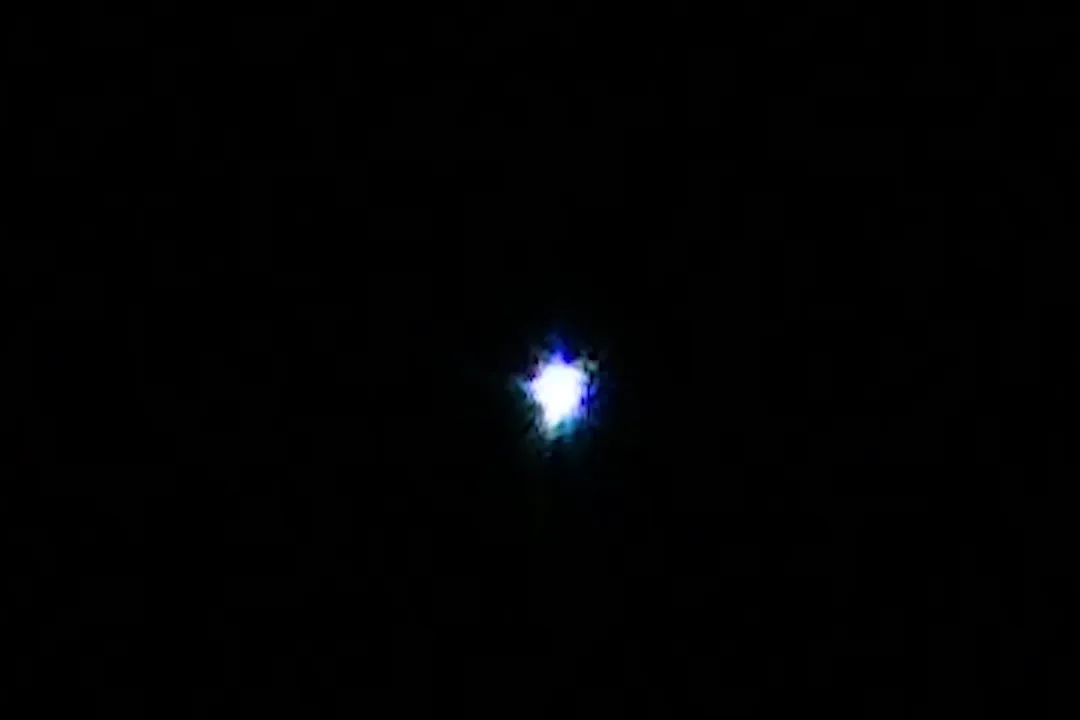
The sight of a brilliant, multi-hued star seemingly flashing or winking in the night sky is often striking, prompting many to wonder exactly what celestial object they are observing and why it behaves so differently from its calmer neighbors. [1][9] This captivating visual effect, where a bright pinpoint of light appears to shimmer, change color, or blink rapidly, is rarely a characteristic of the star itself. Instead, the drama unfolds right here in the blanket of air surrounding our planet: Earth's atmosphere. [1][2][3]
# Atmospheric Distortion
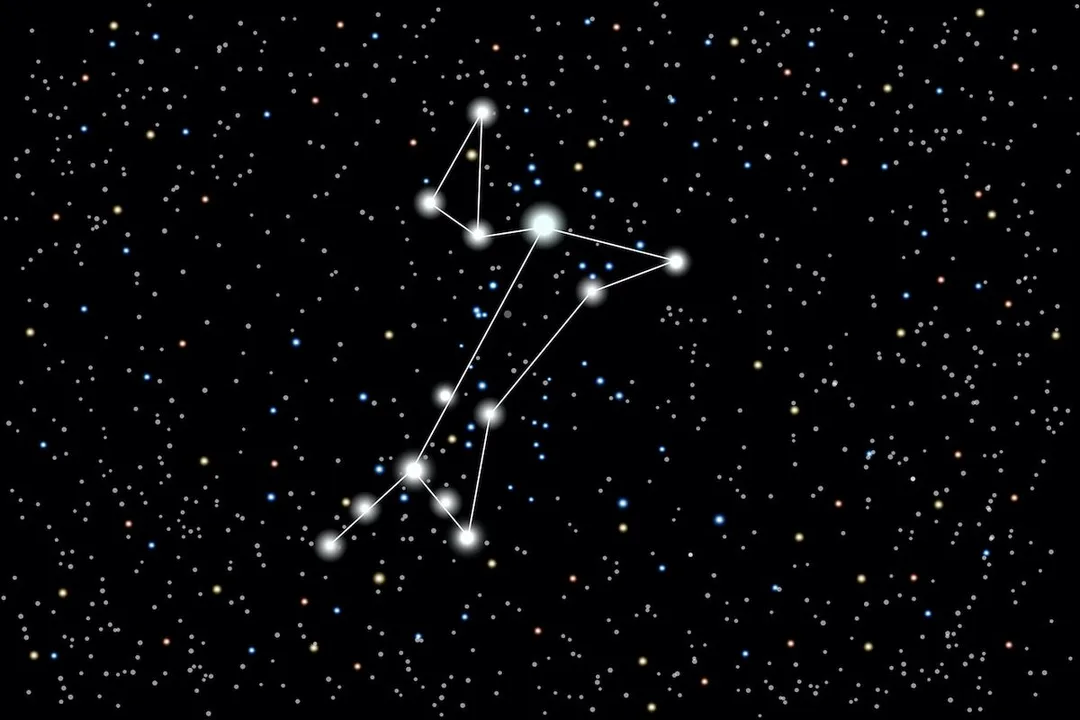
What you are witnessing is primarily a phenomenon called astronomical scintillation, more commonly known as twinkling. [1][2] Stars are located so incredibly far away that, even through the most powerful telescopes, they appear as mere geometric points of light. [1] Because these light sources are so infinitesimally small from our perspective, the light rays they send toward us are easily disrupted by the ever-moving layers of air in our atmosphere. [1]
Think of the atmosphere as a giant, constantly shifting lens made of countless pockets of air with varying temperatures and densities. [2][3] As starlight travels through these turbulent layers on its way to your eye, the light path is bent, or refracted, slightly and randomly many times per second. [1][2] When the light bends toward you, the star appears momentarily brighter; when it bends away, it dims. [1] This rapid change in brightness and apparent position is what we perceive as twinkling or flashing. [1][9]
# Colorful Effects
Sometimes this blinking is accompanied by distinct color changes, where the star appears to flash red, blue, or green. [1][2] This color separation happens because the atmosphere acts like a prism. Shorter wavelengths of light (like blue and violet) are scattered or bent more easily than longer wavelengths (like red). [2] When the atmosphere is particularly agitated, it can separate these colors momentarily, giving the appearance of a multi-colored flash. [1][3]
# The Horizon Factor
One of the most critical factors dictating the intensity of this visual display is the object's altitude above the horizon. [3] If you see a bright star flashing aggressively, look closely at where it sits in the sky. Objects very low on the horizon are shining their light through the thickest possible column of Earth's atmosphere. [3] This means the light has traveled through much more turbulent air than light from an object directly overhead. [3]
This principle explains why an object that twinkles intensely when it first rises might appear to stabilize and shine with a much steadier light as it climbs higher in the night sky. [3][4] For example, the brightest star in our night sky, Sirius, is frequently cited as an intense scintillator when it is still relatively low in the sky. [3][5] Sirius is about 8.6 light-years from Earth, meaning the light you see left the star over eight years ago, yet the atmospheric effects occur in milliseconds. [7][8]
If you notice a particularly vibrant, flashing object, an excellent way to gauge the atmospheric "seeing" conditions for the evening is to observe how much that object is moving. On nights where the air is extremely unstable or turbulent, even stars higher up can show noticeable shimmering, which tells observers that conditions are not ideal for high-magnification views through a telescope. [1] The degree of turbulence is inherently local and changes rapidly with weather patterns.
# Stars Versus Planets
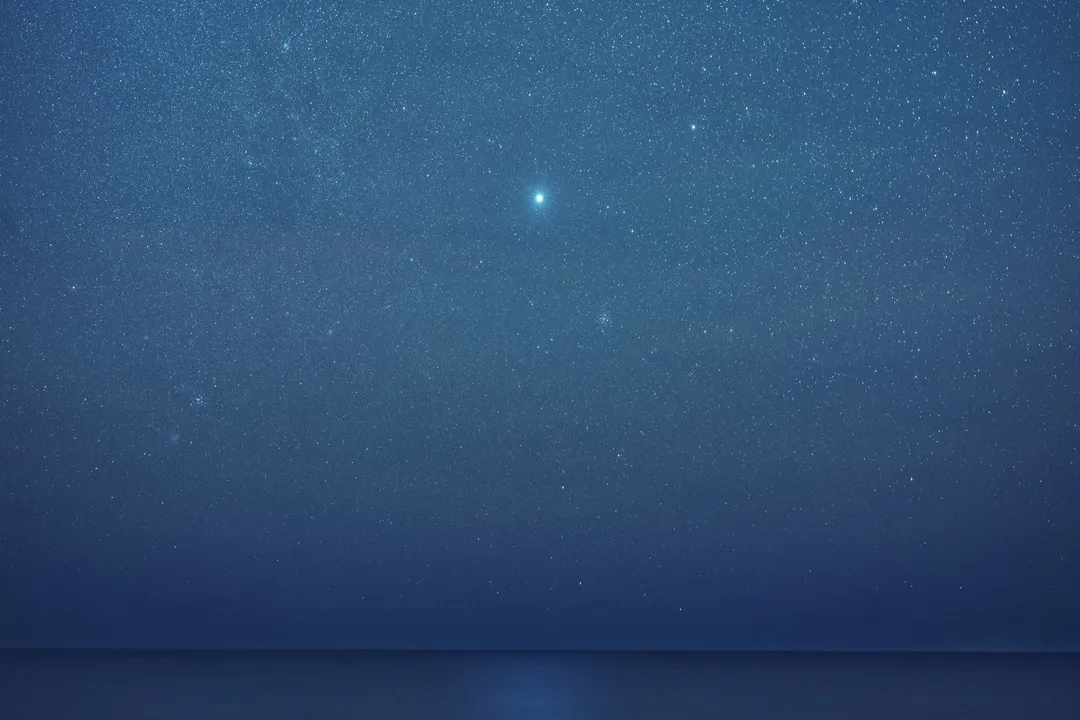
When trying to identify a bright, blinking object, a key diagnostic tool involves comparing its behavior to that of the planets in our solar system. [2] Planets are vastly closer to Earth than the distant stars. [2] While they are still far away, their proximity means they do not appear as true mathematical points of light, but rather as tiny visible disks, even to the unaided eye. [1][2]
Because a planet presents a larger illuminated surface area, the light rays coming from its different edges are affected by the atmosphere in slightly different ways. [1] When light from one edge is bent away, light from another edge might be bent toward you, effectively canceling out the noticeable changes in overall brightness and position. [2] Therefore, planets generally exhibit a steady, unwavering light in the sky, serving as a reliable point of contrast to the actively twinkling stars. [1][2] If the bright object you see is not twinkling, it is very likely a planet like Venus, Jupiter, or Mars. [2]
If you are observing in the Northern Hemisphere, checking the local almanac or a star chart application can immediately confirm the identity of a bright, steady object like Venus, which is often the brightest object after the Sun and Moon. [4]
# Identifying Famous Twinklers
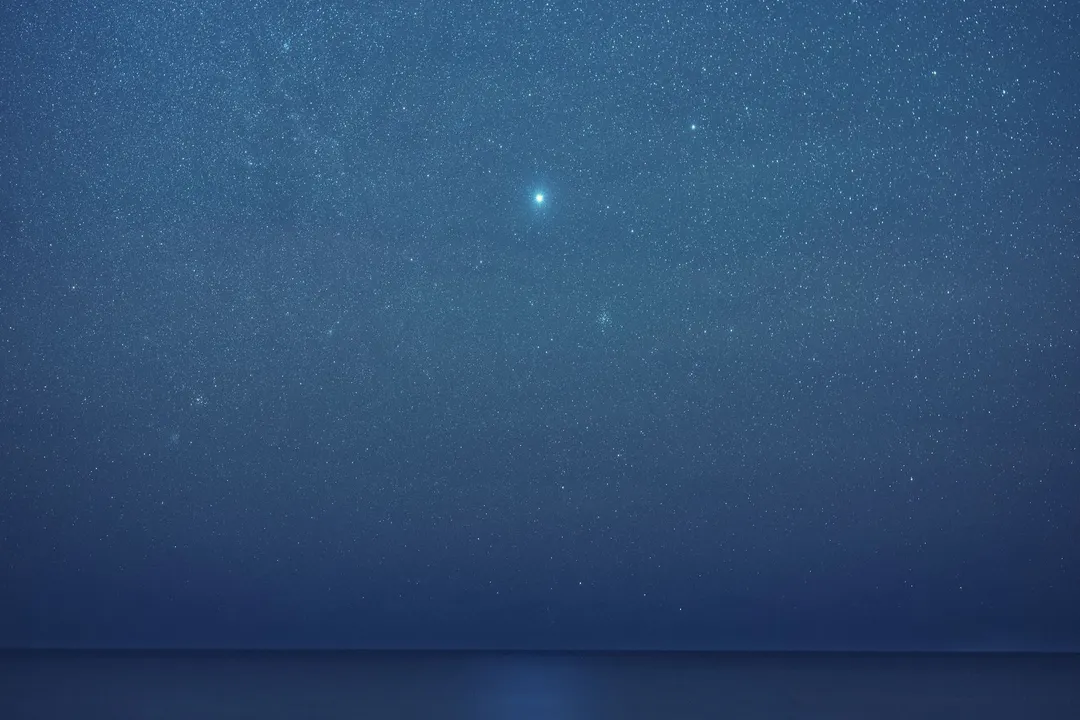
Certain stars are famous for their brightness, making them prime candidates for observers reporting the "blinking star" phenomenon, particularly because they pass relatively low in the sky for many observers. [3]
# Sirius
Sirius, residing in the constellation Canis Major, earns the title of the brightest star visible in the night sky. [7] Its immense brightness contributes significantly to how dramatically its light appears to be affected by the atmosphere when it is low. [5] Its intense light, combined with its path across the sky relative to an observer's latitude, means it puts on quite a show when atmospheric conditions are right, often appearing red and green when near the horizon during winter months in the Northern Hemisphere. [3][5]
# Other Bright Candidates
Besides Sirius, other very bright stars are frequently reported as twinkling objects, especially when they are near the horizon. [3] Capella and Arcturus fall into this category. [3] Any star that is very bright and relatively low in the sky during observation will have a higher propensity to exhibit extreme scintillation compared to dimmer stars or stars positioned high overhead. [3]
When you spot a very bright object, take a moment to track its color and movement over a few minutes. If it stays relatively steady, you might be looking at a planet, or perhaps a star that has risen significantly higher above the horizon since you first spotted it. [3]
# Practical Observation Tips
Understanding this atmospheric effect allows amateur astronomers to better appreciate the conditions of their viewing environment. For instance, if you are attempting astrophotography, intense twinkling caused by low-altitude objects or poor seeing conditions will result in blurred or elongated star trails, even if the object itself is technically stationary. [1]
To maximize your viewing satisfaction for non-twinkling objects:
- Wait for Altitude: Be patient. If you suspect a bright object low on the horizon is a star, wait 30 to 60 minutes for it to rise higher; the twinkling should diminish noticeably. [3]
- Check for Planets: Consult an astronomy app to see if a planet is in the same vicinity. If a nearby object is rock-steady while the target is flashing wildly, you have confirmed a star exhibiting scintillation. [2]
- Consider the Source: Remember that even the brightest stars are emitting light that has traveled for years, but the blinking you see happens in the final few seconds of that journey as the light passes through the air just above your head. [8]
This atmospheric behavior is not a flaw in the star or a sign of an exotic celestial event; rather, it is a beautiful, momentary interaction between ancient starlight and the dynamic air surrounding our world. [1][2] It provides a clear, immediate indicator of the atmospheric stability above your location on any given night. [1]
Related Questions
#Citations
Flickering multicolored star, what is it? : r/askastronomy - Reddit
What is this red/green flashing star? - Astronomy Stack Exchange
Flashing star in autumn? Here are 3 candidates - EarthSky
Last night at JGAP, early in the evening, the bright star Sirius (the ...
Sirius: The brightest star in Earth's night sky - Space
There is a star in the sky that keeps flashing. What is it and ... - Quora