magnitude articles
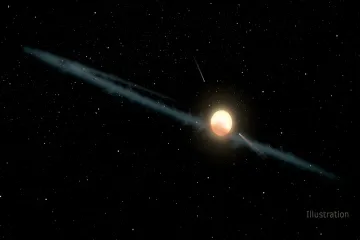
What separates a star's Luminosity from its Apparent Magnitude?
What is the most common reason nearly all stars look faint from Earth?
How much brighter is a star with a magnitude of 1 than one of magnitude 6?
What color change is often seen when light passes through Interstellar Extinction dust?
What obscured KIC 8462852 during its dramatic, aperiodic brightness dips?
Which type of stellar variability has a predictable dimming cycle measured in Hours to Days?
What causes the rapid bending of a star's light path resulting in Scintillation?
Why does a star appear dimmer when observed near the horizon compared to overhead?
For which dimming cause does the light reduction originate *from* the star itself?
Which timescale is associated with Interstellar Dust dimming, unlike Atmospheric Turbulence?
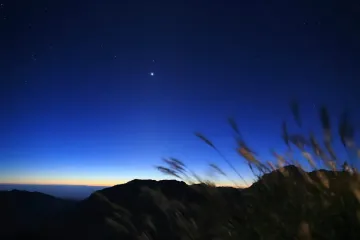
What is the principle governing star labeling in the astronomical magnitude system?
Which astronomer initially categorized naked-eye stars into six magnitude classes around the second century BC?
What factor represents the difference in light intensity for one whole-number magnitude step?
What two primary factors influence a star's Apparent Magnitude (m)?
How is Absolute Magnitude (M) standardized for comparison between stars?
What type of magnitude numbers are assigned to extremely bright celestial objects like the Sun?
How much brighter is a magnitude +2 star compared to a magnitude +7 star?
What is the approximate magnitude limit for stars visible to the naked eye under ideal dark skies?
What is the approximate magnitude limit detectable by the Hubble Space Telescope?
A star at magnitude +3.5 is how many times fainter than a star at magnitude +1.0?
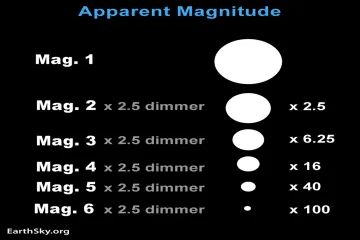
What quantitative system is used to describe how bright an object appears in the night sky?
In the stellar magnitude system, what relationship exists between the magnitude number and the object's observed brightness?
Who is credited with systematically devising the stellar magnitude ranking system for visible light?
What mathematical basis underlies the stellar magnitude brightness scale?
A difference of exactly five magnitudes signifies what difference in brightness between two objects?
What approximate ratio of brightness does each single step on the magnitude scale represent?
What is the approximate apparent magnitude limit for the naked eye under very dark, clear skies?
What is the approximate apparent magnitude of the Sun?
What standard distance are objects artificially placed at to determine their absolute magnitude (M)?