Why does a star appear dimmer when observed near the horizon compared to overhead?
Answer
Its light travels through a much longer column of the atmosphere.
When an astronomical object is positioned low on the horizon, the light originating from that star must traverse a substantially greater vertical distance through the Earth's atmosphere compared to when the same star is located directly overhead (at the zenith). This increased path length means the light encounters a larger quantity of air molecules, dust, and haze, resulting in significantly more light being scattered away and absorbed before reaching the telescope or eye, causing a demonstrable dimming effect known as atmospheric extinction.
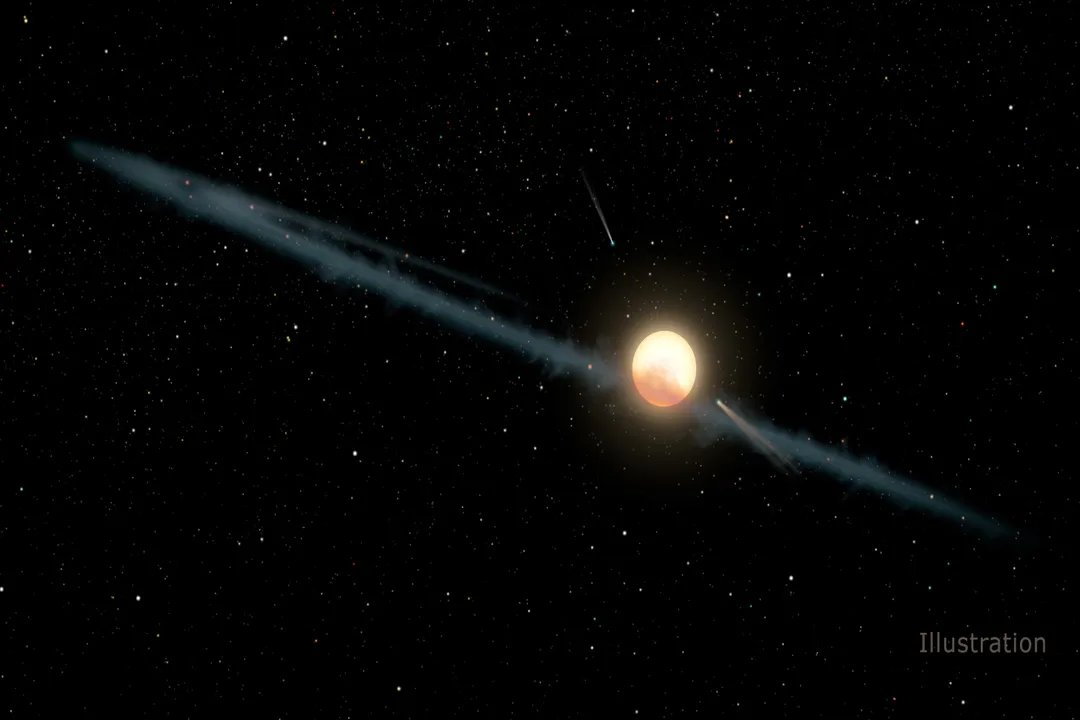
#Videos
STAR BRIGHTNESS EXPLAINED - YouTube
Astronomers Think They Know Why Betelgeuse Got Dimmer
Related Questions
What separates a star's Luminosity from its Apparent Magnitude?What is the most common reason nearly all stars look faint from Earth?How much brighter is a star with a magnitude of 1 than one of magnitude 6?What color change is often seen when light passes through Interstellar Extinction dust?What obscured KIC 8462852 during its dramatic, aperiodic brightness dips?Which type of stellar variability has a predictable dimming cycle measured in Hours to Days?What causes the rapid bending of a star's light path resulting in Scintillation?Why does a star appear dimmer when observed near the horizon compared to overhead?For which dimming cause does the light reduction originate *from* the star itself?Which timescale is associated with Interstellar Dust dimming, unlike Atmospheric Turbulence?