What is an example of a stellar magnitude?
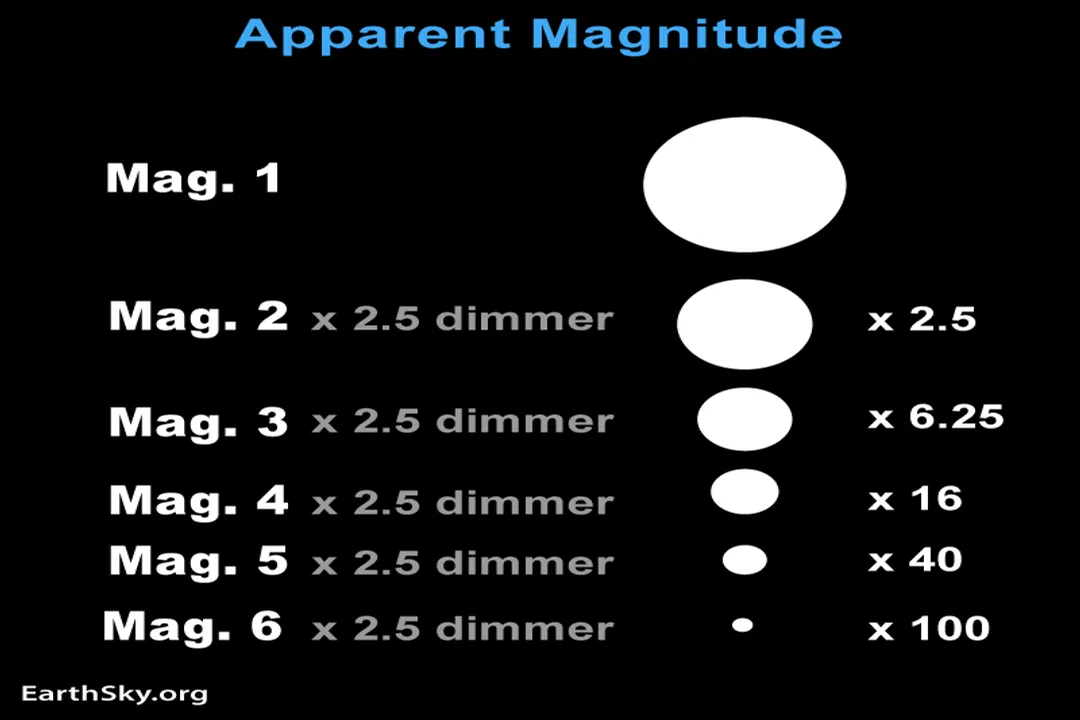
The measure we use to describe how bright an object appears in the night sky is called stellar magnitude, or simply magnitude. It is a quantitative system devised by astronomers, perhaps first systematically by Hipparchus, to rank the visible light from stars and other celestial bodies. [1] Perhaps the most counter-intuitive aspect for newcomers is that the numbers work backward: the smaller the magnitude number, the brighter the object appears to an observer on Earth. [4][5][6] Conversely, objects with large positive magnitude numbers are very faint. [1][5]
# Brightness Number Scale
This system is not based on a simple linear count of brightness but is fundamentally logarithmic. [4][8] This logarithmic nature is key to understanding the scale's power. If you compare two stars, a difference of exactly five magnitudes signifies that one object is precisely 100 times brighter than the other. [1][4][5][8]
Since five steps on the magnitude scale equal a 100-fold difference in light received, this means that each single step in magnitude represents a brightness ratio equal to the fifth root of 100, which is approximately 2.512. [1][4][5] For instance, a magnitude 1.0 star is about 2.5 times brighter than a magnitude 2.0 star, and a magnitude 0.0 star is 2.5 times brighter than a magnitude 1.0 star. [5] If you look at the mathematical relationship, the difference between two magnitudes ( and ) is related to the ratio of their measured brightnesses ( and ) by the equation . [4] This relationship ensures that the scale efficiently covers the enormous range of brightnesses present in the universe without needing an impractical range of numbers.
# Concrete Examples
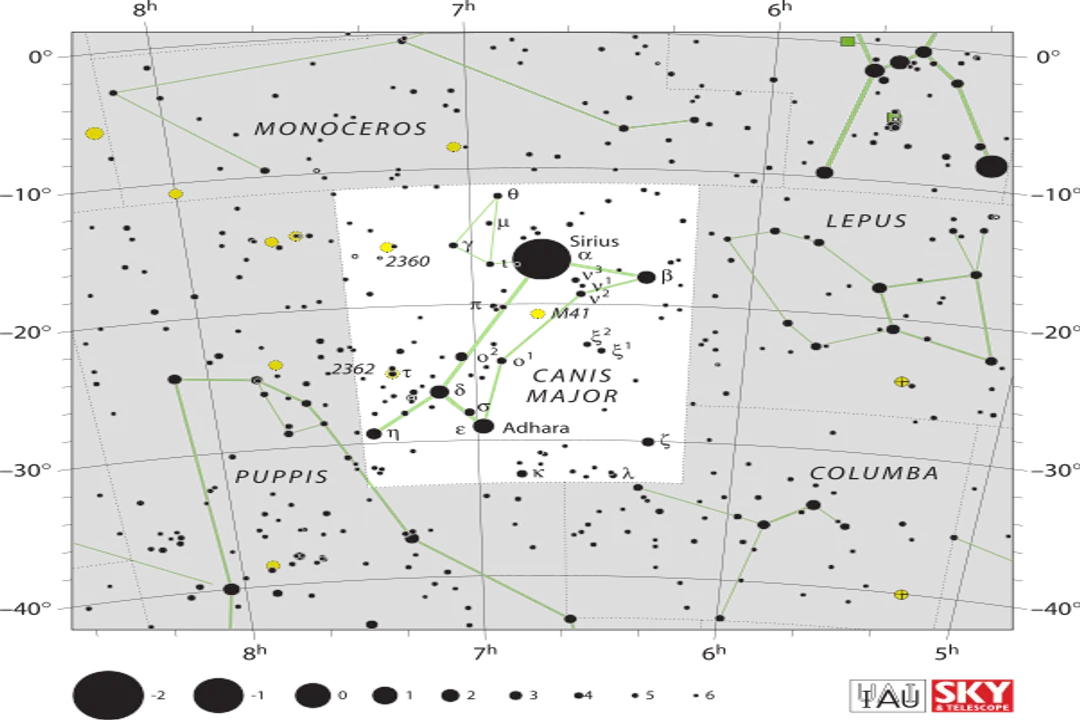
To ground this abstract scale, considering actual celestial objects provides the best illustration of stellar magnitude at work. We can easily see objects ranging from blindingly bright, represented by large negative numbers, down to the faintest specks visible only with powerful equipment. [9]
Here is a demonstration of apparent magnitude values for objects familiar to sky watchers:
| Object | Approximate Apparent Magnitude () | Visibility Note |
|---|---|---|
| The Sun | Far too bright to observe directly. [9] | |
| Full Moon | Easily the brightest object besides the Sun. [9] | |
| Venus (at brightest) | Can sometimes be seen in daylight. [9] | |
| Jupiter (at brightest) | Brighter than most stars. [9] | |
| Sirius (Brightest Star) | The brightest star in the night sky. [9] | |
| Stars near the limit | to $+6.5$ | The approximate limit for the naked eye under very dark, clear skies. [1][6] |
| Faint Galaxies/Nebulae | $+15$ to $+20$ | Require moderate to large amateur telescopes. [9] |
| Hubble Limit | The faintness limit for major space telescopes. [9] |
Notice that the brightest star, Sirius, sits comfortably in the negative or near-zero range, while objects requiring binoculars or small telescopes quickly climb into the positive teens. [9] An amateur astronomer operating in an area with moderate light pollution might only be able to see stars down to magnitude 4 or 5, meaning that the fainter end of the scale listed above becomes effectively inaccessible due to city lights. [6] Thinking about this practically, if the dark sky limit is magnitude 6.5, and Sirius is -1.5, the difference in observed brightness is about 8 full magnitudes. That 8-magnitude difference translates to $(2.512)^8$, or roughly 1585 times the light received from Sirius compared to the faintest star you can just barely see with your unaided eye. [1][5]

# Two Sides Magnitude
The simple magnitude number, like the ones listed above, only tells part of the story because it is entirely dependent on how far away the object is from Earth. This leads to the necessary division of magnitude into two distinct types: apparent magnitude () and absolute magnitude (). [5][9]
# Apparent Magnitude
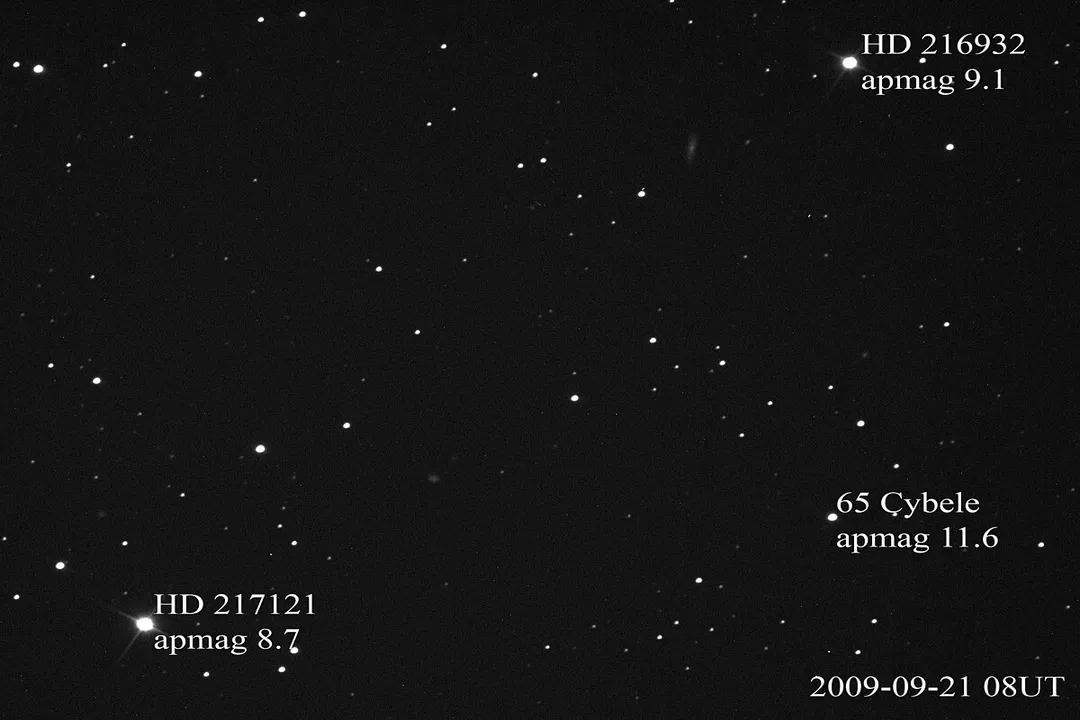
Apparent magnitude () is what we measure when we look up; it describes the brightness of a star or galaxy as it appears from our specific location on Earth. [1][9] This value accounts for the object's intrinsic luminosity and its current distance, as well as any dimming caused by interstellar dust or gas between us and the star (extinction). [9] The Sun is a perfect example of how distance skews apparent magnitude; it appears incredibly bright () because it is so close, even though it is an average star. [9]
# Absolute Magnitude
Absolute magnitude (), conversely, is a standardized measure of intrinsic luminosity. [5] To compare the true brightness of distant objects fairly—say, the Sun and the incredibly distant star HD 140283—astronomers calculate what their apparent magnitude would be if they were all artificially placed at a standard, fixed distance of 10 parsecs (about 32.6 light-years) away from the observer. [5][9] If a star has an absolute magnitude that is much smaller (more negative) than its apparent magnitude, it tells us that the star must be incredibly luminous but is located very far away. [5]
For instance, while Sirius appears blindingly bright ($-1.46$), its absolute magnitude is closer to $+1.4$. [9] This shift shows that Sirius is actually a rather average star in terms of actual energy output; its superior brightness in our sky is overwhelmingly due to its relative proximity. [1] If we took the Sun, which is naturally quite dim intrinsically (absolute magnitude ), and placed it at 10 parsecs, it would be a barely visible speck, far outshone by Sirius even at that standard distance. [5] This comparative exercise highlights that magnitude alone is context-dependent; only by comparing and can we understand the true power source of the light we observe.
# Observing Limitations
The magnitude system is central to amateur astronomy because it defines what is visible through various instruments. [5] Any light pollution washes out the fainter end of the scale, dramatically reducing the number of observable objects. [6]
When setting up equipment or choosing a viewing location, an observer must know the limiting magnitude of their sight or instrument. For example, an urban observer might struggle to see anything dimmer than magnitude 4, effectively losing access to almost all deep-sky objects that require the magnitude 9 or 10 visibility range. [6] A modern, good-quality pair of binoculars might push visibility down to magnitude 10 or 11 under excellent conditions, allowing views of fainter globular clusters or galaxies that are invisible to the naked eye. [5] The real power of a telescope is simply its ability to capture light from objects whose apparent magnitude is too high (too faint) for human vision alone.
If you are using a standard celestial chart that lists objects down to magnitude 12, remember that achieving that visibility requires traveling far from city lights. This requirement is why astronomers often discuss "darkness classes" or use tools like the Bortle Scale, which is essentially a practical, location-based rating of the sky's limiting magnitude. [6] A site rated Bortle Class 1 has excellent skies, allowing the magnitude 6.5 limit to be approached, while a Bortle Class 9 location (city center) might cap observation closer to magnitude 3 or 4, obscuring everything else.
This dependence on location means that the number alone doesn't convey the experience. Imagine two astronomers pointing their scopes at two different galaxies: one at magnitude 14.0 and one at magnitude 14.5. For the observer in the pristine dark, both are visible targets, though the 14.0 galaxy will appear noticeably brighter and easier to resolve. For the observer stuck near a city, however, neither object will be visible at all, rendering the difference between 14.0 and 14.5 functionally irrelevant in that specific scenario. The key takeaway is that the magnitude value provides the potential brightness, but the environment dictates the realized visibility.
Related Questions
#Citations
What is stellar magnitude?
The Stellar Magnitude Scale
The Stellar Magnitude System
Stellar Magnitudes
What is stellar magnitude? How can understanding ...
Magnitudes
The Stellar Magnitude System
Stellar magnitude and logarithms
Apparent magnitude