If astronomers observe very blue, very bright stars in a distant galaxy, what does this imply about that star-forming region?
Answer
The star-forming region is cosmologically young, as older massive stars would have already exploded
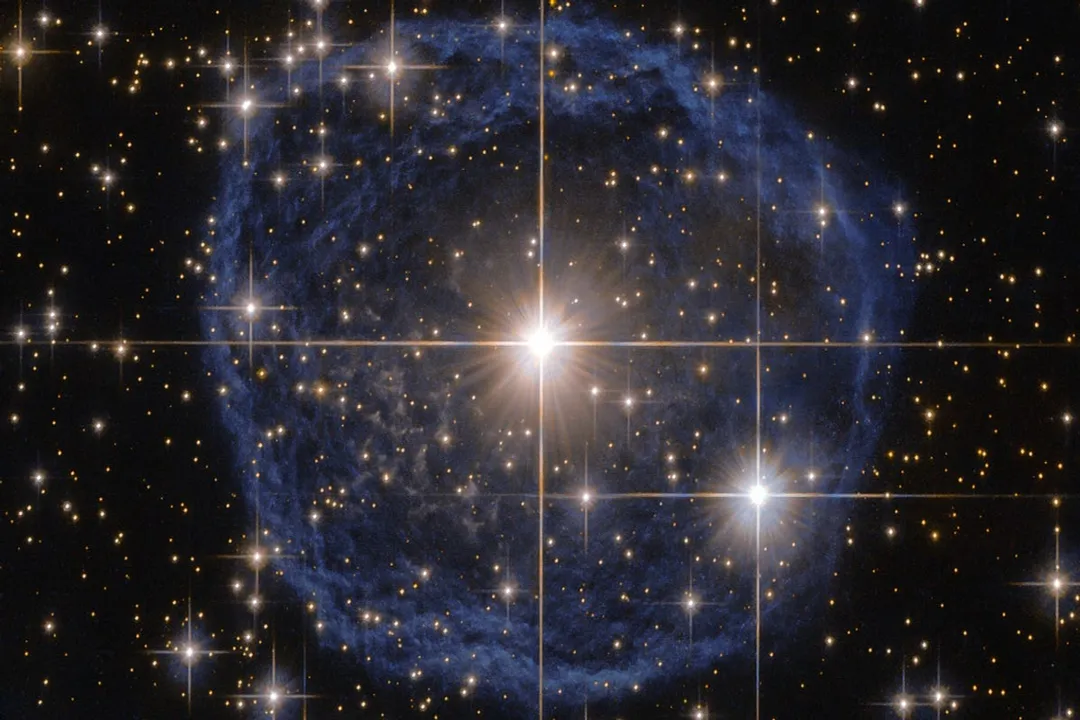
Massive stars, being the brightest and most blue objects, consume their fuel extremely rapidly, existing for only a few million years before exploding as supernovae. Therefore, if astronomers detect these luminous, massive stars in a distant galaxy, it serves as a clear marker that the star-forming activity in that region must have happened very recently in cosmic terms. If the galaxy were old and quiescent (no longer forming stars), the brightest visible objects would be the longer-lived, lower-mass stars or the remnants left by past generations.
Related Questions
What causes the extreme luminosity in stars significantly more massive than the Sun?What is the approximate relationship governing stellar Luminosity (L) in terms of Mass (M)?What is the primary stellar remnant left after a low-to-intermediate mass star like the Sun evolves?What catastrophic core event initiates the Type II supernova explosion in a massive star?How much shorter is the main sequence lifespan of a star 50 times the mass of the Sun compared to the Sun?If astronomers observe very blue, very bright stars in a distant galaxy, what does this imply about that star-forming region?What is the ultimate fate remnant for a star that was significantly massive enough following a Type II supernova?What characteristic distinguishes the post-main sequence life phase of a massive star compared to the Sun's?Which type of star is characterized as the stellar equivalent of a drag racer due to massive power output for a brief run?What fundamental physics concept dictates that a star must increase core temperature and density as mass increases?