What year will SpaceX go to Mars?
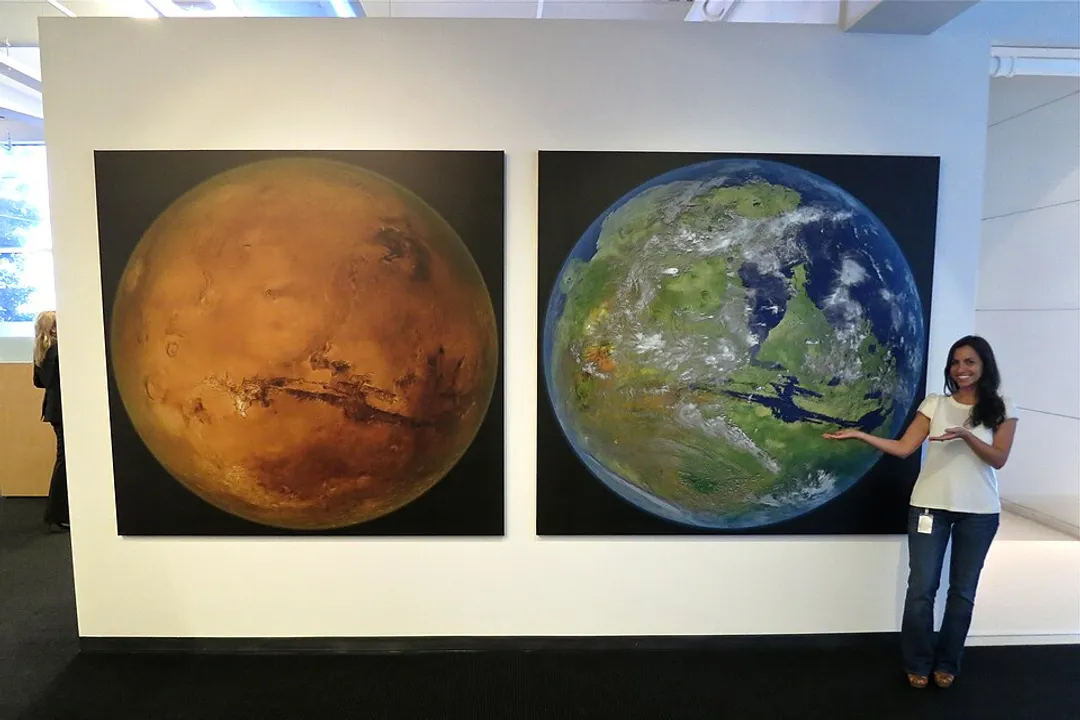
The aspiration to send humans to Mars is no longer confined to science fiction; it sits squarely on the roadmap of a functioning aerospace company, SpaceX. Yet, pinning down a precise year for this monumental achievement remains challenging, largely because the timeline is tethered to relentless technological development, the physics of orbital mechanics, and the pronouncements of its visionary leader, Elon Musk. The current focus is on Starship, the fully reusable system intended to make humanity a multiplanetary species and build a self-sufficient Martian city.
# Evolving Projections
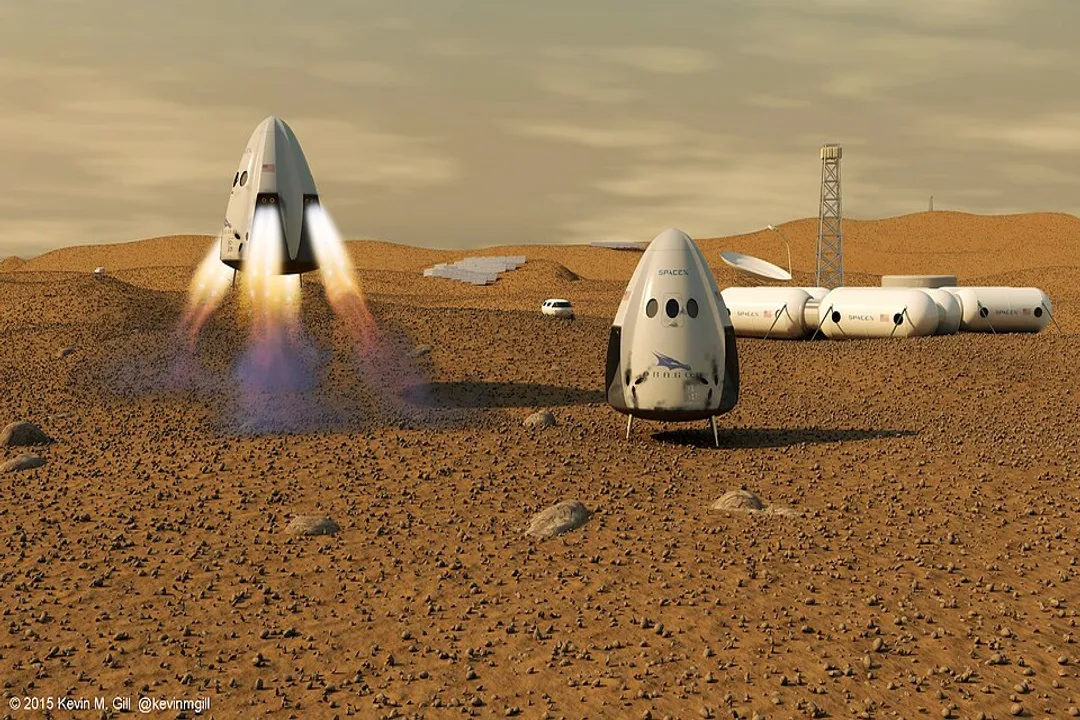
Elon Musk has consistently set aggressive, often shifting, targets for Mars missions. This pattern of ambitious forecasting has led observers to internalize the concept of "Elon time" when discussing dates. As early as 2007, Musk expressed his personal goal of enabling human settlement on Mars. Earlier concepts, such as the Red Dragon missions, envisioned sending a modified Dragon 2 capsule to Mars by the mid-2020s, but this plan was ultimately shelved in favor of the much larger Starship vehicle.
More recently, the target for the first uncrewed Starship missions to Mars, timed to coincide with a transfer window, was set for 2026. Following the successful fourth integrated flight test where both stages achieved controlled splashdown, SpaceX announced plans to launch five uncrewed Starships to Mars in that 2026 window to test reliable landing. If those 2026 precursor missions succeeded, the first crewed flights were projected to follow approximately four years later.
However, subsequent updates have acknowledged the difficulty. A statement from late 2025 suggested a slight chance of a crewed flight by the end of 2026 (potentially carrying the Optimus robot), but deemed it "more likely" that the first uncrewed flight would occur in about 3.5 years, with a human flight following about 5.5 years from that point, potentially pointing toward the early 2030s. Even with the earlier 2026 uncrewed goal, Musk had also suggested that a crewed mission would take place no earlier than 2029. Experts watching the iterative development process suggest that a more realistic timeframe for a successful human flight might be closer to 2029, 2030, or even later, contingent on proving out the necessary rapid reusability and critical refueling operations.
# Technical Prerequisites
The difference between launching a test vehicle in Earth orbit and sending people to another world, landing them, and ensuring their return involves orders of magnitude in technological complexity. For the first human landings to follow the planned 2026 uncrewed path, several key capabilities must be demonstrated, some of which are only testable during the specific, infrequent Earth-Mars transfer windows.
The overarching goal of colonization—establishing a self-sustaining city—is projected to take between 20 to 30 years after the first crewed missions, with the aim of hosting a million people eventually. But before that scale can be approached, the foundational transportation system must be proven reliable across the entire mission profile.
# Orbital Stacking
The Starship architecture relies on an unprecedented level of in-space logistics. For a single Mars-bound Starship to have sufficient propellant for the transit and subsequent maneuvers, it cannot launch fully fueled from Earth. Instead, the spacecraft must be refueled in Earth orbit by multiple "tanker" Starships.
This orbital refueling is perhaps the most immediate and critical technical hurdle that has yet to be demonstrated at scale. While SpaceX has transferred propellant between internal tanks on a single vehicle, transferring hundreds of tons of cryogenic liquid oxygen and liquid methane between two separate spacecraft in orbit remains an unproven endeavor for any organization. Donald Rapp, a chemical engineer, calculates that one Mars-bound Starship requires about 1,200 tons of propellant, meaning roughly twelve tanker launches must succeed just to top off a single interplanetary vehicle. If five uncrewed ships are planned for the 2026 window, this necessitates 60 tanker launches—a massive, unprecedented logistical stress test on the ground infrastructure before a single Mars attempt can even occur. Furthermore, engineers are uncertain about "parasitic" losses—the evaporation of cryogenic fuel when it first contacts relatively warmer lines and empty tanks—which could necessitate even more tanker flights per mission.
# Landing Hurdles
Once the logistical challenge of reaching Mars orbit is overcome, the vehicle must survive Entry, Descent, and Landing (EDL). Starship, weighing 200 tons or more on arrival, is vastly more massive than any previous Martian lander. Unlike previous NASA missions that relied on single-use ablative heat shields, Starship uses a reusable metallic-ceramic tile shield for aerobraking. Musk has pointed out that the Martian atmosphere creates harsher conditions, including more free oxygen, which could degrade the tiles during entry.
Even beyond the heat shield, the vertical landing technique itself poses a major risk. Scott Hubbard, a former NASA director, points out that previous landers were squat with low centers of gravity, often using parachutes or airbags for stability. Starship is a tall, slender vehicle, and while vertical propulsive landing looks impressive, it demands extreme precision, especially given that there are no prepared landing pads on the Martian surface. A slight tipping or a faster landing—as demonstrated by the Odysseus lander tipping over on the Moon due to an altimeter failure—could result in the catastrophic loss of the vehicle and its mission payload.

# Surface Autonomy
The SpaceX plan calls for automated systems, specifically Tesla’s Optimus humanoid robots, to precede or accompany the first crews to install power generation, survey resources like water ice, and build initial habitats. While Musk has presented compelling visuals of these robots performing tasks, experts note that the demonstrations often occur in well-prepared environments, a sharp contrast to the barren, unstructured Martian surface. An alternative suggested by some experts is to send an "army" of proven, adaptable rovers and rotorcraft, like the successful Ingenuity helicopter, capable of adapting to any surface, rather than relying on nascent humanoid dexterity. The success of the initial cargo missions hinges on whether these robots can perform complex construction and maintenance tasks autonomously enough to prepare for human survival.
# Window Constraint
A final, non-technical reality heavily influences the timeline: the Earth-Mars synodic period, which dictates the optimal launch window approximately every 26 months. This physical constraint means that SpaceX cannot simply increase its launch cadence if a technical issue arises, as it can with Low Earth Orbit (LEO) operations.
When Starship performs integrated flight tests in LEO, the company can iterate rapidly, sometimes flying a new version just weeks after the previous one. For Mars missions, a failure in the 2026 window—say, in testing the heat shield or the Mars-ascent engine start—forces the entire program to wait until the next window, likely 2028, for another attempt. This disparity forces SpaceX to adopt a "massively compressed waterfall" approach for deep space elements: they must design, analyze, and test nearly everything to a high degree of certainty before launch, because the two-year wait between opportunities severely slows the deep-space iteration loop. This single constraint—the astronomical clock—makes even the more likely 2028-2030 human flight target an exceptionally tight schedule demanding near-perfect performance on first attempts for many unproven systems.
Ultimately, the year SpaceX lands on Mars is less a date on a calendar and more a reflection of when the necessary orbital refueling, reliable EDL, and functioning ISRU/power systems can be certified as mature enough to mitigate the risk inherent in a two-year penalty for failure.
#Videos
Elon Musk revealed Unexpected Starship Timeline to Mars in 2026 ...
Related Questions
#Citations
Elon Musk Sours On Starship 2026 Mars Launch – Says 2028 Flight ...
Mission: Mars - SpaceX
SpaceX Mars colonization program - Wikipedia
Elon Musk revealed Unexpected Starship Timeline to Mars in 2026 ...
Elon Musk makes another Mars prediction: Mars will be ... - The ...
What capabilities must SpaceX develop prior to the uncrewed ...
SpaceX - A Closer Look at SpaceX's Mars Plan - Aerospace America