How do we get information from Mars?
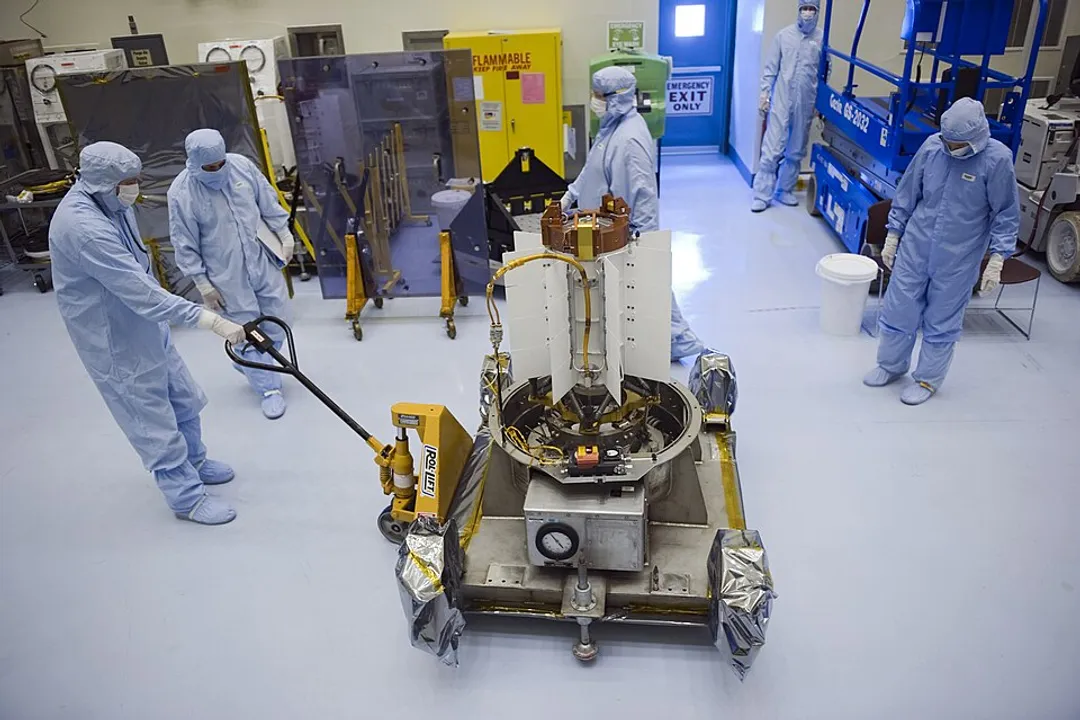
The faint whispers of robotic explorers traversing the ochre sands of Mars must first cross an unimaginable gulf of space to reach us here on Earth. Getting that precious cargo of scientific data—images, atmospheric readings, system diagnostics—back across the void is an engineering feat defined by immense distances, power limitations, and the necessity of global cooperation. It is not simply a matter of pointing a radio and transmitting; it involves a complex, multi-layered communication pipeline connecting our surface machines with the massive dishes rooted firmly on our planet.
# Vast Distances
The fundamental challenge in communicating with Mars is the sheer separation between the two worlds. Because both Earth and Mars are moving in their respective orbits around the Sun, the distance between them is constantly fluctuating. At its closest approach, the separation can be as small as 33.9 million miles (about 3 minutes of light time), but at its farthest, the signal must travel 248.7 million miles (roughly 22.4 minutes of light time). This travel time dictates that any command sent from Earth will take at least 14 minutes one way, meaning a round trip for a simple acknowledgment can stretch to half an hour or more. This significant lag mandates that surface operations, like driving or complex sequences, must be pre-programmed far in advance; real-time remote control is utterly impossible.
# Ground System
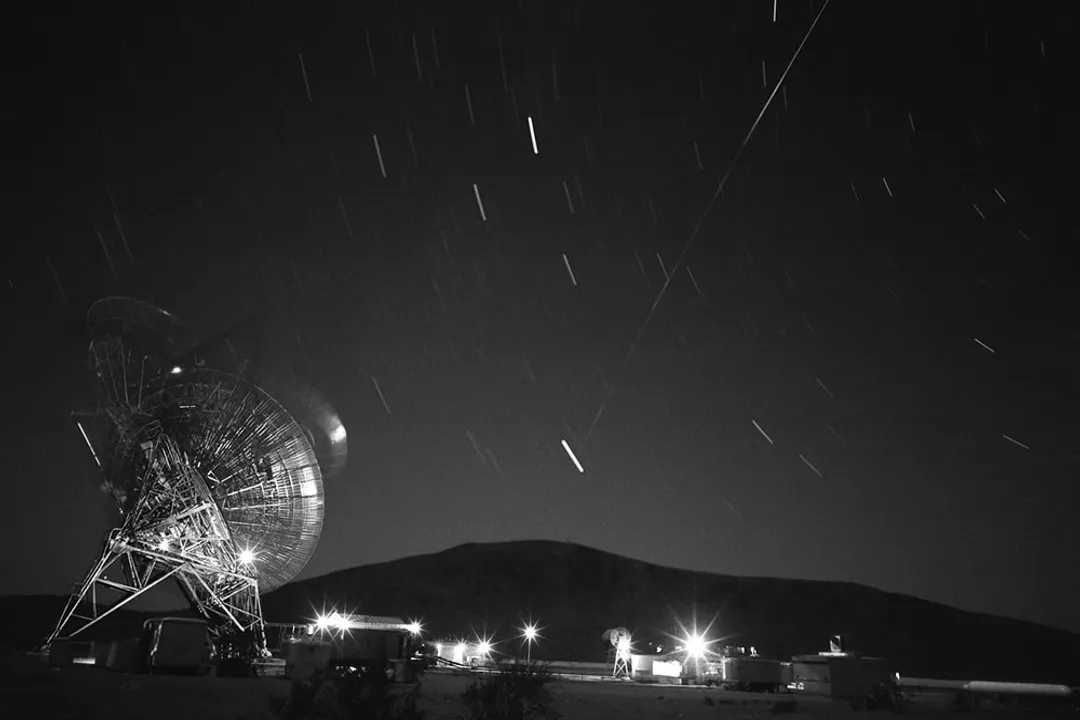
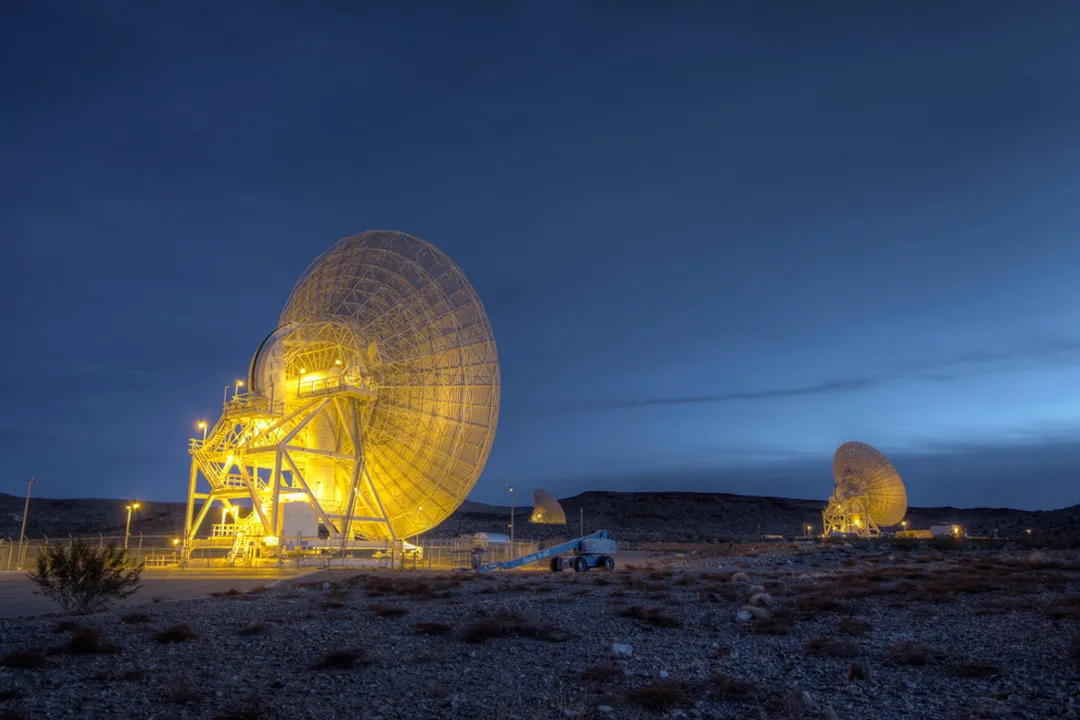
The listening posts for all deep space endeavors are concentrated in a highly specialized terrestrial system known as the Deep Space Network (DSN). The DSN acts as the long-distance telephone operator for interplanetary missions, serving as the primary point of contact for both sending commands (uplink) and receiving data (downlink). To overcome the intermittent visibility caused by planetary rotation—which blocks line-of-sight communication from Mars for about 12 hours per day—the DSN is distributed across three geographically distant complexes. These complexes are situated in Goldstone, California; Madrid, Spain; and Canberra, Australia.
This strategic placement allows for a "follow-the-sun" operational period, ensuring that at least one massive antenna complex is always optimally positioned to communicate with a Mars asset. These complexes house some of the world's largest radio antennas, equipped with exceptionally sensitive receivers capable of capturing signals that arrive at billions of a billionth of a watt. Companies like Peraton support NASA’s Jet Propulsion Laboratory (JPL) in maintaining and operating these critical assets, handling everything from signal processing to the physical sustainment of the hardware.

# Orbital Middlemen
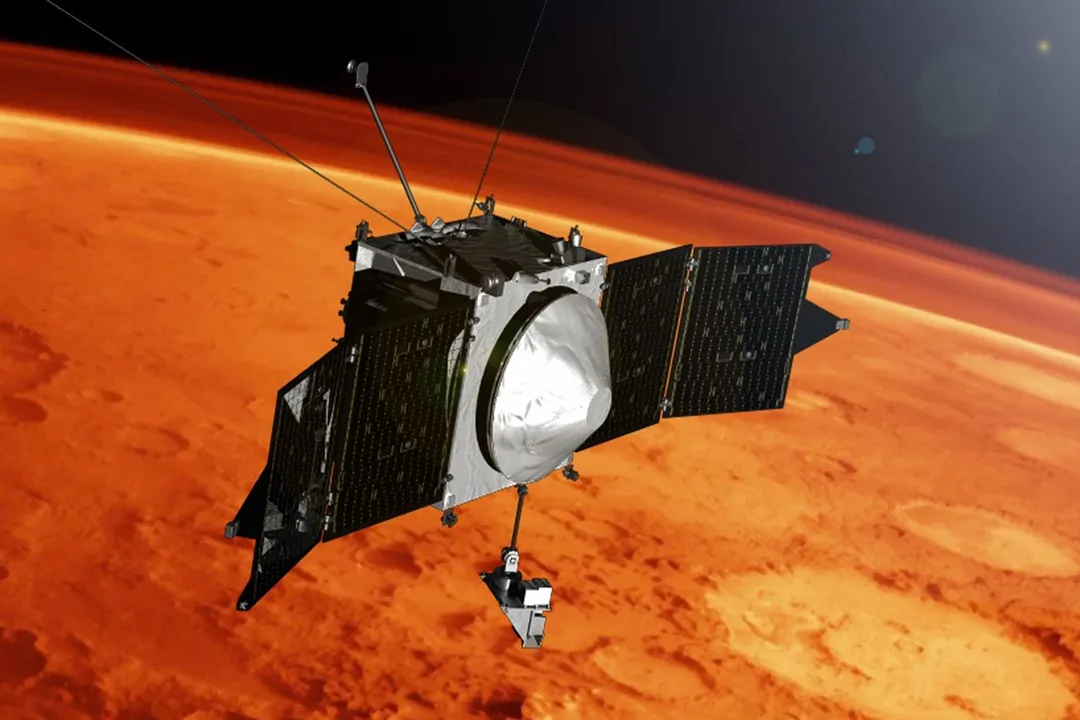
While the DSN is the ultimate destination for the data, relying on Direct-to-Earth (DTE) communication from a rover on the Martian surface would be highly inefficient due to the rover’s limited power supply and size constraints. A rover like Curiosity cannot carry the giant, power-hungry antennas that the DSN uses. To circumvent this, NASA and its international partners established the Mars Relay Network (MRN).
The MRN is a constellation of five spacecraft currently orbiting Mars, acting as crucial communication relays between the surface and Earth. These orbiters include NASA’s Mars Odyssey (ODY), Mars Reconnaissance Orbiter (MRO), and MAVEN (MVN), alongside the European Space Agency’s (ESA) Mars Express (MEX) and ExoMars Trace Gas Orbiter (TGO). Every single image we have seen from the Martian surface since 2004 has passed through this relay network.
The benefit of using these orbital assets is threefold: they possess larger antennas that are impractical to land on a rover, they have more power available from larger solar panels that don't face Martian dust or long nights, and they have much more regular contact windows with Earth. Furthermore, some orbiters, like MRO, have the capability to point their antennas toward Earth while simultaneously communicating with the rovers, cutting down on the time needed to relay the data.
# Link Types
Rovers employ different radio systems optimized for different tasks, a necessity dictated by the energy trade-offs involved. For example, the Curiosity rover carries both an X-band transmitter for direct contact and an Ultra High Frequency (UHF) radio system, which is the preferred method for relay traffic.
The performance disparity between the two methods is stark. Direct communication using Curiosity's high-gain X-band antenna can manage speeds up to about 32 kbit/s (kilobits per second) to an Earth-based DSN antenna. However, communicating via the UHF system to an orbiter allows speeds up to 2 Mbit/s (megabits per second). This represents an efficiency gain of over 60 times compared to the direct link, making the relay essential for downloading large volumes of science data, such as the high-resolution images the rovers send back.
To illustrate the efficiency gap, we can compare the expected data returns, keeping in mind that orbiters have more power and better receiving equipment:
| Component | Primary Link Target | Approximate Max Data Rate | Key Advantage |
|---|---|---|---|
| Rover (e.g., Curiosity) | Earth (Direct) | Up to 32 kbit/s | Immediate status confirmation post-landing |
| Rover (e.g., Curiosity) | Orbiter (UHF) | Up to 2 Mbit/s | High-speed transmission for large files |
| Orbiter (e.g., TGO) | Earth (DSN) | ~1,562.7 Mb/day average | Larger antennas, consistent power source |
The MRN orbiters, in turn, transmit data to Earth, with the newest member, ESA's Trace Gas Orbiter (TGO), sending the most data per day on average. The successful deployment of a relay network is so vital that every image taken since 2004 relied on it, and during critical events like Entry, Descent, and Landing (EDL), multiple orbiters simultaneously monitor the incoming signals.
This necessity for optimized data transfer shines a light on the operational philosophy: surface assets must be extremely power-conscious, prioritizing science collection over lengthy radio transmissions. The engineers must carefully schedule transmission windows—called passes or overflights—when a specific orbiter is overhead and has time allotted for the relay session.

# Data Flow
The sequence of transferring a single high-resolution panoramic photograph, for instance, is a multi-stage process heavily reliant on precision timing.
- Acquisition: The rover captures the image using its cameras, perhaps the Mastcam or MAHLI on Curiosity, and stores the data in its internal memory.
- Rover Uplink to Orbiter: The rover waits for a scheduled pass or overflight by an active relay satellite. When the connection is established (the relay session), the rover beams the data up via its UHF radio at high speed (up to 2 Mbps).
- Orbiter Downlink to Earth: The orbiter stores the data and then waits for its next scheduled downlink opportunity to communicate with one of the DSN complexes on Earth. During this step, the orbiter transmits the rover's data along with its own science data. Some orbiters can even do both simultaneously, shortening the overall relay time.
- Ground Reception: A massive DSN dish, such as the 70-meter dish, receives the faint signal. Specialized Signal Processing Centers then amplify, interpret, and disseminate the raw data to mission control centers like JPL.
It is fascinating to consider the physical infrastructure required on the ground, which is not just the DSN hardware but the entire support ecosystem. Beyond the engineers running the telescopes, there are teams managing power cooling, heating, fiber optic connectivity, and logistics for shipping replacement parts across continents—all just to keep the listening posts ready for the brief, precious minutes a rover is in view. The entire process must be validated through years of pre-launch testing, as there is zero margin for error once the robot is millions of miles away. Even non-agency groups, such as the team at Goonhilly in the UK with their 32m dish, have successfully intercepted signals directly from Mars surface missions, confirming the immense sensitivity required even for the rover’s lower-power direct transmissions.
This intricate, orbital stepping-stone approach is what allows missions like Curiosity and Perseverance to return gigabytes of data weekly, enabling continuous scientific investigation on the surface that would otherwise be impossible with the limited power available to a solar-powered or RTG-equipped rover. The relay network transforms a whisper into a torrent of information, ensuring that the discoveries made in Gale Crater or Jezero Crater make the long haul home.
#Videos
How Mars rover Curiosity communicates with Earth - YouTube
How Does NASA Get Video From Mars? How fast is the ... - YouTube
Related Questions
#Citations
Communicating with Curiosity - NASA Science
How hard is it to receive direct signals from vehicles on the surface ...
How Mars rover Curiosity communicates with Earth - YouTube
Communicating with Mars: The Deep Space Network and ... - Peraton
Curiosity (rover) - Wikipedia