What makes a planet a habitable zone?
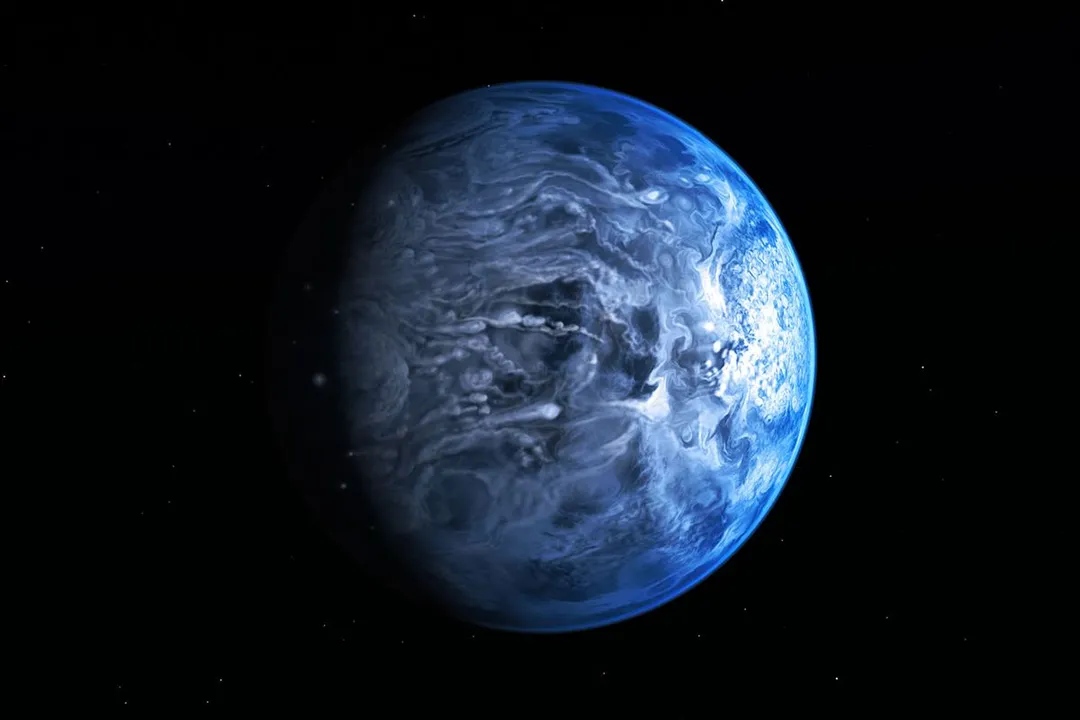
The search for life beyond Earth often boils down to finding the right address—a place neither too scorching nor too frigid. This ideal neighborhood around a star is commonly known as the Habitable Zone (HZ), [7] a term that carries a certain cosmic appeal, often summarized by the familiar "Goldilocks Zone" analogy. [7] It is not a guarantee of life, but rather a prerequisite; it is the region where a planet could theoretically maintain liquid water on its surface. [4][6]
# Water Necessity
The fundamental premise linking a planet to this zone is the presence of liquid water. [4] Water is essential because it acts as a universal solvent, capable of dissolving many substances, which is critical for the chemical reactions necessary for life as we currently understand it. [1] If a planet orbits too close to its star, the energy it receives causes surface water to boil away into space, resulting in a "runaway greenhouse effect" that strips the planet of its surface moisture, much like what is believed to have happened to Venus. [2] Conversely, if the planet ventures too far out, any water present freezes solid, locking away the solvent needed for biochemistry. [5] The Habitable Zone, therefore, defines the orbital band where temperatures allow water to exist in its liquid state within the planet's normal range of surface pressures. [2]
Interestingly, while the HZ is often discussed in terms of surface conditions, the presence of liquid water is not exclusively tied to surface temperature. A significant analysis point, often missed when only looking at the classical definition, is that internal heating or tidal forces—even far outside the traditional HZ—could potentially maintain subsurface oceans. [1] Consider the icy moons of Jupiter and Saturn, like Europa or Enceladus; these worlds are deep within the outer, colder regions of our Solar System, yet strong evidence suggests vast, warm, liquid oceans exist beneath their ice shells, warmed by tidal kneading from their giant host planets. [1] This illustrates a crucial distinction: the HZ describes the zone based on stellar energy input, but habitability itself may manifest in places the HZ model doesn't cover.
# Stellar Dependence

The exact placement and width of the Habitable Zone are entirely dependent on the characteristics of the central star. [2][8] Stars are not uniform; they vary widely in mass, luminosity, and temperature, which directly dictates how much energy they radiate into space. [8] A larger, hotter star—a massive, bright blue-white star for example—emits a tremendous amount of energy. Consequently, its Habitable Zone must be situated much farther away from it to maintain the correct moderate temperature for liquid water. [8] The zone for such a star would be broad and distant.
On the opposite end of the spectrum are smaller, cooler stars, such as red dwarfs. These stars are far less luminous, meaning their Habitable Zones are located much closer to the star, resulting in a tighter, more constrained orbital sweet spot. [8] For a planet to remain in the HZ of a dim red dwarf, it would need to orbit incredibly closely, perhaps completing a year in just a few weeks. [2] The spectral type and mass of the star are thus the primary architects of the HZ boundary. [8]
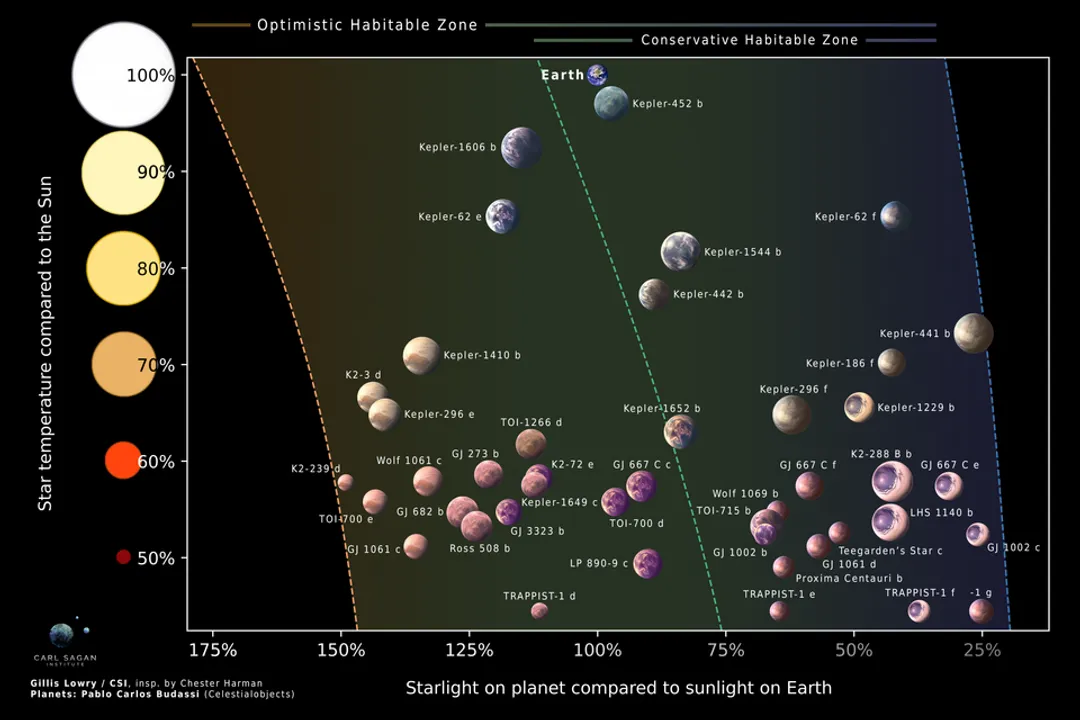
When astronomers calculate these zones, they often rely on the stellar input. For instance, the traditional HZ calculation often uses the concept of stellar flux—the amount of energy received per unit area. A planet receiving about as much flux as Earth does from the Sun is a good candidate for lying within our Sun's HZ. [2]
A subtle yet significant point arises when comparing stars of different ages and compositions. While the initial HZ calculation might be based on mass and current luminosity, a star’s evolution changes its output over time. A star that is currently in the HZ region might have been too hot for liquid water billions of years ago, or it might become too cool in the future. The concept of a long-term habitable zone that accounts for stellar aging is far more complex than the instantaneous calculation for liquid water today. [9]

# Orbital Parameters

Simply being in the general vicinity of the HZ is not enough; the planet's orbit itself must be relatively stable and circular. [2] Orbital distance dictates the average energy received, but the shape of the orbit, known as its eccentricity, dictates how much that energy fluctuates. [2]
If a planet has a highly eccentric orbit, it will swing dramatically between being very close to its star (too hot) and very far from its star (too cold) during a single revolution. [5] Even if the average distance places it within the HZ, the extreme swings in temperature might prevent liquid water from remaining stable long enough to support life. A planet might spend half its year boiling and the other half freezing solid, creating environmental instability that life struggles to adapt to, regardless of the annual average. [2]
To illustrate this, imagine two planets orbiting the same star at the same average distance. Planet A has a near-perfect circular orbit. Planet B has a highly elliptical orbit. Planet A maintains a relatively constant, tolerable temperature. Planet B experiences violent climate shifts, perhaps melting all its ice during its closest approach, only to have it all flash-freeze when it swings to its farthest point.
This brings us to a practical consideration for detection and analysis. When observing an exoplanet transiting or moving across the sky, we measure its orbital period, which gives us its average distance via Kepler's laws. However, accurately determining the eccentricity often requires longer observation baselines or specialized techniques, making the initial confirmation of HZ placement slightly less precise until more data is gathered. This uncertainty means that an early calculation placing a planet in the HZ might need revision as we refine the shape of its path. [2]
# Atmospheric Control
The Habitable Zone definition derived from stellar flux and liquid water is, admittedly, incomplete because it ignores the planet’s own characteristics. A planet's atmosphere plays an immense, sometimes dominating, role in its actual surface temperature. [1]
Atmospheric composition and density are critical buffers against stellar radiation and temperature swings. [4] For example, Earth’s atmosphere, rich in greenhouse gases like carbon dioxide and water vapor, traps heat that would otherwise escape into space, warming the surface by about 33 degrees Celsius. [1] This natural warming effect pushes Earth's actual habitable conditions slightly inward compared to where they would be without an atmosphere.
Conversely, a planet in the HZ that possesses an atmosphere far too thick or with too many potent greenhouse gases—even if it orbits at a distance comparable to Earth’s—can become too hot, simulating a runaway greenhouse scenario. [2] Venus is the prime example here; it orbits near the inner edge of the Sun's HZ, but its extremely dense carbon dioxide atmosphere results in surface temperatures hot enough to melt lead, making it completely inhospitable. [2]
Therefore, the "Habitable Zone" is often more accurately described as the Circumstellar Habitable Zone (CHZ), acknowledging that the stellar environment and the planet’s specific properties interact to define the actual thermal environment. [6] A planet with a thin, non-greenhouse atmosphere will require to orbit closer to its star than a planet with a thick one to achieve the same liquid water stability.
If we were to assign a "habitable effectiveness index" to a planet, we might consider the ratio of its atmospheric pressure to its distance from the star. A planet with a pressure of, say, $0.1$ bar might need to be inside the calculated HZ edge to sustain liquid water, whereas a planet with a pressure of $2$ bars might be comfortably outside that same edge and still retain surface water. This relationship suggests that future life-finding missions will need to prioritize atmospheric characterization alongside orbital parameters. [1]
# Factors Beyond the Zone
True habitability demands more than just the right temperature range. Several other geological and physical features are considered crucial for maintaining a stable environment conducive to life over astronomical timescales. [1]
# Magnetic Shield
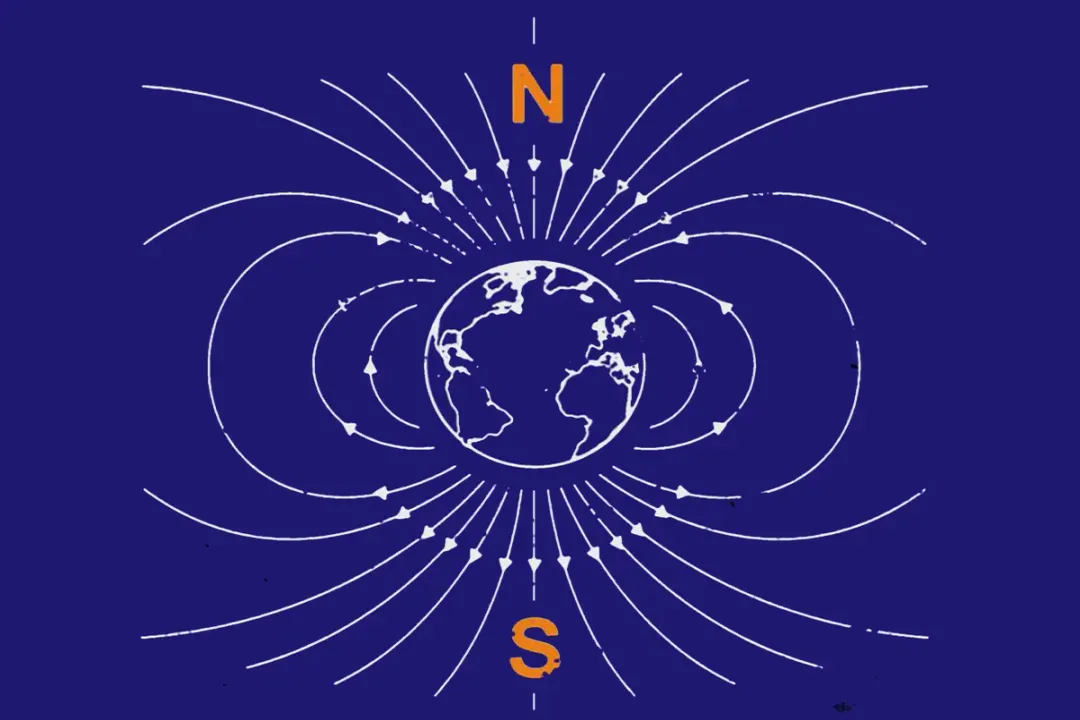
A planet needs protection from its star’s harsh radiation and solar wind. A strong magnetosphere, generated by a liquid, convecting metallic core (a dynamo effect), acts as a planetary shield. [1] This magnetic field deflects charged particles that would otherwise slowly strip away the atmosphere over billions of years. [1] Mars, for instance, appears to have lost much of its early, thicker atmosphere because its internal dynamo shut down, leaving its upper layers vulnerable to solar erosion. [1] A planet sitting perfectly in the HZ with no magnetic field might simply become a barren rock like Mars over eons.
# Planetary Size and Geology
The mass and size of the planet influence its ability to retain an atmosphere and maintain internal geological activity. [1] A planet must be massive enough to hold onto essential volatile compounds, including water and atmospheric gases, through gravity. [1] Furthermore, geological processes, most notably plate tectonics, are thought to be vital for long-term climate stability. Plate tectonics helps cycle carbon dioxide between the atmosphere and the planet’s interior via volcanism and subduction, acting as a global thermostat over geological timeframes. [1] Without this mechanism, carbon dioxide could become permanently locked away in rocks, causing global temperatures to plummet over billions of years, even if the planet started perfectly situated within the HZ. [1]
# Expanding the Definition
The classical definition, focused solely on surface liquid water determined by stellar flux, is increasingly being refined as we study more diverse planetary systems. [2][6] The search isn't just for "Earth 2.0" but for any environment supporting life. [1]
One major consideration involves the type of star. For M-dwarf stars (red dwarfs), the HZ is very close to the star, which has significant consequences. Planets in this region are often tidally locked, meaning one side perpetually faces the star (eternal day) while the other faces away (eternal night). [2] This creates extreme temperature differentials. However, a sufficiently thick atmosphere could potentially circulate heat from the dayside to the nightside, distributing warmth and creating a stable temperate band around the terminator—the line between day and night. [2] This scenario, often termed an "Eyeball Earth," suggests that life could thrive in a perpetual twilight zone, even on a tidally locked world located in the stellar HZ. [2]
Another expansion involves looking outside the traditional stellar HZ altogether, as mentioned with the icy moons. [1] If a planet or moon has substantial internal heating—perhaps from radioactive decay within its core or powerful tidal forces from a massive neighbor—it could host liquid water oceans beneath an insulating ice shell, entirely independent of the energy received from its host star. [1] This widens the potential search area significantly, shifting focus from just orbital distance to internal energy budgets.
A final comparison point involves the stellar input itself. The Habitable Zone is sometimes broken down into an Optimistic Habitable Zone and a Conservative Habitable Zone. [6] The conservative zone represents the tightest range where liquid water is very likely, assuming minimal atmospheric greenhouse effect. The optimistic zone extends further out, taking into account the possibility of a thicker atmosphere or other factors that could boost surface temperatures enough to melt ice. [6] This distinction recognizes the inherent uncertainty in measuring the atmospheres of distant exoplanets when calculating their potential habitability today. [6]
The exploration of what makes a planet habitable is less about finding a single line in space and more about understanding a complex interplay of orbital mechanics, stellar physics, and planetary geology. The Habitable Zone sets the baseline for the potential of liquid water based on distance, but only when combined with atmospheric characterization, magnetic field strength, and internal energy sources can we begin to gauge the true likelihood of finding life. [1]
#Videos
What Is the Habitable Zone? - YouTube
Related Questions
#Citations
What makes a planet habitable - SEEC - NASA
Habitable zone - Wikipedia
What Is the Habitable Zone? - YouTube
What makes a planet habitable? | BBC Sky at Night Magazine
ELI5: How do we know planets within the habitable zone of a solar ...
ESA - Planets in the habitable zone - European Space Agency
Habitable Zone - ESA/Hubble
Habitable Zone
What makes a planet habitable, and how to search for ... - PubMed