How does the end-of-mission history for terrestrial planets like Mars generally differ from that of gas giants like Jupiter?
Answer
Giant planets receive controlled atmospheric entries for disposal, whereas rocky planets have seen 'crashes' mostly resulting from mission failures or orbital decay.
Jupiter and Saturn act as destinations for controlled atmospheric entries for disposal, whereas for the rocky planets, the 'crashes' have largely been a combination of mission failures and unintended orbital decay rather than pre-planned, high-velocity strikes on the solid surface.
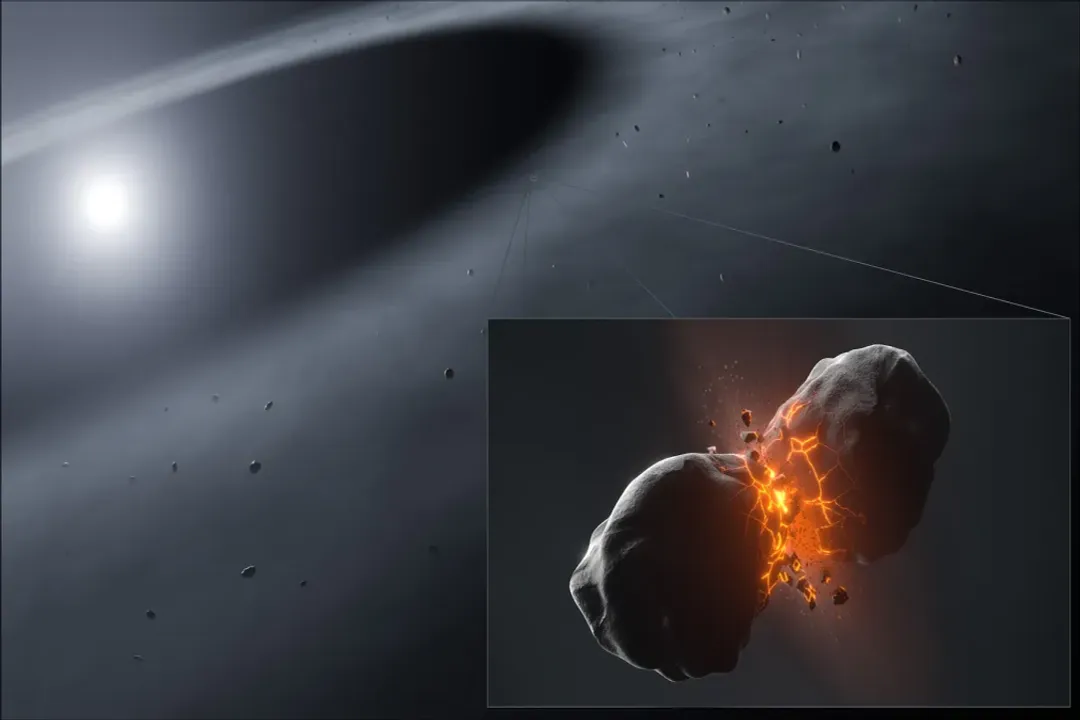
#Videos
These Are the Coolest Collisions In Space - YouTube
Related Questions
What was the primary reason for intentionally crashing the Galileo probe into Jupiter's atmosphere?Which mission deliberately impacted a permanently shadowed crater near the lunar south pole to analyze ejected material for water ice?What specific terrestrial error caused the loss of the Mars Climate Orbiter in 1999?Which two types of celestial bodies are mentioned as the primary targets for deliberate, high-energy kinetic impacts by human-made objects?Why were probes like Galileo and Cassini deliberately steered into the atmospheres of giant planets at the end of their missions?What concept explains the caution exercised regarding intentionally crashing functioning satellites onto the Martian surface?What was the explicit scientific goal of the DART mission involving a satellite impact?What was the ultimate fate of the Cassini spacecraft following its productive mission studying Saturn?What is the recurring fate for probes that attempt to land on Venus?How does the end-of-mission history for terrestrial planets like Mars generally differ from that of gas giants like Jupiter?