What characteristic defines the paradox of nebulae regarding size and mass?
Answer
Gigantic yet having almost no mass.
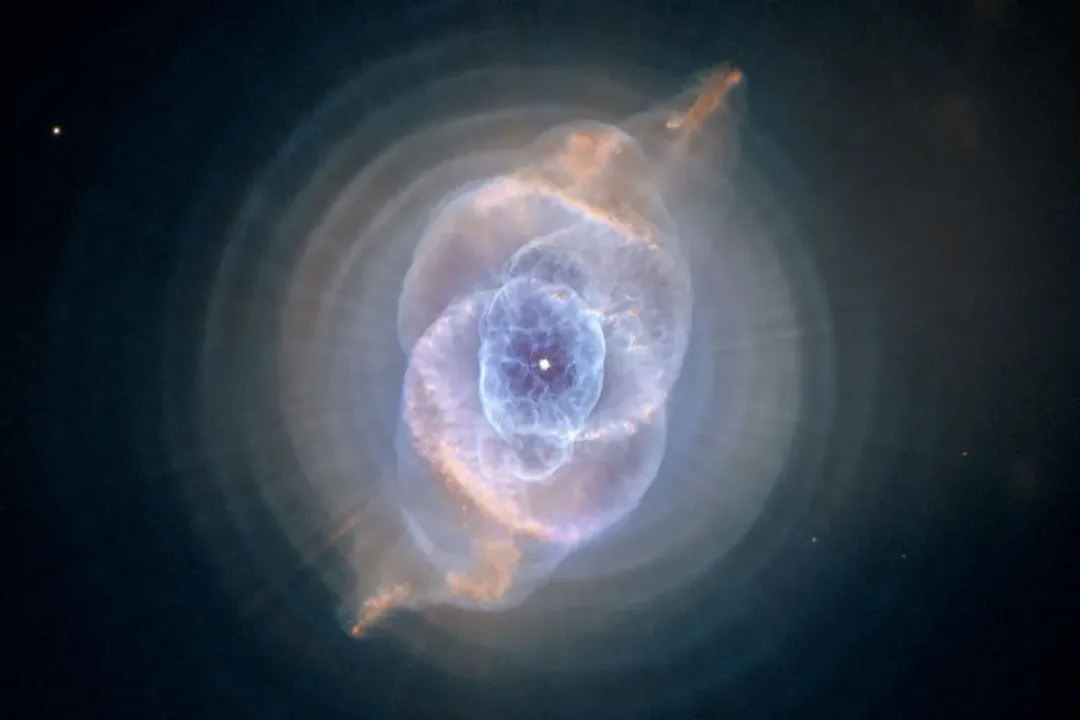
Nebulae present a significant paradox: while they are immense structures, often spanning hundreds of light-years, the material within them is profoundly rarefied, meaning the gas and dust are extremely spread out. This results in an extraordinarily low density, far less than the best vacuum achievable on Earth. The textual comparison emphasizes this by stating that a volume of nebula material equal to Earth's volume would weigh only a few kilograms. This combination of vast scale and near-negligible mass is a defining physical trait of these interstellar structures.
Related Questions
What is the Latin term from which the word nebula is derived?What gas constitutes approximately 90 percent of a typical nebula's observable material?What characteristic defines the paradox of nebulae regarding size and mass?How do Emission Nebulae (H II Regions) generate their characteristic glow?What characteristic color often results from light scattering in Reflection Nebulae?Why were Planetary Nebulae mistakenly given their name centuries ago?What famous structures within the Orion Nebula (M42) showcase active star formation?What unique physical extreme is associated with the Boomerang Nebula?Which famous object serves as a striking example of a Dark Nebula, seen as a silhouette?When observing nebulae visually versus via long-exposure camera integration, what difference is noted?