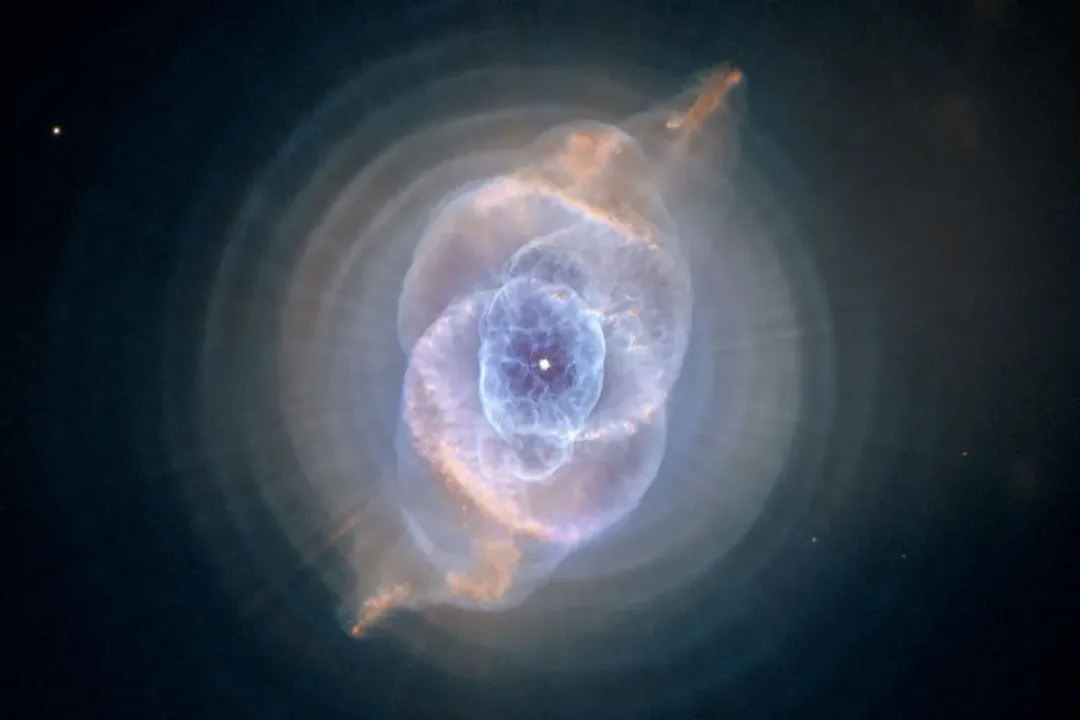
When observing nebulae visually versus via long-exposure camera integration, what difference is noted?
Visual observation yields faint, colorless grey shapes, unlike camera images.
There is a profound perceptual difference between how the human eye views nebulae and how electronic detectors capture them over time. Modern observatories like Hubble and Webb use long integration times (minutes or hours) to collect sufficient photons, filtering specific elemental emissions (like ionized hydrogen or oxygen) and mapping them to visible colors in a composite image. Conversely, the human eye, requiring immediate signal collection, often perceives these same objects, even bright star-forming regions like the Swan Nebula, as faint, colorless grey shapes because there are insufficient photons hitting the rods and cones quickly enough to register the subtle spectral colors inherent in the gas.