Why do atomic hydrogen ($ ext{H}$) atoms combine into molecular hydrogen ($ ext{H}_2$) within dense molecular clouds?
The dense interior shields them from ultraviolet radiation
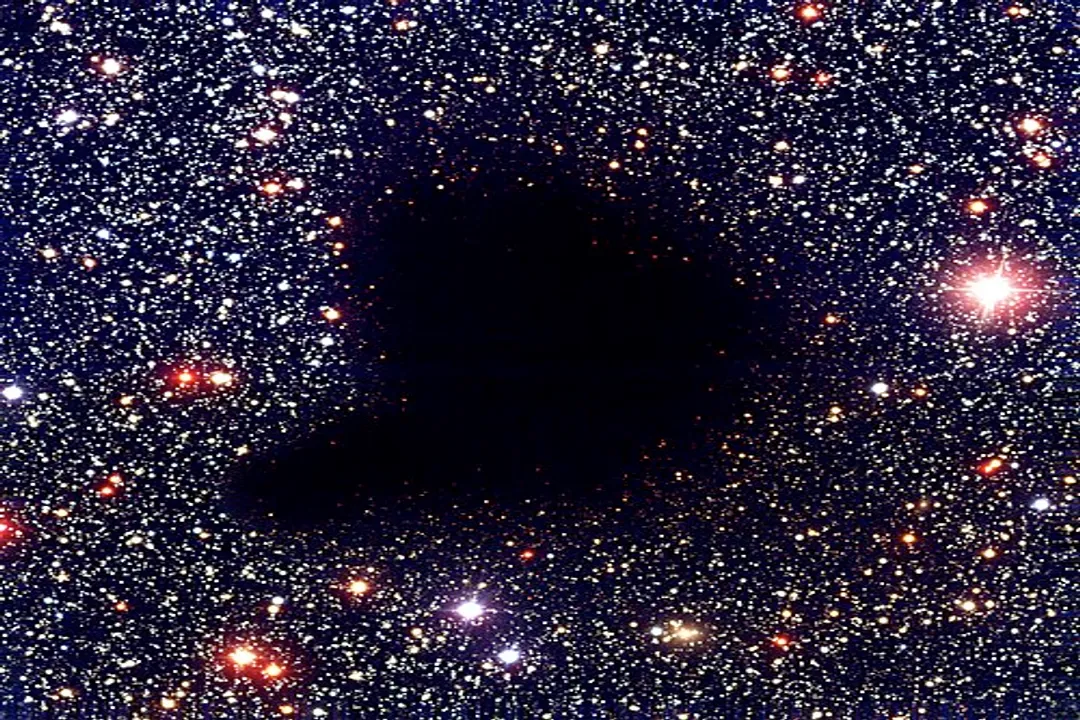
Atomic hydrogen ($ ext{H}$) is highly susceptible to being broken apart, or dissociated, by the harsh ultraviolet radiation emanating from nearby hot stars. For hydrogen to convert into the more stable molecular form ($ ext{H}_2$), it must be protected from this energetic radiation. Within the structure of a molecular cloud, the significant density of the gas itself, along with the presence of dust grains, creates an opaque environment. This shielding effect prevents the energetic UV photons from penetrating deep into the core, allowing the atomic hydrogen to survive long enough to combine into molecular hydrogen, a prerequisite for stellar formation.
#Videos
A newly found gas cloud lurks near the solar system | Science News