Can you grow lettuce in space?
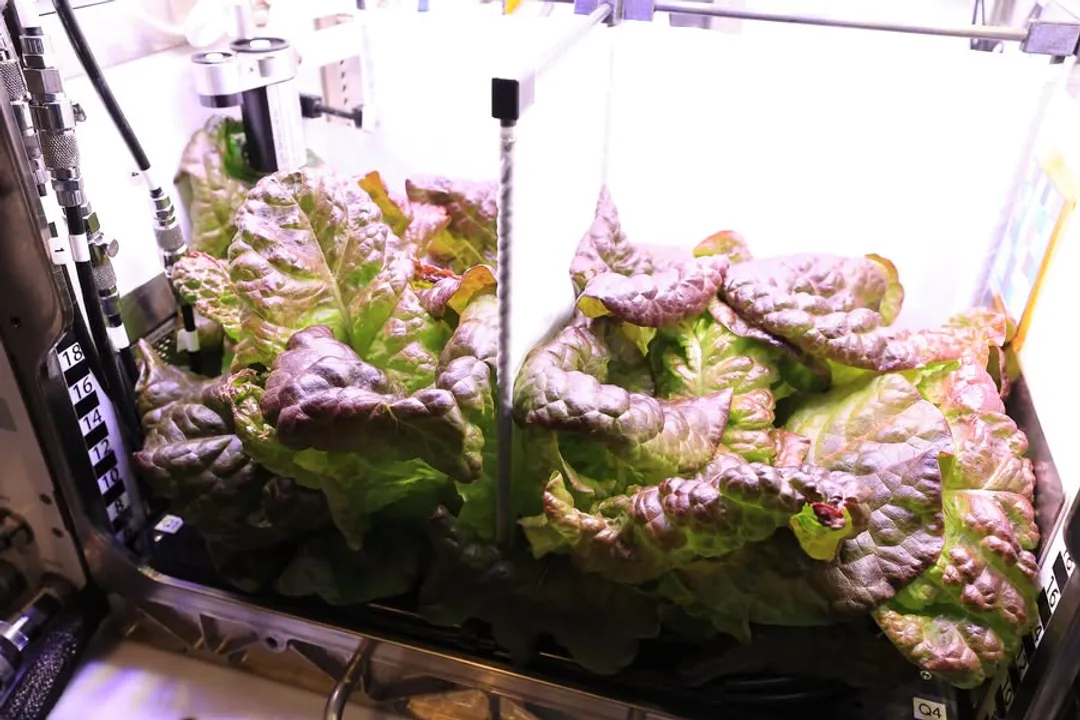
Cultivating leafy greens hundreds of miles above the Earth’s surface is no longer confined to science fiction novels; it is a documented reality aboard the International Space Station (ISS). [2][8] Astronauts have successfully nurtured and harvested lettuce, transforming a theoretical challenge into a tangible source of fresh provisions and vital scientific data for missions stretching into deep space. [1][5] This ability to grow food in orbit marks a significant milestone in making long-duration space habitation feasible, where relying solely on pre-packaged resupply missions becomes impractical. [5]
# Romaine Milestone
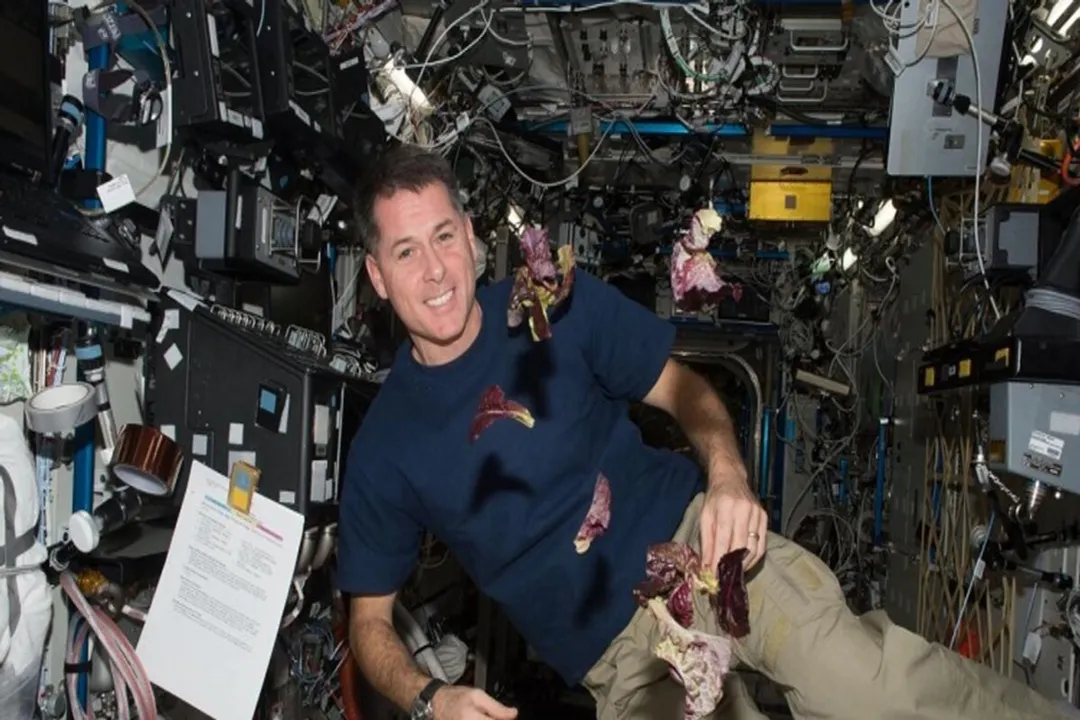
The successful cultivation of greens in space has focused heavily on lettuce varieties known for their relative hardiness and quick turnover. One of the most notable achievements involved the Outredgeous romaine lettuce. [5][9] This specific variety holds the distinction of being among the first leafy greens grown and eaten aboard the ISS. [9] The initial experiments demonstrated that the plants could germinate, grow, and mature successfully in the unique microgravity environment. [2] The success wasn't just about producing a plant; it was about proving that the complex biological processes—from root development to leaf formation—could operate reliably under controlled artificial conditions. [8]
# Growth Habitat
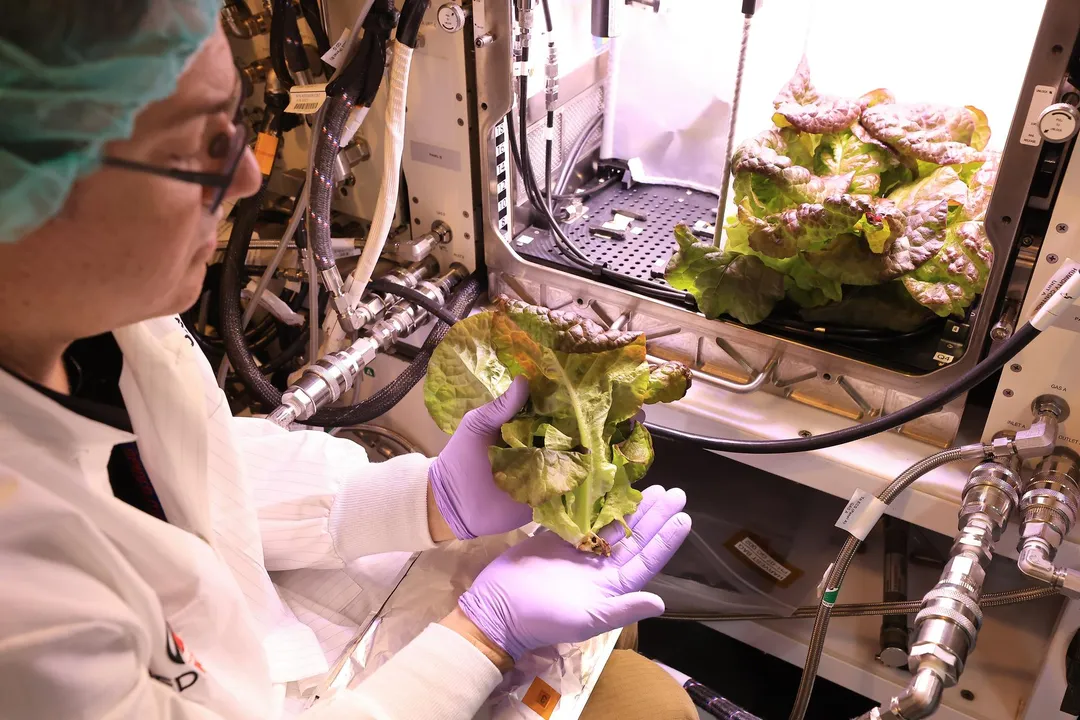
The system used to nurture these offworld vegetables is designed to be compact, efficient, and safe for a crewed spacecraft. NASA developed a plant growth system called Veggie. [2][4] This chamber acts as a small, contained garden, designed to provide the necessary inputs without creating a mess in the sensitive station environment. [4]
The plants aren't simply suspended in air; they rely on specialized "plant pillows". [5] These pillows are essentially self-contained growth modules, pre-loaded with seeds, a growth medium, and slow-release fertilizer. [5] The astronauts are primarily responsible for providing water and monitoring the system, minimizing the hands-on time required for daily care. [4] Crucially, the lighting system relies on banks of LEDs, typically favoring red and blue wavelengths, which are most efficient for photosynthesis, supplemented by some green light to allow the human eye to perceive the foliage as a natural green color. [6]
# Growth Context
While the immediate environment in the Veggie chamber is vastly different from a terrestrial field, the underlying scientific principles of controlled environment agriculture closely mirror advanced farming techniques used here on Earth. [6] The challenge in space revolves around managing water, nutrients, and light within a closed loop where gravity cannot assist in nutrient distribution or drainage. [7]
While the space setup minimizes external variables, the core principles of maximizing yield in a constrained volume are identical to high-tech terrestrial vertical farms. [6] On Earth, energy cost is a primary driver in choosing a light spectrum; in space, the priority shifts slightly toward optimizing astronaut time and minimizing the mass of consumables and waste produced, even if the energy source itself is plentiful via solar arrays. [6] The targeted light recipe—heavy on red and blue LEDs—is engineered for peak photosynthetic efficiency, a practice common in indoor agriculture globally to reduce operational energy overhead. [6]
# Crew Morale
The decision to grow lettuce goes far beyond simply adding a garnish to a space meal; it addresses fundamental human needs during long-duration isolation. [5] For astronauts aboard the ISS, access to fresh food offers a significant psychological boost. [5] Packaged, shelf-stable meals, while nutritious, lack the sensory stimulation of fresh produce. [5] The ability to see, tend, and harvest living plants provides a vital connection to Earth and routine, which can alleviate the mental strain of confinement and isolation. [5] Furthermore, fresh produce supplies vitamins and antioxidants that may degrade over the many months that pre-packaged supplies endure during transport and storage. [5]
# Harvest Science
Once the lettuce reaches maturity, the process transitions from cultivation to careful scientific study and preparation for consumption. [1] Astronauts carefully harvest the leaves, taking care to collect samples for scientific analysis before eating. [1] This analysis is essential to ensure the produce is safe to consume, checking for microbial contamination or unexpected chemical changes that the space environment might have induced. [1][2]
The actual eating process itself is an event. After harvesting, the greens are often washed with a purified water solution before consumption. [1] To enhance the sometimes muted flavor profile experienced in microgravity, astronauts frequently dress the space lettuce with an acidic dressing, like a vinaigrette, which helps bring out stronger tastes. [2][5] The lettuce harvested for the Veggie program has often been consumed fresh shortly after picking, although some samples are sometimes frozen for return to Earth labs to study plant development in detail. [1]
The initial growth cycles often revealed that while the plants matured sufficiently, their flavor profile sometimes lacked the intensity of their terrestrial counterparts. This can be attributed to the unique environmental stresses, or lack thereof, in orbit potentially affecting secondary metabolite production—the compounds responsible for strong taste and aroma. [5] To address this critical factor for long-term astronaut acceptance, future efforts focus not just on successful growth, but on flavor engineering. For instance, mildly stressing the plants near harvest time, perhaps by momentarily adjusting the nutrient solution concentration or the light cycle, might mimic environmental cues that trigger desirable taste compounds in the leaves, a method increasingly explored by high-end growers back on solid ground. [5]
# Future Farming
The successful growth of lettuce demonstrates a proof of concept that scales up for future deep-space missions, such as voyages to Mars. [5] Developing dependable, closed-loop life support systems that incorporate biomass production is non-negotiable for journeys lasting years. [7] The knowledge gained from fine-tuning the Veggie system—understanding light requirements, nutrient delivery, and atmospheric regulation for different crops—directly informs the design of larger, more complex agricultural modules needed for longer stays away from Earth. [5][7] Each successful harvest of romaine lettuce contributes a small but essential piece to the much larger puzzle of creating self-sustaining habitats beyond low Earth orbit. [5]
#Videos
Space Station Live: A First for Space Lettuce - YouTube
Related Questions
#Citations
NASA Harvests Lettuce for Space Station Study
Salads in space: NASA has learned to grow lettuce on the ... - CBC
Space Station Live: A First for Space Lettuce - YouTube
VEGGIE: growing lettuce in space. Take a look at one of the ... - Reddit
The man growing lettuce for space station salads - BBC
Space-grown lettuce success: 'Our growth techniques have many ...
Biofortification for space farming: Maximising nutrients using lettuce ...
Space Lettuce Is Out of This World Good - Science | HowStuffWorks
A legacy of plant studies 'Outredgeous' romaine lettuce variety was ...