What was the first satellite to use nuclear power?
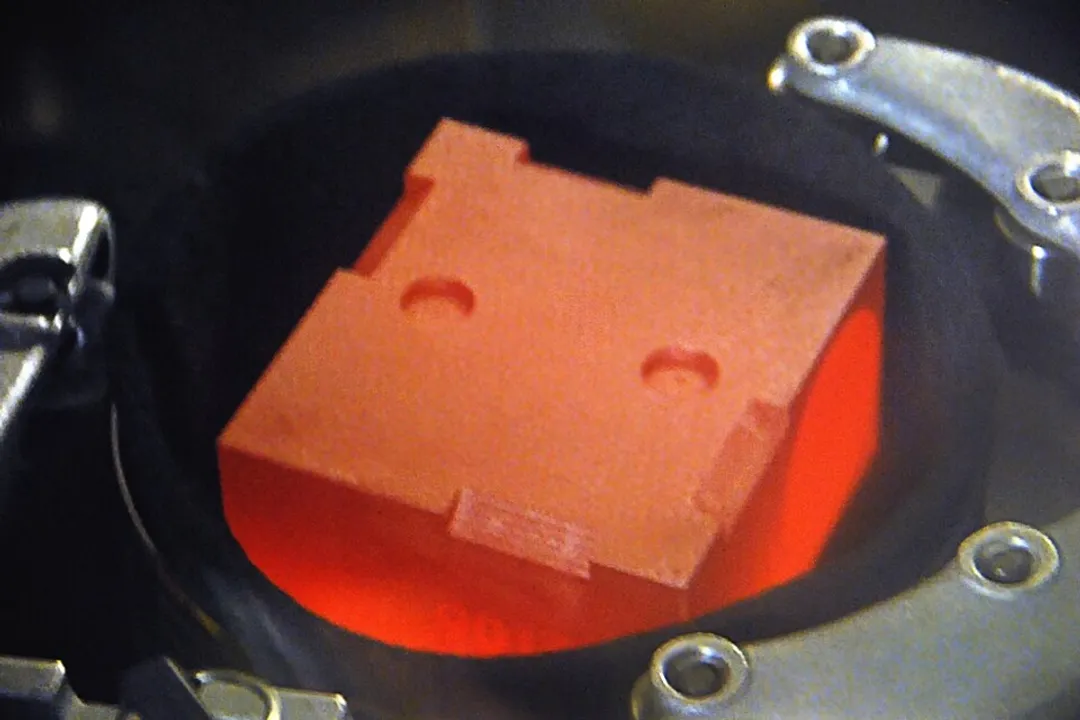
The question of which satellite claims the title of "first to use nuclear power" actually splits into two distinct, important milestones, depending on the technology involved: the first to use any nuclear source, and the first to employ a nuclear fission reactor. Technically, the earliest spacecraft to rely on a nuclear power source was the US Navy's Transit 4A satellite, launched in 1961. This marked the beginning of nuclear power utilization in orbit. However, the first time a true nuclear reactor was placed into space occurred several years later with the SNAP-10A technology demonstration in 1965. Understanding these two events requires looking at the difference between radioisotope generation and reactor technology.
# Early Power Needs
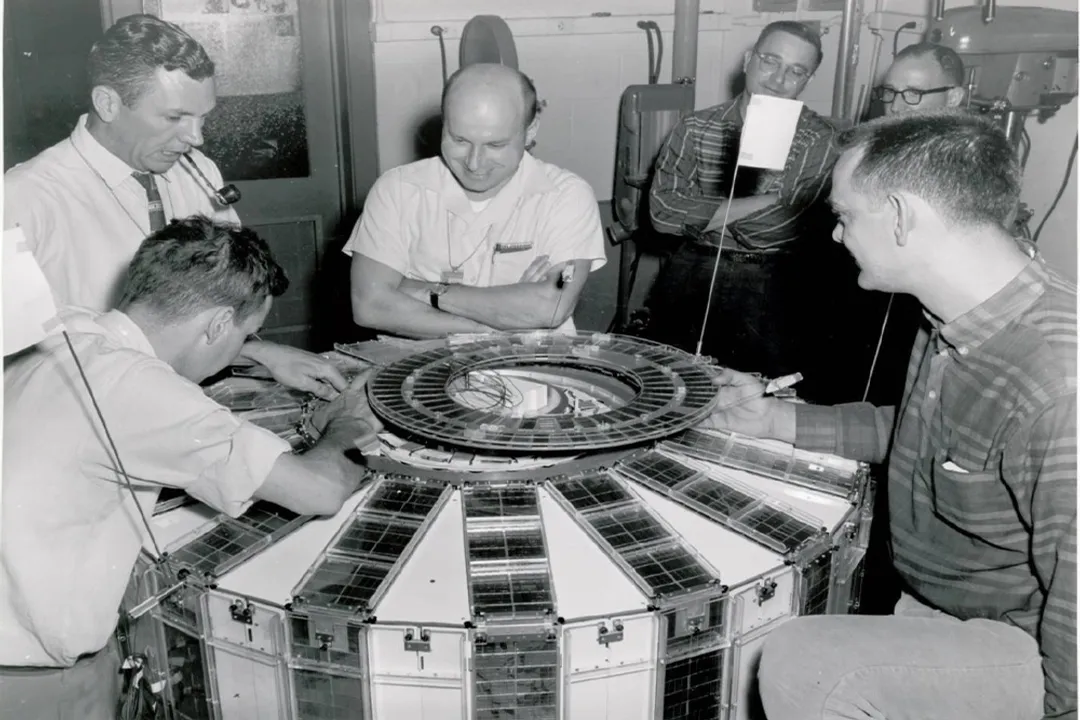
As space exploration matured beyond simple short-duration missions, the limitations of traditional solar arrays or chemical batteries became apparent for long-term navigation and deep-space probes. Solar panels are unreliable when a satellite passes into the shadow of a planet or when operating far from the sun, and batteries offer insufficient longevity for multi-year missions. The need arose for a reliable, long-lasting, and self-contained power source capable of functioning regardless of sunlight or mission orientation. This necessity drove the development of Radioisotope Thermoelectric Generators (RTGs) and, later, compact nuclear reactors for space applications.
# First Nuclear Power
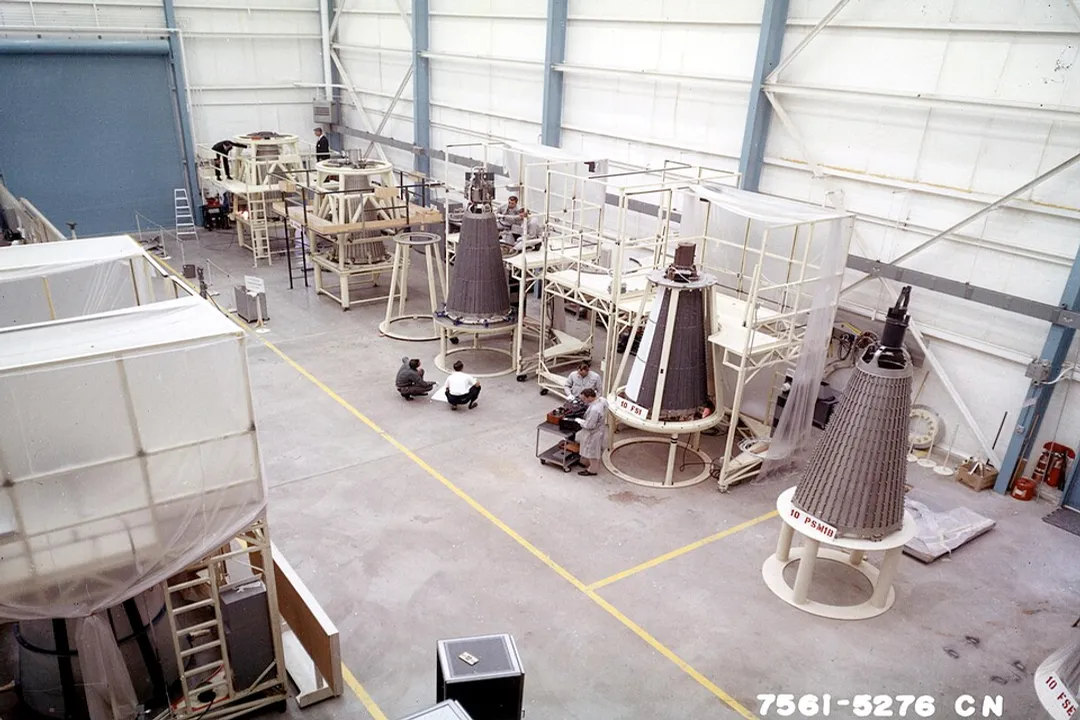
The very first successful application of nuclear power aboard a satellite involved an RTG, a system that converts the heat generated by the natural decay of a radioactive isotope into electricity. This was demonstrated by the Transit 4A satellite. Launched in 1961, Transit 4A was part of the US Navy’s program aimed at developing an orbital navigation system.
The power unit used was a specific type of SNAP (Systems for Nuclear Auxiliary Power) device. This specific RTG used Plutonium-238 as its fuel source. While the satellite was primarily a navigation tool, the SNAP device served as an Auxiliary Power Unit (APU), providing steady, continuous electrical current for non-essential systems or supplementary functions when solar power might have been inadequate. The success of Transit 4A proved the viability of using the consistent heat from radioactive decay to generate electrical power in the harsh environment of space. This event is celebrated as the starting point for 60 years of nuclear power usage in spacecraft, dating back to 2021.
# Reactor Milestone
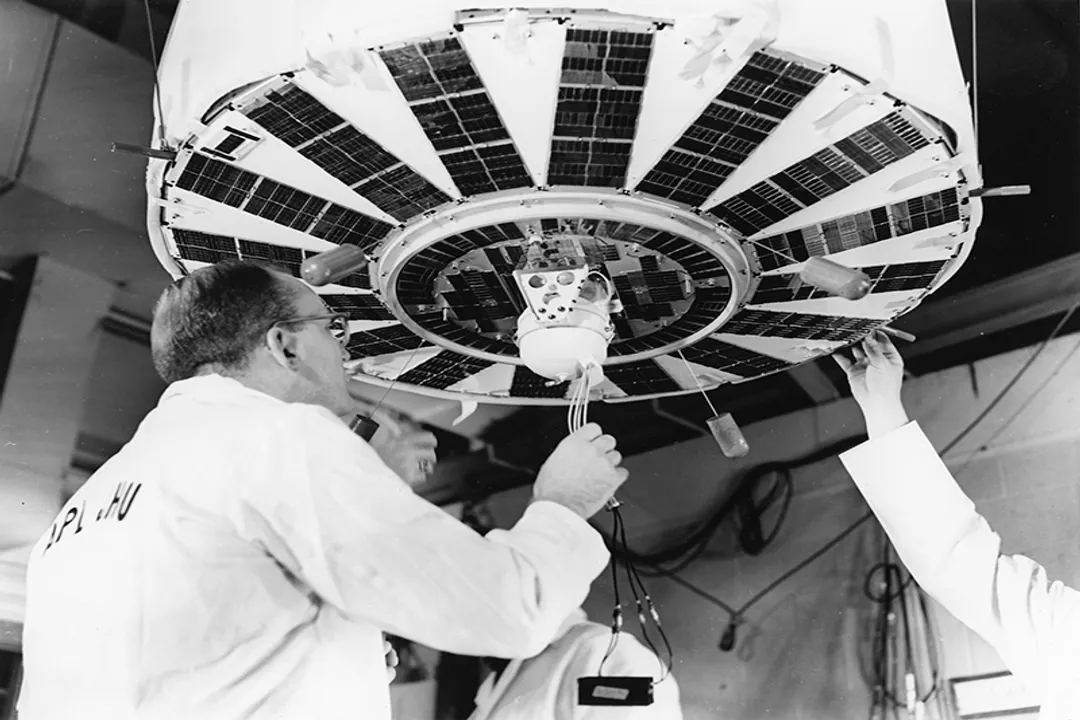
If the definition of "first" is restricted to the first time a self-sustaining, actively controllable nuclear fission reactor operated in orbit, then the milestone belongs to SNAP-10A. This system was launched on April 3, 1965, aboard a United States Air Force satellite.
SNAP-10A was not designed to power a functional operational spacecraft in the way Transit 4A was; rather, it was a dedicated technology experiment. The primary objective was to test the performance and safety of a small nuclear reactor operating in space and convert its thermal energy to electricity. The reactor generated approximately 500 watts of electrical power during its brief operational life, which lasted about 43 minutes before it was shut down. The system was designed for remote shutdown, showcasing a necessary safety feature for any future reactor-powered vehicle.
The fundamental difference is clear: Transit 4A used the slow, predictable heat from decay, while SNAP-10A utilized a controlled chain reaction of fission. This early reactor test, despite its brevity, paved the way for considering higher-power nuclear sources for future missions, such as those requiring significant energy for propulsion or high-rate data transmission.
# Power Mechanism Comparison
The differing approaches taken by the 1961 RTG and the 1965 reactor highlight the engineering trade-offs inherent in space nuclear power development. RTGs, like the one on Transit 4A, rely on the heat produced as Plutonium-238 decays. This process requires no moving parts or external initiation, resulting in extremely high reliability and a lifespan measured in decades, though the power output is relatively low and declines slowly over time.
| Feature | RTG (Transit 4A, 1961) | Fission Reactor (SNAP-10A, 1965) |
|---|---|---|
| Power Source | Isotopic Decay (e.g., Pu-238) | Controlled Nuclear Fission |
| Power Output | Low (tens to hundreds of watts) | Higher (SNAP-10A produced 500 W) |
| Control | Passive (decay rate cannot be altered) | Active (reactor can be started/stopped) |
| Mission Role | Auxiliary/Long-term trickle charge | Technology Demonstration |
When considering these two early steps, it becomes apparent that the early space agencies were testing the waters cautiously. Starting with the low-risk, passive heat of an RTG for a functional mission like navigation, and then graduating to an active, higher-power fission experiment demonstrates a measured approach to increasing on-orbit power capabilities. The engineering complexity and shielding required for a fission system far outstrip those of an RTG, making the 1965 flight a far greater technological leap than the 1961 deployment.

# Longevity and Trust
The ongoing use of radioisotope power systems in subsequent decades underscores the trust placed in the stability and endurance of RTG technology. Nuclear power in space is not a historical footnote; it has been a consistent component for more than half a century. Systems like those on the Voyager probes, for instance, rely on this long-term decay heat for essential functions today, demonstrating the incredible longevity of the basic RTG principle proven by Transit 4A.
Looking back at the 1960s, the commitment to launching a nuclear reactor, even a small one like SNAP-10A, carries significant weight regarding public perception and engineering confidence. In an era where launch vehicle reliability was still developing, deliberately placing a fission system into orbit represented a profound statement of belief in both the technology and the safety protocols surrounding it. Successfully deploying a reactor, even as a test, required an extremely high level of assurance that the system would remain contained and that the launch vehicle would perform flawlessly—a testament to the rigor applied by the involved defense and energy departments. While SNAP-10A proved the principle, the sheer simplicity and long-term resilience of the RTG model have arguably made radioisotope power the more common workhorse for deep-space missions requiring continuous, moderate energy.
Related Questions
#Citations
The first satellite 🛰️ powered by nuclear fission was launched in ...
History of Space Nuclear Power - Department of Energy
SNAP-10A - Wikipedia
60 Years on, Nuclear Power Still Enables Pioneering Space Missions
50 Years of Nuclear-Powered Spacecraft: It All Started with Satellite ...
NASA marks 60 years of nuclear power in space
[PDF] Nuclear Power on the Moon