Who was the first space traveler?
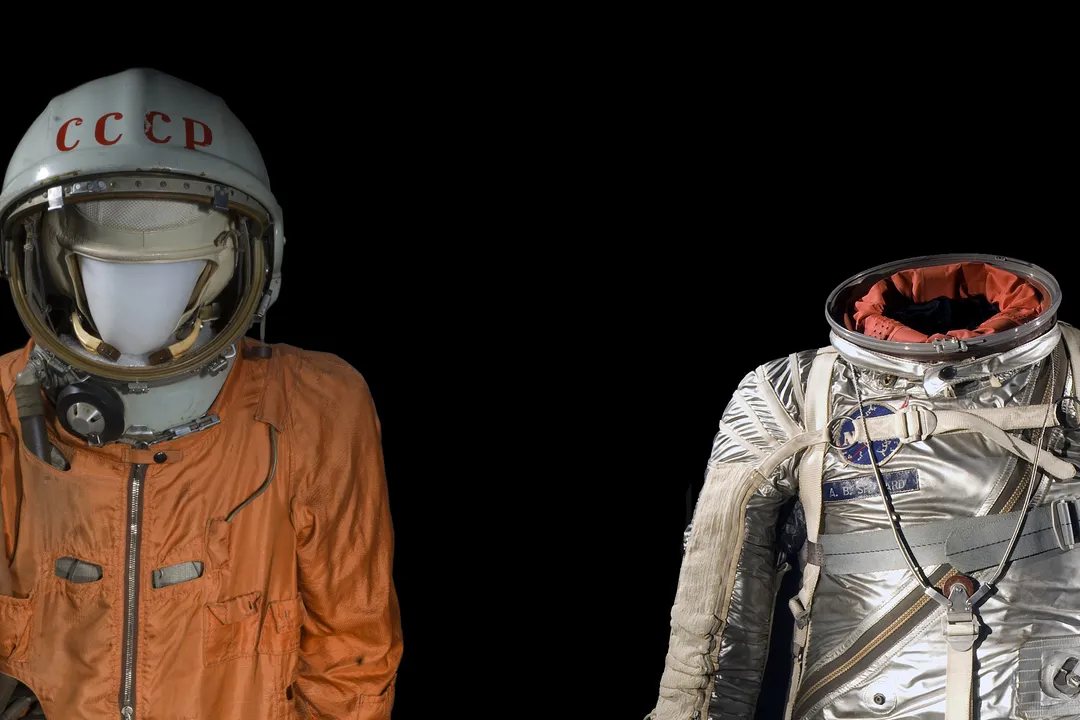
The honor of becoming the first human to venture into outer space belongs to a citizen of the Soviet Union, Yuri Alekseyevich Gagarin, a name that instantly became synonymous with humanity’s reach for the stars. On April 12, 1961, this 27-year-old major piloted the Vostok 1 spacecraft, completing a single orbit of the Earth and instantaneously etching his achievement into history. His flight, lasting 108 minutes from launch to landing, confirmed that a human being could survive the rigors of launch, weightlessness, and re-entry, officially opening the era of human spaceflight.
# Soviet Selection

The path to becoming the first man in space was exceptionally rigorous and highly secretive, a testament to the political stakes involved in the Space Race against the United States. Yuri Gagarin was born in a rural village in the Smolensk region, the son of a collective farm carpenter and a milkmaid. His early life was marked by the hardships of the Nazi occupation during World War II, an experience that forged a deep-seated determination in him. Before his historic flight, Gagarin was a military pilot, having graduated from the Soviet Air Force's first officer school in Orenburg.
The final group selected for cosmonaut training, dubbed the "First Twelve," consisted of the cream of Soviet military aviation, all of whom were under 30 years old and less than 5 feet 7 inches tall. This height restriction was likely due to the very tight confines of the Vostok capsule. Gagarin’s competition for the prime slot was fierce, primarily involving Gherman Titov. Despite the high pressure, Gagarin possessed a rare combination of technical skill, physical endurance, and an engaging, humble public persona that ultimately favored his selection by the Soviet leadership. His calm demeanor under pressure during simulated conditions reportedly stood out to his superiors.
# Vostok Craft
The spacecraft that carried Gagarin was the Vostok 3KA capsule, part of the Vostok program. This pioneering vehicle was comparatively rudimentary by later standards, designed primarily for the singular purpose of achieving this first human orbital flight. The entire mission was highly automated; ground control could only intervene in emergencies, as the Soviet leadership was uncertain if a human could function effectively in zero gravity. Gagarin was only provided with a sealed envelope containing the necessary codes to take manual control, a measure intended only for catastrophic scenarios.
The Vostok design was deceptively simple on the outside, but the internal systems were complex for their time. The descent section was a sphere, designed to withstand the extreme heat of atmospheric reentry. For Gagarin, the primary concern, after the successful launch, was the automatic control system functioning correctly throughout the single orbit. The entire Vostok 1 mission profile was tightly scripted: launch, orbit, and then a series of retrorockets firing to begin the descent back to Earth.
# The Flight Profile
The launch occurred at Baikonur Cosmodrome on April 12, 1961, at 09:07 Moscow Time (06:07 UTC). As the powerful Vostok rocket lifted off, Gagarin famously uttered the word Poyekhali!, which translates to Let's go! or Off we go!. This spontaneous exclamation became one of the most famous phrases associated with the early space age.
Once in orbit, Gagarin confirmed that he felt fine and that weightlessness was not an issue, effectively debunking one of the major unknowns regarding human survival in space. He spent his time observing the Earth below him, reportedly remarking on the planet’s beauty, noting the distinctive blue color of the atmosphere and the blackness of space. He transmitted observations about the Earth's horizons and the way light behaved, providing the first human visual data from orbit. The complete mission was just shy of two hours, but it was long enough to circle the globe once.
# Rivalry Ascent

While Gagarin was achieving this historic first, the American space program, Project Mercury, was actively pursuing a similar goal. The Soviet success immediately placed the United States on the defensive in the eyes of the world. Just under a month later, on May 5, 1961, the US launched its first astronaut, Alan Shepard, on a suborbital flight aboard Freedom 7.
The crucial distinction between Gagarin's flight and Shepard's—often highlighted in retrospective analyses—is the orbital nature of the Soviet mission. Gagarin completed a full orbit, proving long-duration capability, whereas Shepard’s flight was ballistic, lasting only about 15 minutes and reaching an altitude of 116 miles without ever circling the planet. Although both were monumental achievements in rocketry and human endurance, the full orbit gave the Soviet Union a significant propaganda and technological victory in the eyes of many observers. The Soviets had achieved the "first in space," while the Americans achieved the "first in space and returned safely," though the latter had been performed by a dog months prior. This historical context underscores the immense pressure on the American space program following Gagarin’s flight.
| Traveler | Nation | Date | Duration | Flight Type | Key Achievement |
|---|---|---|---|---|---|
| Yuri Gagarin | USSR | April 12, 1961 | 108 minutes | Orbital | First human in space; completed one orbit |
| Alan Shepard | USA | May 5, 1961 | ~15 minutes | Suborbital | First American in space |
| Data derived from comparison of mission profiles. |
The rigor of training differed markedly as well. While American astronauts were highly trained test pilots, the Soviet cosmonauts underwent training that emphasized physical endurance and psychological fortitude to an extreme degree, sometimes involving centrifugal forces and isolation chambers that would test the limits of human tolerance. The decision to proceed with the orbital flight, despite the known risks of the untested Vostok capsule, highlights a willingness to accept a higher degree of immediate danger for the sake of securing the historical first.
# Landing Circumstance
The dramatic conclusion of the Vostok 1 mission was perhaps the strangest detail of the entire event. Contrary to standard operating procedure in later decades, Gagarin did not land inside the Vostok capsule. While the capsule did parachute down, just as the craft was preparing to land, Gagarin ejected at an altitude of about 23,000 feet (7 kilometers). He then parachuted separately to the ground.
This ejection was dictated by Soviet regulations at the time, which required the pilot to bail out before the descent module touched down; otherwise, the flight would technically not have been officially recognized as a spaceflight by some international sporting bodies. Gagarin himself confirmed this maneuver upon landing. He landed safely near the city of Engels in the Saratov region, far from the intended landing zone. His unexpected arrival startled a local farmer and her granddaughter, who were the first people to greet the man who had just orbited the Earth.
# Global Acclaim
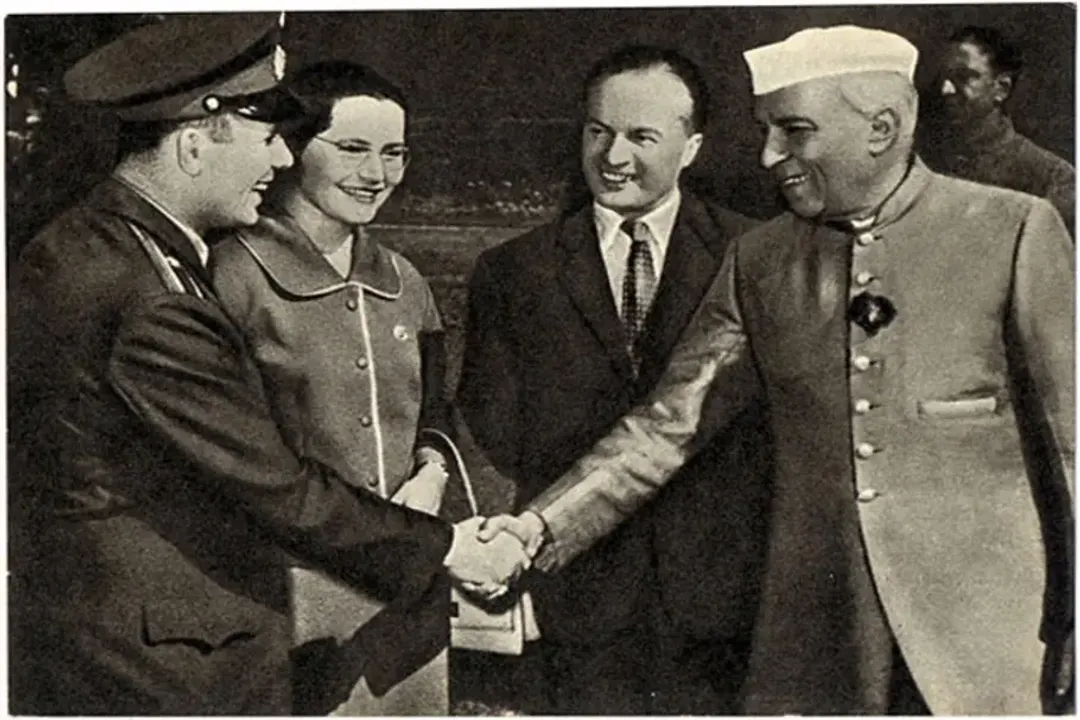
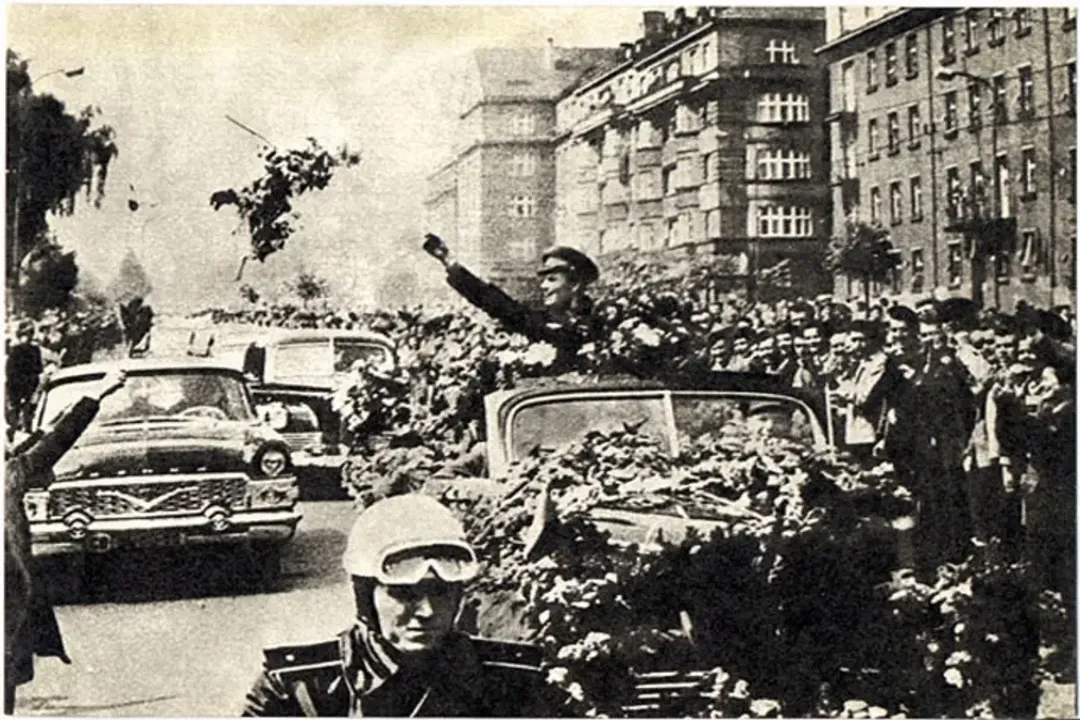
The reaction worldwide was immediate and ecstatic. Gagarin became an instant global celebrity, a symbol of human accomplishment rather than merely a Soviet achievement, though the political implications were certainly not lost on world leaders. He was feted by leaders and people across dozens of countries, embarking on a long international goodwill tour following his flight. He was awarded the title "Hero of the Soviet Union" and promoted to lieutenant colonel immediately after his return.
The significance of this achievement is recognized globally even today. The United Nations General Assembly declared April 12th as the International Day of Human Space Flight in 2011, marking the 50th anniversary of Gagarin’s flight. This observance is meant to celebrate the beginning of the space age and affirm the importance of space science and exploration for the benefit of all humanity. This global recognition underscores that, despite the Cold War context, the act itself transcended politics.
When considering the sheer novelty of the experience, one can only imagine the internal processing required of Gagarin. He was the first human being to witness our planet as a single, unified sphere hanging in the void, a perspective that few before him had ever conceived, let alone experienced firsthand. This singular view from orbit is a profound shift in human consciousness—a moment where the abstract idea of Earth as a whole body became an observable, emotional reality for one person.
The subsequent career of Gagarin, while celebrated, was managed carefully by the Soviet state. Because he was too valuable a symbol to risk again, he was mostly barred from returning to space after Vostok 1. He trained as a backup for the Voskhod 2 mission and later worked on the Soyuz program, though his desire to fly again remained strong.
Another fascinating element of the Soviet approach, which contrasts with the later American process, involved the intense secrecy surrounding the mission parameters and even the cosmonaut’s identity immediately following the launch. While the Soviets quickly announced Gagarin’s success, many specific technical details about the spacecraft and the landing procedure remained classified for years. This secrecy served to maximize the psychological impact of the achievement during the height of the rivalry. In contrast, the American Mercury flights, though delayed, were highly publicized, with astronauts like Shepard appearing extensively before and after their flights, embodying a more open, public-facing approach to space exploration.
Yuri Gagarin’s life was tragically cut short in 1968 when he died during a routine training flight in a MiG-15UTI jet, just a few years shy of seeing the Moon landing. His legacy, however, is secured not just by the date of his flight, but by the foundational knowledge he brought back: that human beings could indeed survive and function in the final frontier. His brief 108-minute orbit was the crucial, irreversible step that launched the entire human future beyond Earth’s atmosphere.
#Videos
Yuri Gagarin: The first man in space - BBC News - YouTube
Related Questions
#Citations
Yuri Gagarin - Wikipedia
Racing to Space: Yuri Gagarin and Alan Shepard
Yuri Gagarin and Vostok 1, the First Human… - The Planetary Society
Soviet cosmonaut Yuri Gagarin becomes the first man in space
Mission Monday: Five fast facts about the first person in space
Firsts in Space - | The Schools' Observatory
International Day of Human Space Flight - the United Nations
Yuri Gagarin: The first man in space - BBC News - YouTube