Who was the first space traveller?
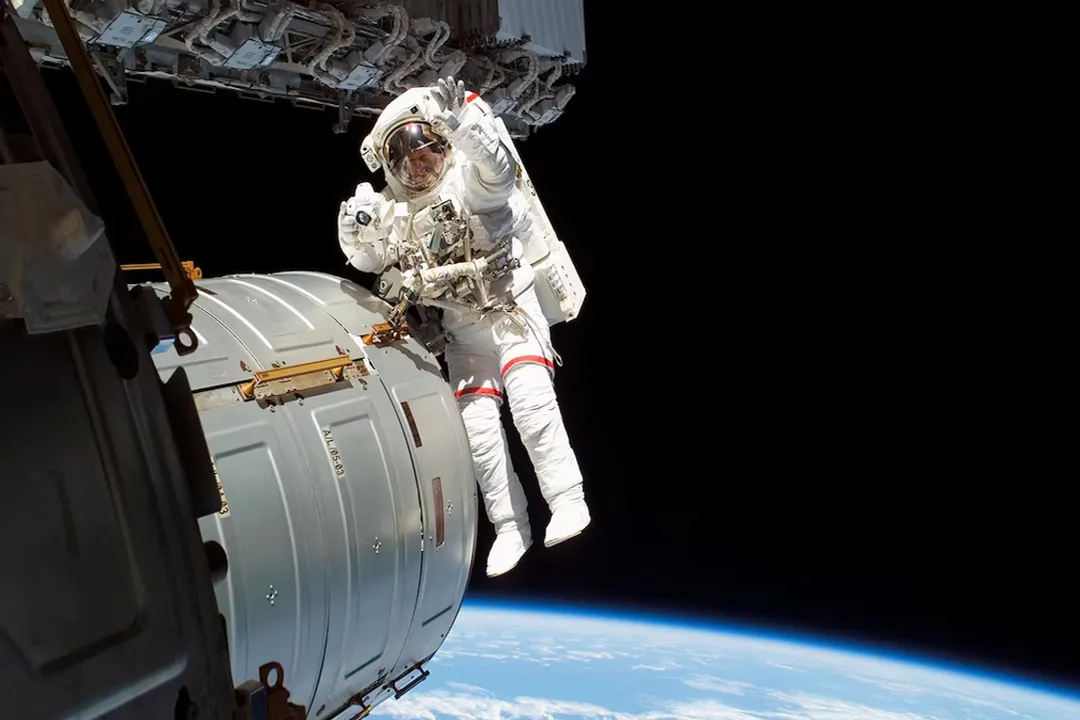
The moment humanity transcended the terrestrial boundaries and placed a living person into orbit remains one of history's most defining achievements. That honor belongs to Yuri Alekseyevich Gagarin, a Soviet cosmonaut, who became the first human to journey into outer space on April 12, 1961. [1][2] This single flight, clocking in at just over an hour and a half, irrevocably altered our planet's self-perception and cemented a new era of technological prowess.
# First Man

Yuri Gagarin was the individual chosen to represent the peak of Soviet engineering and human courage for this monumental endeavor. [1] His selection was the culmination of a rigorous training program designed to push the limits of human endurance and psychological stability. [1] While the world knew him as the icon of this achievement, the preparation involved intense physical and mental conditioning necessary for a mission where the outcome was far from guaranteed. [1]
His spacecraft, the Vostok 1, was launched from the Baikonur Cosmodrome, initiating what would become a short but profoundly significant voyage. [1] The achievement was not just a personal triumph for Gagarin but a massive symbolic victory in the intense technological competition characterizing the Cold War era. [1] This flight set the precedent for all subsequent human forays beyond Earth’s atmosphere, making the name Yuri Gagarin synonymous with the dawn of human space exploration. [1][2]
# Orbital Flight
The specifics of Gagarin's venture are essential to understanding the scale of the achievement, particularly when viewed against modern standards of space travel. [1] The Vostok 1 mission lasted a mere 108 minutes from launch to landing. [1] During this time, Gagarin successfully completed one full orbit around the Earth. [1]
The spacecraft’s descent phase itself presented considerable risk. While Gagarin ejected from the capsule at an altitude of about 7 kilometers (4.3 miles) and parachuted to the ground separately from the Vostok descent module, the flight profile was complex for its time. [1] The mission design, while groundbreaking, was remarkably straightforward compared to later, more complex rendezvous and docking procedures seen in later missions. [1] Thinking about that initial flight, one can observe that the entire operation was reliant on pre-set parameters, with mission control having limited capability to intervene beyond pre-programmed contingency plans—a stark contrast to the real-time adjustments possible in today's highly automated capsules. The sheer audacity of sending a human into the unknown based on such a tightly choreographed, pre-planned sequence highlights the immense faith placed in the rocketry of the era. [1]
The Vostok spacecraft itself was a small spherical module, essentially a pressure vessel designed to keep its lone occupant alive during the vacuum exposure and high G-forces of launch and re-entry. [1] The fact that this relatively simple machine carried the weight of human aspiration into space demonstrates an engineering philosophy focused on achieving the absolute minimum required for a first success: getting a human up, around, and safely back down. [1]
# Defining Spaceflight
The definition of "space traveler" often hinges on verifiable, technical criteria—namely, crossing the Kármán line or achieving an orbit around Earth. [1] This precision becomes relevant when considering discussions that sometimes venture into mythology or allegory. For instance, in contemporary political discourse, there have been assertions suggesting that figures from ancient mythology, such as the Hindu deity Hanuman, could be considered the first space travelers. [7][8]
However, when adhering to the scientific and historical definition established by achievements like Gagarin’s, these narratives fall outside the scope of verifiable human spaceflight accomplishments. [1] Gagarin’s flight is the benchmark because it involved physical travel atop a controlled rocket system, traversing the physical vacuum of space, and returning to Earth, all documented and measured by objective scientific standards. [1][2] It is this objective measurement—the orbital mechanics, the time in space, the verifiable re-entry—that separates modern space travel from ancient stories or religious texts when establishing a concrete historical first. [1] The contrast between a physical, orbital journey and a metaphorical or divine ascent serves to underscore the tangible nature of Gagarin’s accomplishment. [7][8]
# Initial List
Gagarin’s flight initiated what quickly became a documented record of individuals achieving this milestone. The initial list of space travelers, categorized by their first flight, grew rapidly in the years immediately following April 1961. [3] This list tracks not just the astronauts and cosmonauts, but the chronological progression of nations capable of putting humans into orbit or on suborbital trajectories. [3]
For example, the immediate aftermath saw the swift succession of other individuals joining the ranks of those who had seen Earth from orbit. While Gagarin was the first, the competitive nature of the space race meant that the world would soon see further records broken: the first woman, the first multi-person crew, and the first spacewalker. [1] Maintaining an accurate, chronological list, as documented by organizations tracking these records, highlights the intense, step-by-step nature of the subsequent exploration efforts following that initial success. [3]
| Traveler | Nation | Date of First Flight | Mission |
|---|---|---|---|
| Yuri Gagarin | Soviet Union | April 12, 1961 | Vostok 1 |
| Gherman Titov | Soviet Union | August 6, 1961 | Vostok 2 |
| John Glenn | USA | February 20, 1962 | Friendship 7 |
This comparative data clearly shows the very tight sequence of achievements in the immediate aftermath of the very first flight, illustrating the rapid pace of technological development once the initial barrier was broken. [1][3]

# Exploration Echoes
The history of space travel is a continuum, built upon earlier dreams of reaching the stars. [6] Long before Gagarin, humanity dreamed of leaving Earth, an impulse that mirrors earlier explorations across oceans and continents. [6] However, the act of traveling to space introduced an entirely new variable: the hostile environment beyond the atmosphere, demanding entirely new solutions for survival and navigation. [1]
Gagarin's brief orbit provided the ultimate proof of concept. It transitioned space exploration from theoretical physics and engineering blueprints into a lived human experience. [6] The visual impact of seeing the Earth as a whole, blue sphere—an experience Gagarin confirmed—has become a defining element of astronaut testimony. [1][6] This single viewpoint shift, from being on the planet to observing it from the outside, is perhaps the deepest philosophical contribution of that 108-minute flight. It gave humanity an objective look at its home, a perspective that inspires further investigation into the cosmos even today. [6] The video documentation and imagery released of these early flights served as powerful tools, bringing that experience to millions who remained on the ground. [4][5] While Gagarin’s physical time in space was short, the psychological and scientific reverberations of that journey continue to influence every subsequent launch and every scientific discovery made beyond our atmosphere. [2][6]
#Videos
Yuri Gagarin Became The First Human In Space, 57 Years Ago Today
Related Questions
#Citations
Yuri Gagarin - Wikipedia
April 1961 - First Human Entered Space - NASA
The first human in space - YouTube
History of Space Travel | National Geographic Kids
"Think Hanuman Ji Was 1st Space Traveller": BJP MP Anurag ...
was he the first space traveller? A - Facebook
Anurag Thakur : Who was the first space traveller? Students: Neil ...