What fundamental environmental characteristic defines planets in the TRAPPIST-1 system?
Answer
They are tidally locked to the ultracool dwarf star
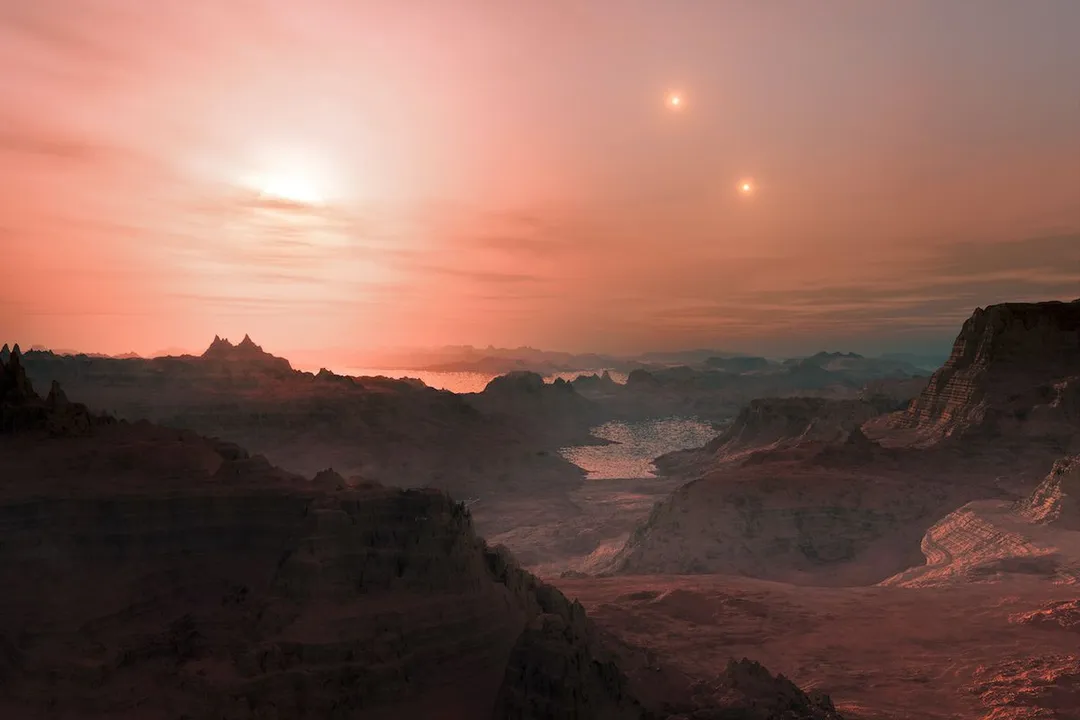
The planets in the TRAPPIST-1 system, which orbit an ultracool dwarf star, are situated so closely to their host that they have become gravitationally locked, or tidally locked. This means one hemisphere perpetually faces the star, enduring constant daylight and extreme heat, while the opposite hemisphere remains in perpetual darkness and intense cold. This locking mechanism creates severe temperature gradients across the planet, confining potential zones for stable liquid water to the twilight band, known as the terminator zone.
#Videos
Discovery of the Most Exciting Habitable Planet Near the Solar System
There are no known habitable exoplanets - YouTube
Related Questions
What prerequisite for life as we understand it is key to habitability searches?What mechanism keeps Europa's subsurface ocean liquid despite being far from the Sun?What chemical findings in Enceladus's plumes suggest an environment supporting life reactions?Why does liquid water not persist on the surface of Mars presently?What defines the classic Habitable Zone (HZ) utilized in exoplanet searches?What primary concern threatens the habitability potential of Proxima Centauri b?What fundamental environmental characteristic defines planets in the TRAPPIST-1 system?How does Kepler-186f's energy receipt compare to that of Earth?How do internal energy sources on icy moons expand the definition of habitability zones?What is the function of plate tectonics in maintaining Earth's long-term climate stability?