What planet is most likely to be terraformed?
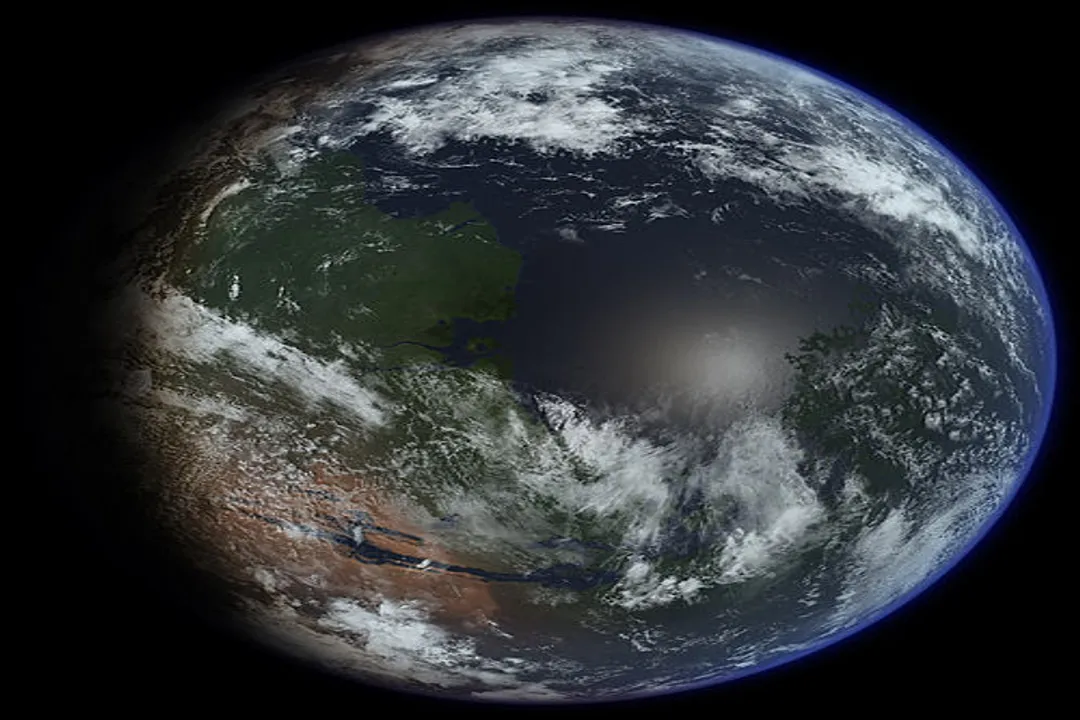
The prospect of transforming a desolate celestial body into a second home for humanity is one of science fiction's most enduring dreams, often called terraforming. [2] This massive undertaking seeks to engineer an alien environment—like that of Mars or Venus—to support terrestrial life, requiring changes to its atmosphere, temperature, and ecology. [2] When assessing the solar system for the most likely candidate, the discussion almost immediately centers on one world: Mars.
# Mars Focus

Mars presents the most feasible starting point within our solar system for creating a truly habitable environment. [4] It holds several key advantages over other potential targets. First, it has readily available water, primarily locked away as ice in its polar caps and subsurface regions. [9] Second, its day length is remarkably similar to Earth's, clocking in at about $24.6$ hours, which is conducive to biological rhythms. [4] Perhaps most critically, Mars already possesses a thin atmosphere composed mostly of carbon dioxide, providing a chemical starting point for building a thicker, warmer envelope. [9] While the challenges are immense, Mars represents a process of building up an environment, which appears less fundamentally difficult than dismantling one, as would be required elsewhere. [3][5]
# Martian Hurdles
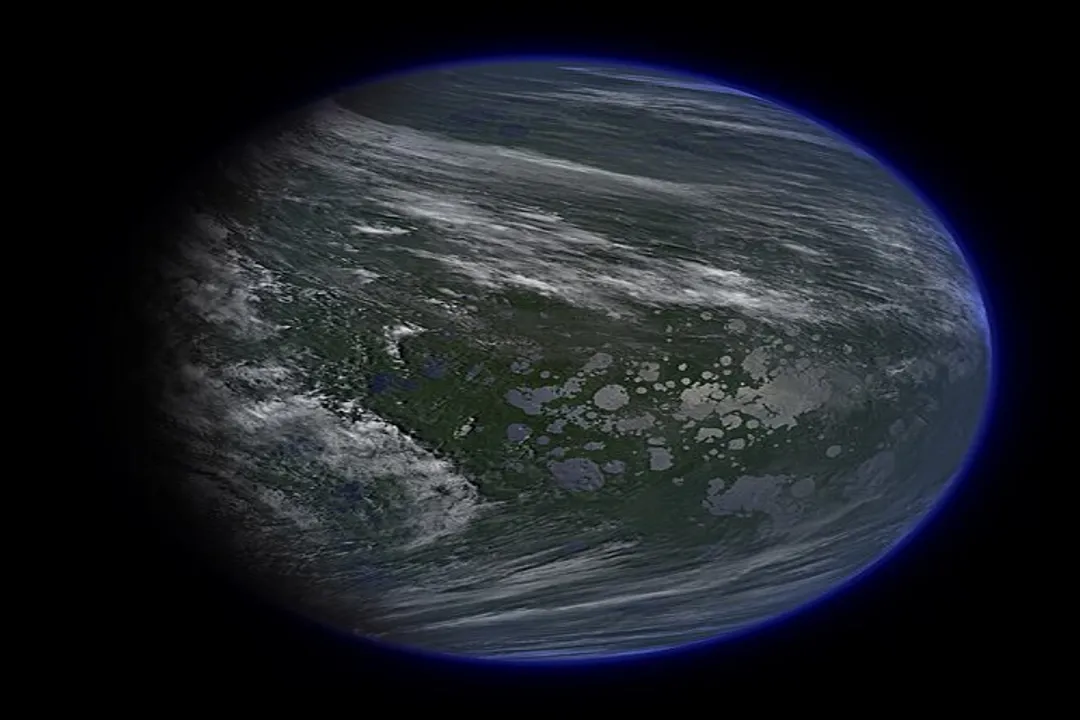
Despite its relative advantages, the Red Planet is a harsh mistress. The primary hurdle is the near-vacuum conditions. The atmospheric pressure on the surface is less than one percent of Earth's sea-level pressure, meaning liquid water cannot exist stably on the surface; it would either freeze or boil away instantly. [9] Compounding this is the intense cold; the average surface temperature hovers around . [9]
Beyond the thermal and pressure issues, Mars lacks a global magnetic field. [9] Earth’s magnetic field shields us from harmful solar and cosmic radiation and prevents the solar wind from slowly stripping away our atmosphere. Without this shield, any atmosphere we manage to generate on Mars would eventually be eroded away by space weather. [9] This lack of a magnetosphere remains arguably the single most difficult problem to solve in any long-term terraforming plan. [6]
Another factor often overlooked when considering long-term habitation is gravity. Mars has only about $38%$ of Earth’s gravity. [4] While a thin atmosphere can be added, and temperatures can be raised, the fundamental physics of planetary mass cannot be changed. Any colonists or future generations born there would develop under significantly lower gravitational loads, with unknown long-term effects on skeletal density, muscle mass, and cardiovascular health. [4] This biological constraint means that even a perfectly terraformed Mars might only be livable for short periods or require extensive technological countermeasures for permanent settlers, a requirement Venus or the Moon would share, but one unique to Mars in the context of atmospheric terraforming candidates.
# Venus Comparison
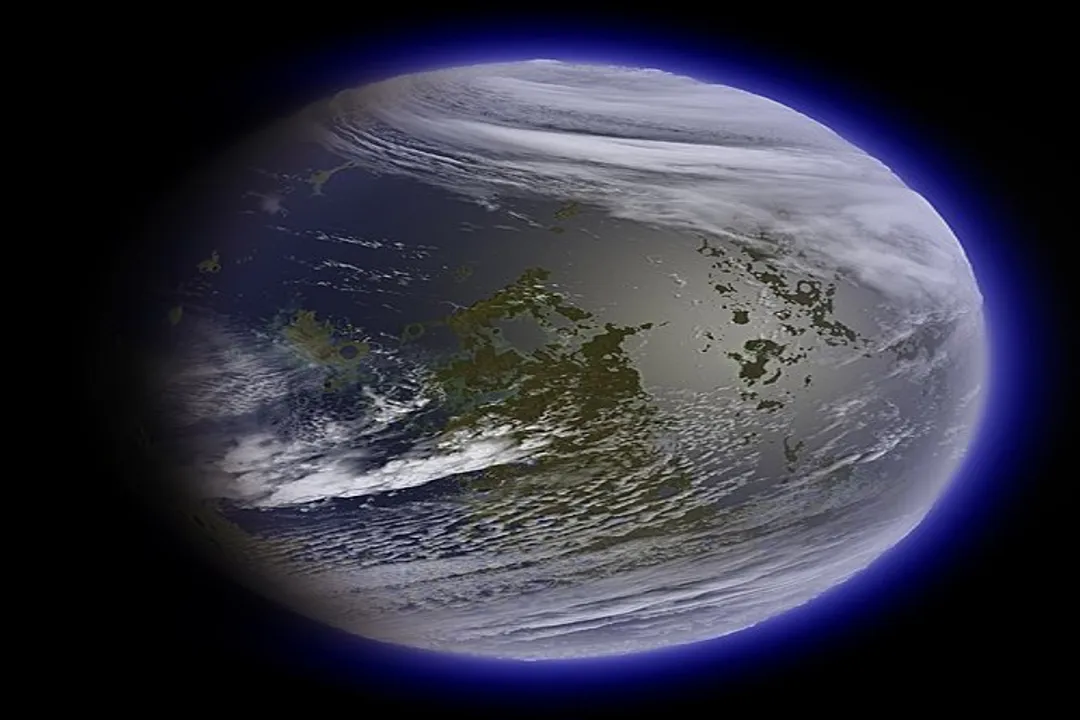
Venus is often brought up in discussions about planetary modification due to its size, which is quite similar to Earth's. [3] However, the path to making Venus habitable is vastly different and arguably more daunting than the Martian route. Venus suffers from a runaway greenhouse effect, resulting in a scorching surface temperature hot enough to melt lead, averaging around (). [3] Furthermore, its atmospheric pressure is crushing—about $92$ times that of Earth at sea level. [3]
To terraform Venus, engineers would first need to drastically cool the planet and then somehow remove the vast majority of its dense, toxic carbon dioxide atmosphere, a task orders of magnitude greater than simply thickening Mars's thin layer. [3][5] While concepts like using massive solar shades in orbit or introducing engineered organisms to consume the have been proposed, the energy and mass required to achieve the initial cooling are staggering. [3] In contrast, Mars requires adding energy (heat) and adding atmospheric components, a problem that seems slightly more tractable with present-day engineering projections. [9]
# Building Atmosphere
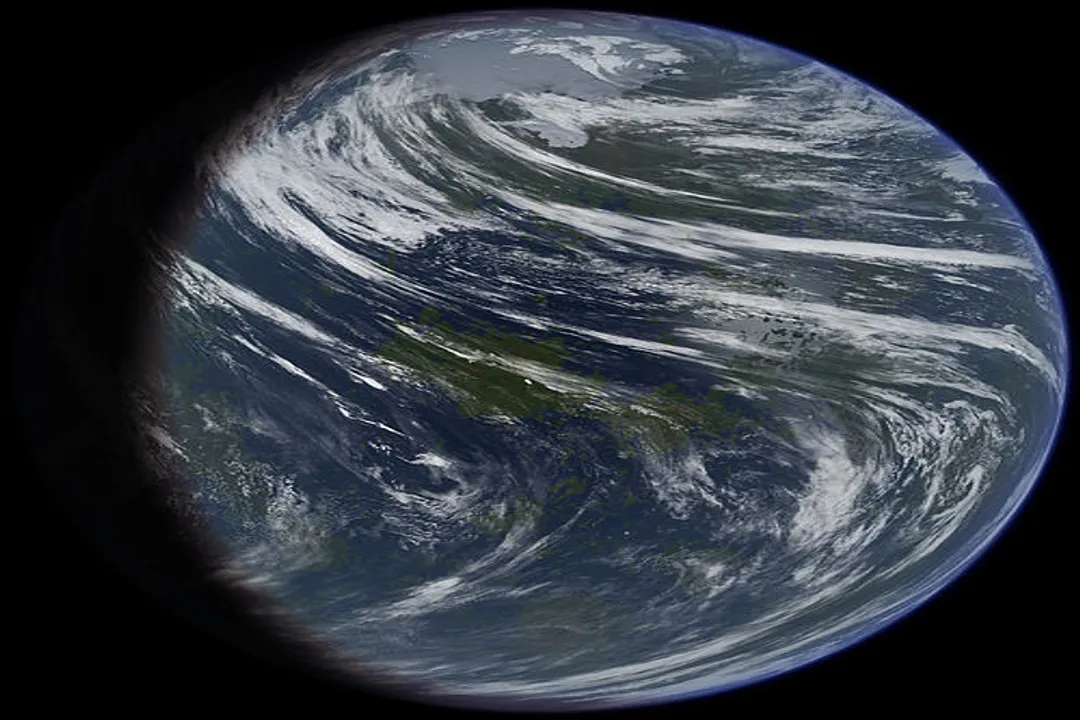
The central focus for Mars terraforming revolves around increasing the temperature and pressure sufficiently to allow liquid water to persist on the surface and sustain plant life. [9] This necessitates releasing large quantities of greenhouse gases trapped on the planet. [9]
One proposed technique involves melting the ice stored in the polar caps and within the regolith (Martian soil) itself. [9] If enough of this frozen carbon dioxide could be vaporized into the atmosphere, it would act as a powerful greenhouse agent, triggering a runaway warming effect that would sublimate even more and potentially water ice. [9]
Several methods have been suggested to initiate this warming:
- Orbital Mirrors: Large, thin mirrors placed in orbit could focus solar energy onto specific regions, like the polar ice caps, to kickstart the sublimation process. [9]
- Atmospheric Factories: Importing super-greenhouse gases, such as perfluorocarbons (PFCs) from Earth or other raw materials, which are far more potent than per molecule, to initiate warming quickly. [9]
- Surface Darkening: Spreading dark, low-albedo dust or lichen across the surface to absorb more solar radiation, thereby raising the local temperature. [9]
A key comparison point here is the nature of the required transformation. Mars needs a phase change: frozen gas to gaseous gas. Venus needs a total chemical recycling: excess gas into rock or space. The former is fundamentally about energy input and trapping heat; the latter involves large-scale planetary material management. [3][5]
# Moons and Minor Bodies
While Mars grabs the spotlight, other bodies are discussed by space settlement advocates, often requiring different approaches. The National Space Society (NSS) roadmap includes concepts for moons and asteroids, suggesting that completely new ecological niches might be built there. [6]
Titan, Saturn’s largest moon, possesses a dense nitrogen atmosphere and surface lakes of liquid methane and ethane. [4] However, its surface temperature is frigid, around (), and the chemistry is entirely alien to Earth's biology. [4] Terraforming Titan would involve massive heating and introducing oxygen and water while dealing with the challenges of low gravity and the distance from the Sun.
Europa, one of Jupiter’s moons, is famous for its subsurface ocean, which might contain conditions favorable for life as we know it, albeit deep beneath an ice crust. [4] Modifying Europa would look less like creating a breathable surface and more like creating deep-sea habitats adapted to extreme pressure and isolation.
In this context, bodies like Mars are considered superior because they offer a solid, sunlit surface and an existing (if thin) atmosphere that points toward a planetary rather than a localized solution. [1] While many moons and asteroids could support closed, artificial habitats—a form of paraterraforming—true surface-level, open-air terraforming within our solar system remains Mars's domain. [1]
# Scale and Timeline
The sheer scale of engineering required for even the most promising candidate, Mars, pushes any realistic timeline far into the distant future. Even if we achieved the immediate goal of releasing all known trapped from the polar caps, some estimates suggest this would only raise the pressure to about $30$ millibars—still insufficient to support liquid water or human life without a pressure suit. [9] The required mass of greenhouse gas might be far greater than what is currently known to be accessible on Mars. [9]
This highlights the gap between scientific feasibility and engineering reality. We know how we might warm the planet, but we lack the industrial base and the multi-century commitment necessary to execute it. [6] While the initial stages—creating a warmer, slightly denser atmosphere—might take centuries, achieving a fully self-sustaining biosphere capable of producing breathable oxygen could take millennia. [6] The entire process demands a multi-generational commitment spanning hundreds or thousands of years. [2] The consensus suggests that Mars is the most likely candidate because the physics are favorable in the long term, not because the endeavor is easy or imminent. [4]
#Videos
I Terraformed All The Planets In Our Solar System—Even Pluto...
How Hard Would It Be to Terraform Venus? - YouTube
Related Questions
#Citations
How many terraformable planets, moons, and other potential worlds ...
Terraforming - Wikipedia
Top 4 candidates in our solar system for terraforming - Big Think
Which planet or moon would be most feasible to terraform? [closed]
Which planet would be the easiest to terraform? - Quora
NSS Roadmap to Space Settlement Milestone 29: Terraforming and ...
I Terraformed All The Planets In Our Solar System—Even Pluto...
Is terraforming Mars possible? | Los Alamos National Laboratory