How many planets are in the Andromeda Galaxy?
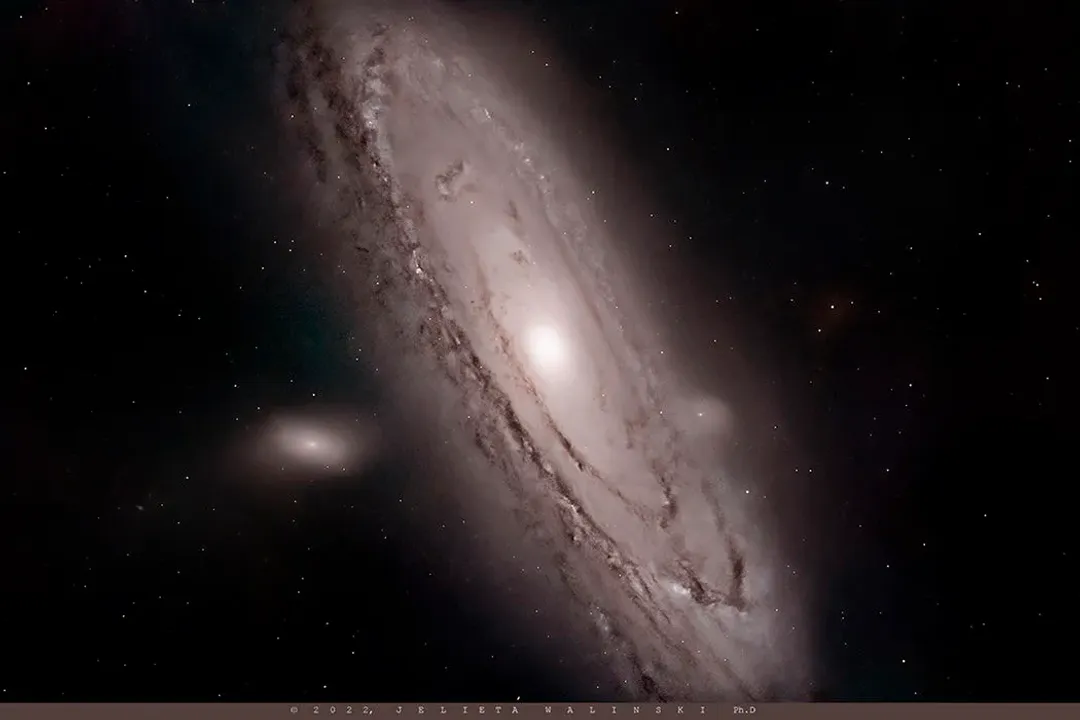
Located roughly 2.5 million light-years from Earth, the Andromeda Galaxy, also cataloged as Messier 31, stands as our closest major galactic neighbor. [1][7] While astronomers have mapped its vast spiral structure and identified billions of individual stars, confirming the existence of specific planets orbiting those distant suns remains an insurmountable challenge with existing technology. [2][3] Even though we understand the mechanics of solar systems, the physical distance renders the detection of individual exoplanets in this neighboring galaxy impossible for current observatories. [7][8]
# Detection Constraints
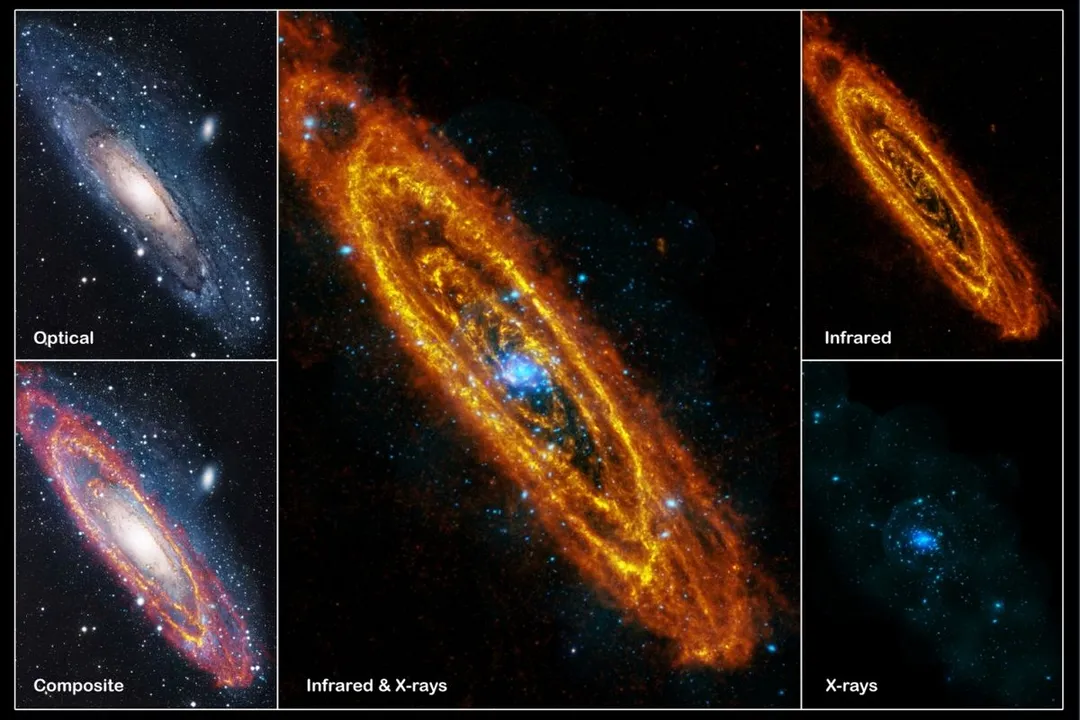
The primary reason we cannot count the planets in Andromeda is the sheer scale of the distance involved. In our own galaxy, the Milky Way, astronomers find exoplanets using techniques like the transit method, where a telescope monitors a star for periodic dimming caused by a planet passing in front of it. [7] Alternatively, the radial velocity method measures the slight gravitational wobble a star experiences due to an orbiting planet. [9]
At a distance of 2.5 million light-years, these signals become indistinguishable from the background noise of the galaxy itself. To visualize this, consider that the Andromeda Galaxy appears as a single patch of light in our night sky. Even with the power of the Hubble Space Telescope or the James Webb Space Telescope, resolving individual stars is difficult, let alone detecting the tiny, non-luminous planets circling them. [8] The stars are packed so closely from our perspective that their light blends together, masking any subtle gravitational or optical signatures that would indicate a planetary system. [7]
# Statistical Estimates
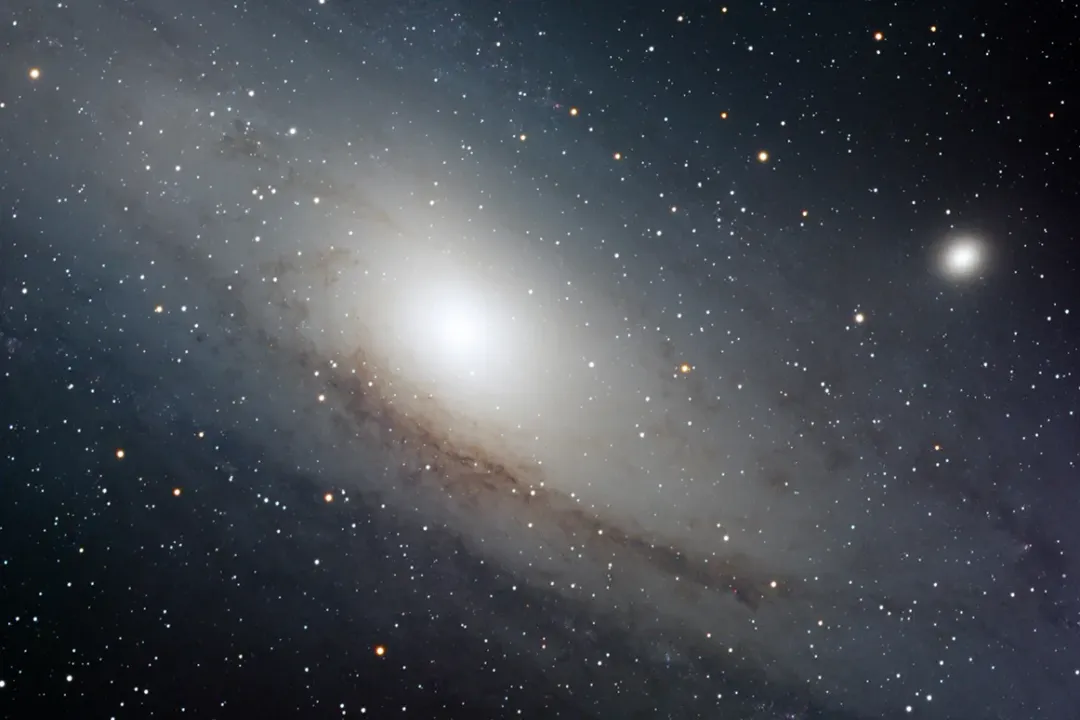
While we have zero confirmed detections of planets in Andromeda, scientists apply statistical models to estimate their abundance based on what we see in the Milky Way. [9] Data from missions like the Kepler Space Telescope suggest that, on average, there is at least one planet for every star in our galaxy. If this ratio holds true for other spiral galaxies, we can apply that logic to Andromeda. [9]
Andromeda is significantly larger than the Milky Way, containing an estimated one trillion stars. [1][5] By applying the galactic planetary ratio, it is scientifically sound to infer that there are likely trillions of planets within Andromeda. [9] These are not confirmed observations, but rather reasonable projections based on the density and stellar population of the galaxy. [4]

# Galaxy Comparison
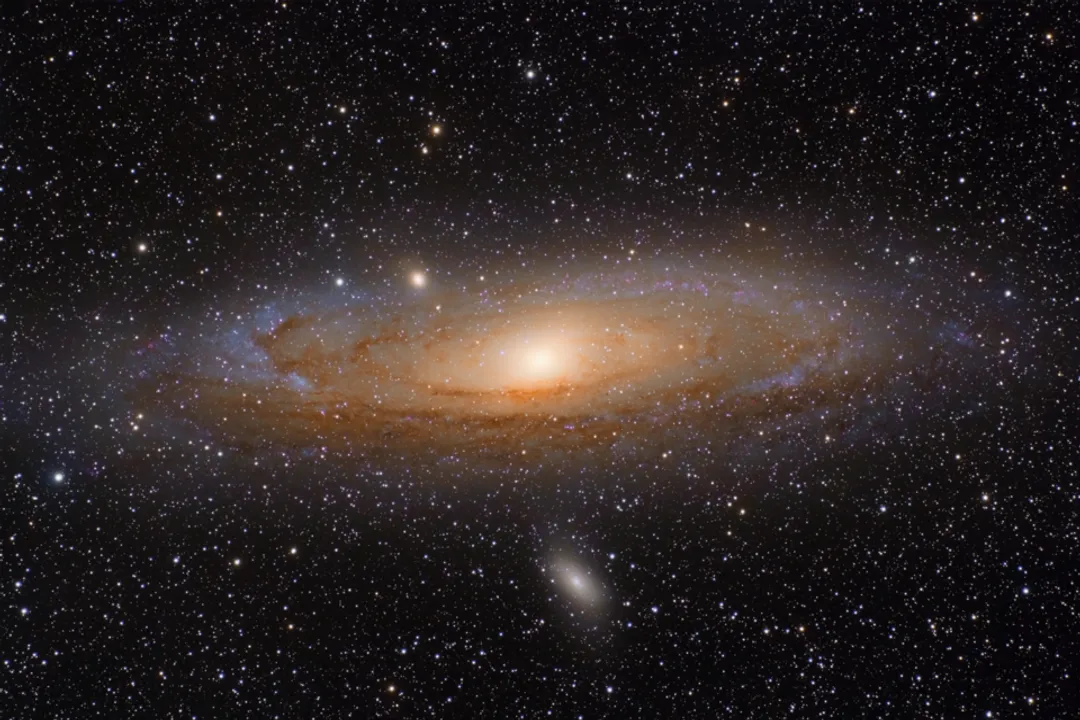
To better understand the scale and planetary potential of Andromeda, we can compare its structure to our own local environment. The table below illustrates why Andromeda presents such a massive, yet distant, target for planetary studies.
| Feature | Milky Way | Andromeda (M31) |
|---|---|---|
| Distance from Earth | 0 (Internal) | ~2.5 million ly |
| Estimated Stars | 100-400 billion | ~1 trillion |
| Confirmed Exoplanets | Thousands | Zero |
| Stellar Density | Moderate | High (in core) |
The contrast in confirmed exoplanet numbers does not imply a lack of planets in Andromeda, but rather a limitation of observational reach. [7] In the Milky Way, we have the advantage of proximity, allowing us to utilize various observational methods that are ineffective at intergalactic distances. [9]
# Detection Methodology
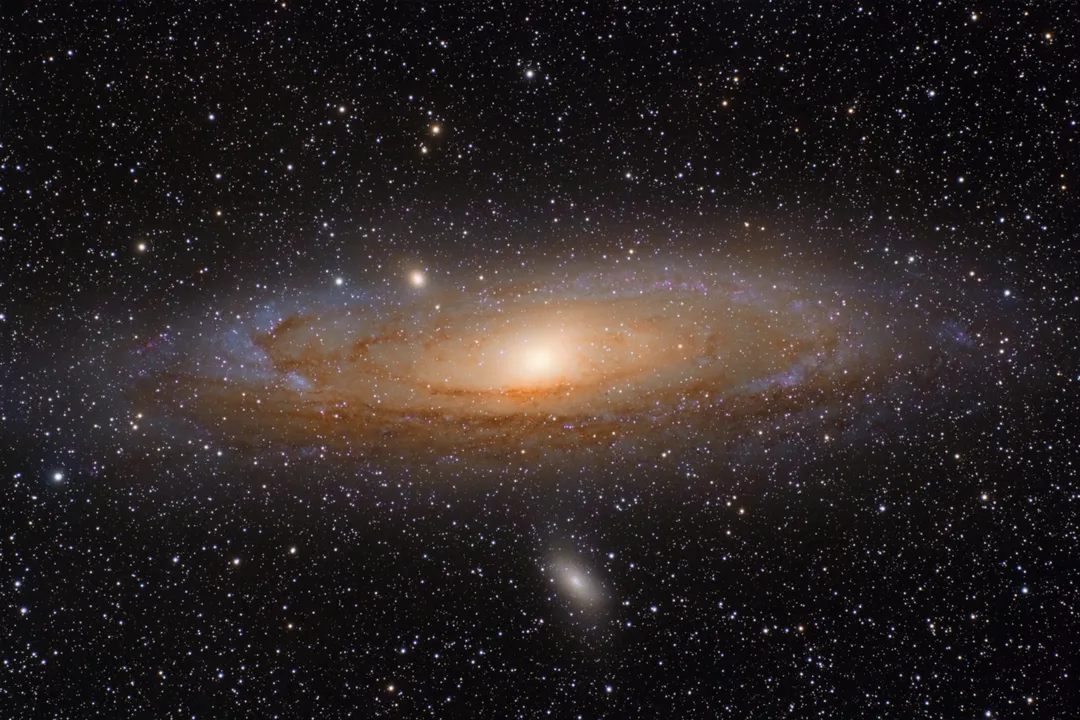
The methods scientists use to find planets locally rely on observing individual stars with high precision. Detecting a planet requires isolating the light of a single star. [8] In Andromeda, the light from millions of stars overlaps, creating a diffuse glow rather than discrete, analyzable points of light for the majority of the galaxy's population. [7]
Even if we were to focus on the outskirts of Andromeda where stars are more sparse, the resolution required to identify a transit event—a tiny dip in brightness—is currently beyond our capabilities. A planet transiting a sun-like star in Andromeda would dim that star by such a miniscule amount that the signal would be lost within the atmospheric interference and the star's own natural variability. [7]
# Scientific Inference
While the exact number of planets remains unknown, the scientific community treats the existence of such worlds as a near-certainty. [4] The formation of planets is a byproduct of star formation; as gas and dust collapse to form a star, the remaining material often settles into a protoplanetary disk, which eventually coalesces into planets. [9]
Because the laws of physics and chemistry appear consistent throughout the observable universe, there is no reason to believe that stars in Andromeda form differently than stars in our own galaxy. [5] Therefore, the trillions of stars in Andromeda are almost certainly accompanied by trillions of planets, ranging from rocky worlds similar to Earth to gas giants and icy bodies. [9]
# Future Outlook
Looking ahead, our ability to probe the Andromeda Galaxy will rely on the development of new detection techniques. Currently, gravitational microlensing offers a theoretical pathway for detecting objects in distant galaxies. [7] This occurs when the gravity of a massive object, such as a star, acts as a lens, bending and magnifying the light of a background object. If a planet were involved in this lensing event, it could theoretically leave a signature in the light curve. [8]
While this method has been used to find planets in our own galaxy, applying it to Andromeda is difficult because of the need for precise alignment between the observer, the lens, and the source. However, as telescopes grow more sensitive and our ability to process vast amounts of astronomical data improves, we may eventually identify evidence of planets or at least planetary-scale debris in our neighbor galaxy. [7][8] For now, the count remains a matter of statistical probability rather than direct observation.
Related Questions
#Citations
Andromeda Galaxy - Wikipedia
Known planets in the Andromeda Galaxy : r/NoStupidQuestions
How many planets are in the Andromeda Galaxy? - Quora
Some mind-blowing facts about the Andromeda Galaxy - Facebook
Andromeda Galaxy | Space Engine planetary Database Wiki - Fandom
Life on the Andromeda Galaxy #space #astronomy #universe
Andromeda Galaxy: Facts about our closest galactic neighbor - Space
Messier 31 (The Andromeda Galaxy) - NASA Science
How many planets are estimated to exist in the Andromeda Galaxy?
Andromeda Galaxy: Complete guide and how to see it