How many planets are in the outer solar system?
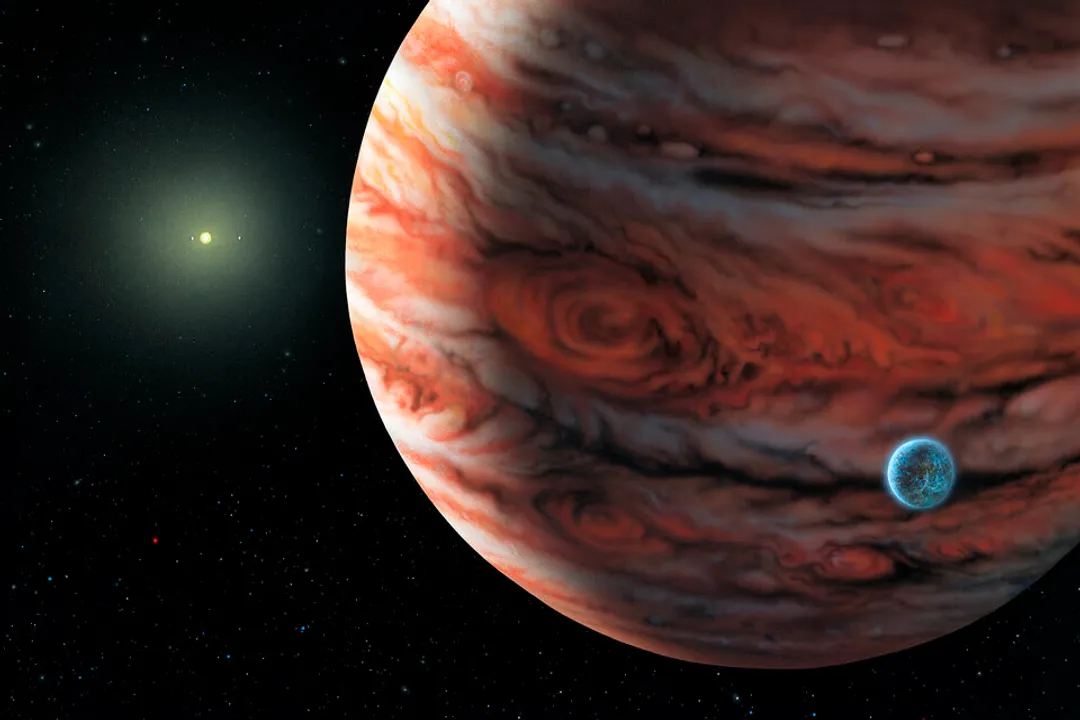
The solar system contains eight officially recognized planets that orbit our Sun. [2][9] When looking toward the outer reaches of this system, we focus on the four massive worlds positioned far past the main asteroid belt. [4][7] These giants are distinct from the four rocky, terrestrial worlds closer to the Sun, representing the majority of the planetary mass in our neighborhood. [9] While the inner system is defined by solid ground and thin atmospheres, the outer system is dominated by immense spheres of hydrogen, helium, methane, and ammonia, often referred to as gas giants and ice giants. [6][7]
# Solar Neighborhood
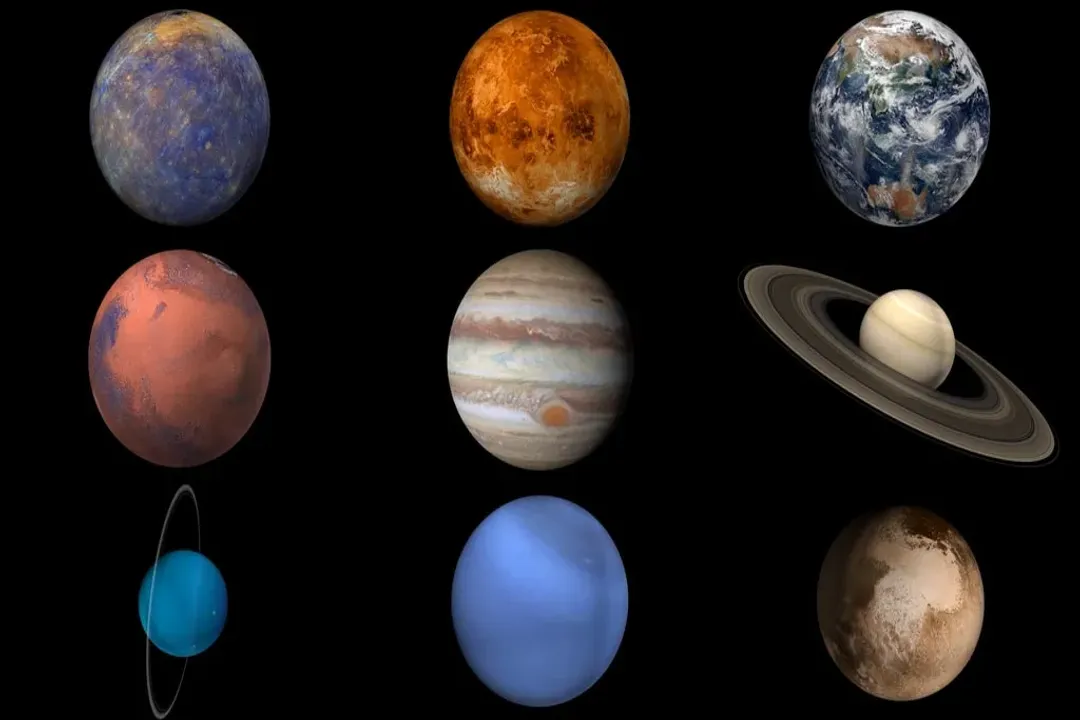
The distinction between inner and outer planets comes down to location and composition. The inner planets—Mercury, Venus, Earth, and Mars—are made mostly of rock and metal. [1] However, as we move out to the region past the asteroid belt, the composition shifts dramatically. The outer planets formed in a part of the early solar system where temperatures were low enough for volatile compounds like water, methane, and ammonia to condense into ices. [6] This allowed these bodies to accumulate vast, thick atmospheres, resulting in the massive, low-density worlds we observe today. [7]
Understanding the outer solar system requires recognizing these bodies as distinct from the smaller, terrestrial planets. They lack solid surfaces in the traditional sense, meaning a spacecraft would simply sink into increasingly dense, fluid-like layers of gas and ice. [4] These four worlds are Jupiter, Saturn, Uranus, and Neptune. [4][7]
# Jupiter
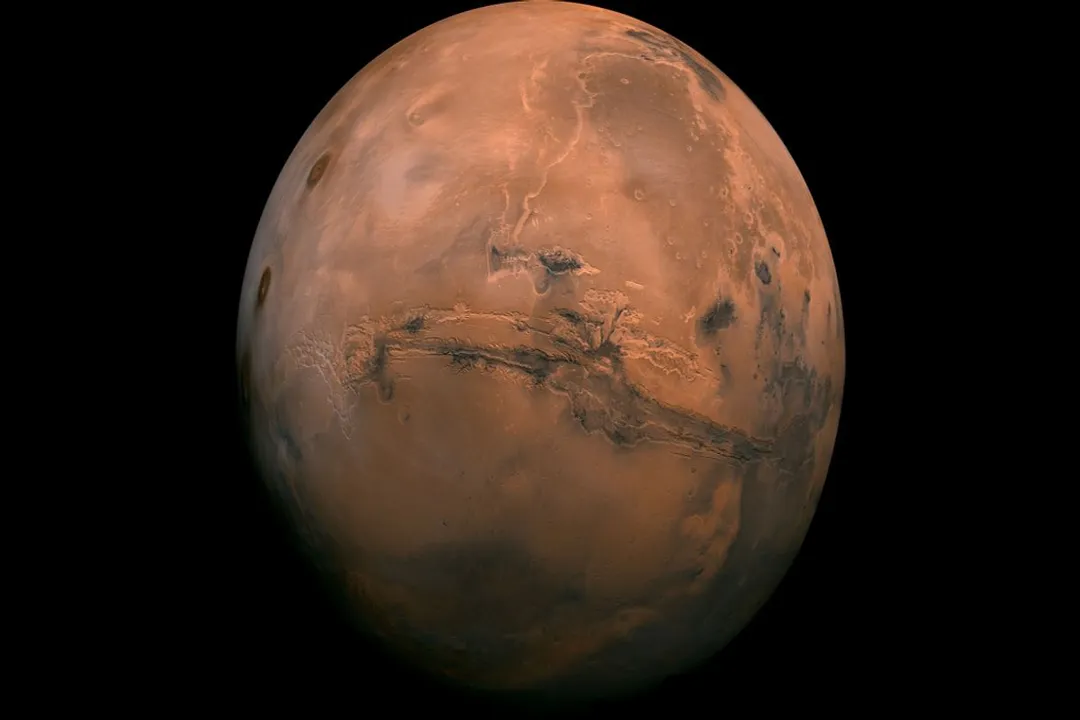
As the largest planet in the solar system, Jupiter sets the standard for gas giants. [6] It is so massive that it contains more material than all the other planets in the solar system combined. [1] Jupiter is composed primarily of hydrogen and helium, mirroring the composition of the Sun itself. [4] Its most recognizable feature is the Great Red Spot, a colossal, centuries-old storm that is wider than Earth. [1]
Jupiter serves as a gravitational anchor for the outer solar system. Its immense gravity influences the orbits of countless asteroids and comets. [7] The planet also possesses a complex system of dozens of moons, including the four large Galilean satellites: Io, Europa, Ganymede, and Callisto. [1] Each of these moons presents a unique world, with Europa, in particular, drawing interest for its subsurface ocean. [9]
# Saturn
Saturn is arguably the most recognizable planet due to its magnificent, complex ring system. [1] Like Jupiter, it is a gas giant primarily made of hydrogen and helium. [4] If one could find a large enough body of water, Saturn would float because its average density is actually lower than that of water, a direct result of its gaseous composition. [6]
The rings of Saturn are composed of billions of particles, ranging from tiny grains of sand to massive boulders, all made of ice and rock. [1] Beyond its rings, Saturn hosts a diverse family of moons, including Titan, the only moon in the solar system known to have a substantial, thick atmosphere. [9] Titan is unique, featuring weather, clouds, and lakes of liquid methane and ethane, distinct from the water-based cycle on Earth. [1]
# Uranus
Moving further out, we encounter the ice giants. Uranus is the first of the two planets classified specifically as an ice giant. [4] While it contains hydrogen and helium, it has a higher proportion of "ices"—water, ammonia, and methane—compared to Jupiter and Saturn. [6] This mixture gives the planet its distinct blue-green hue, caused by methane in its atmosphere absorbing red light. [1]
Uranus is unique among the major planets because it rotates on its side. [1] Its axis of rotation is tilted nearly 90 degrees compared to its orbital plane, likely the result of a massive collision early in its history. [6] This extreme tilt causes unusual seasonal patterns, where each pole spends 21 years in continuous sunlight and 21 years in total darkness. [9]
# Neptune
Neptune serves as the outermost major planet. [2] It is similar to Uranus in composition, defined as an ice giant with a deep, vivid blue color. [1] While Uranus and Neptune are similar in size, Neptune is denser and has a more dynamic atmosphere. [4] It holds the title for the fastest winds in the solar system, with storms capable of reaching supersonic speeds, far outpacing the wind speeds found on any other planet. [6]
Because Neptune is so distant—roughly 30 times farther from the Sun than Earth—it takes about 165 Earth years to complete a single orbit. [9] Its immense distance makes it a cold, dark frontier, where sunlight is faint compared to the inner solar system. Like its neighbor Uranus, Neptune has a system of faint rings and a collection of moons, with Triton being the most prominent. [1]
# Planet Definition
The question of how many planets exist in our solar system often leads to confusion regarding Pluto. [8] For decades, Pluto was taught as the ninth planet, but this changed in 2006. [2] The International Astronomical Union (IAU) established criteria for a planet: it must orbit the Sun, be spherical due to its own gravity, and have "cleared the neighborhood" around its orbit. [2]
Pluto failed the third criterion because it resides in the Kuiper Belt, a region filled with other icy objects and debris. [2] Because Pluto shares its orbital neighborhood with these other bodies, it was reclassified as a dwarf planet. [8][9] Consequently, there are only eight major planets in our solar system. [2] Including the dwarf planets would significantly increase the count, as there are many such bodies in the outer reaches, including Eris, Haumea, and Makemake. [9]
# Comparative Data
To understand the scale of the outer solar system, comparing these four giants reveals how significantly they differ from the inner, rocky worlds. The following table provides a quick reference for their physical differences.
| Planet | Type | Primary Composition | Moons (Confirmed) |
|---|---|---|---|
| Jupiter | Gas Giant | Hydrogen, Helium | 95+ |
| Saturn | Gas Giant | Hydrogen, Helium | 146+ |
| Uranus | Ice Giant | Water, Ammonia, Methane | 28+ |
| Neptune | Ice Giant | Water, Ammonia, Methane | 16+ |
Note: The number of confirmed moons changes frequently as space agencies discover smaller satellites during new missions and data analysis.
# Distance Perspective
One perspective that often gets overlooked is how distance affects our ability to interact with these worlds. The scale of the outer solar system is vast, creating a significant delay in communication. For instance, a radio signal traveling at the speed of light takes approximately 40 minutes to reach Jupiter. [1] By the time a signal reaches Neptune, it takes over four hours. [9]
This delay means that autonomous systems are necessary for any spacecraft sent to this region. Ground control on Earth cannot "steer" a probe in real-time; the craft must be programmed to react to dangers and perform scientific tasks independently. This technical limitation defines how we research the outer planets. Unlike the Mars rovers, which operate with a relatively short delay, missions to the outer solar system are feats of long-term planning and independent machine intelligence.
# Future Exploration
While we have visited these giants with probes like Voyager, Galileo, Cassini, and New Horizons, there remains much to uncover. [1][9] Many of the moons of the outer planets are considered primary targets for future missions. The search for life, or conditions suitable for it, has shifted from the surface of these planets to the icy shells of their moons. [6]
Because these planets have immense gravitational influence, they act as miniature solar systems, with their own complex magnetic fields, ring systems, and satellite groups. [6] The outer solar system remains a laboratory for understanding how the early solar system formed, as the composition of these cold, distant worlds has remained relatively unchanged since their birth billions of years ago. [7] Future research will likely focus on sending specialized orbiters to explore the subsurface oceans of moons like Europa and Enceladus, aiming to see what lies beneath those frozen exteriors. [9]
#Videos
All the Planets of the Solar System | Space Science by KLT - YouTube
Related Questions
#Citations
About the Planets - NASA Science
Solar System - Wikipedia
How many planets are outside our Solar System? - ESA
Outer Planets in the Solar System | Definition & Properties - Study.com
All the Planets of the Solar System | Space Science by KLT - YouTube
What are The Outer Planets of the Solar System? - Universe Today
The Outer Solar System - Let's Talk Science
How many planets are in our Solar System? : r/answers - Reddit
Solar system guide - Discover the order of planets and other ... - Space
How many planets are in our solar system? - Facebook