count articles
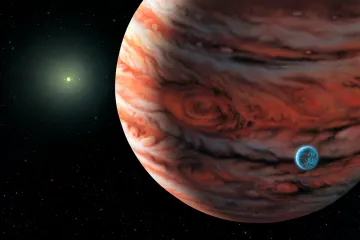
What is the primary composition of the gas giant Jupiter?
Why is Saturn considered to have a density lower than that of water?
What is unique about the rotation axis of the planet Uranus?
What specific atmospheric characteristic defines Neptune?
Why was Pluto reclassified as a dwarf planet in 2006?
What makes Titan, the moon of Saturn, scientifically unique?
Why is Europa, a moon of Jupiter, a primary target for future space exploration?
How do ice giants like Uranus and Neptune differ in composition from gas giants?
What is the consequence of the distance between Earth and Neptune for communication?
What is the Great Red Spot on the planet Jupiter?
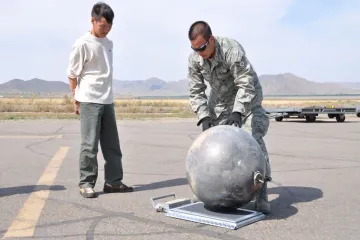
What is the primary criterion defining an object as space debris?
How does NASA focus its intense tracking efforts regarding space debris size?
What kinetic threat is represented by a debris piece just one centimeter across at orbital velocity?
What differentiates 'space debris' from 'meteoroids' in official categorization?
What is the approximate velocity objects in Low Earth Orbit (LEO) often exceed?
Which debris category is characterized by high quantity but is generally not cataloged?
What is the primary mechanism associated with the Kessler Syndrome concern?
What examples of operational debris arise from routine use other than spent rocket bodies?
What operational challenge defines when a structurally sound satellite becomes classified as long-term debris?
What characterizes the objects between 1 cm and 10 cm regarding tracking and collision risk?
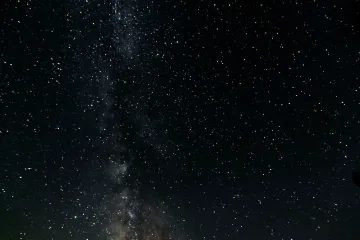
What is the typical estimated range for the number of stars in the Milky Way galaxy?
What is the fundamental first step astronomers take to estimate the total number of stars in a galaxy?
How do scientists estimate the total mass of the Milky Way galaxy?
What complicates the calculation derived immediately after determining the Milky Way's total mass from gravitational observations?
What is the most common type of star found in the Milky Way's stellar population?
What mathematical model do astronomers use to predict the distribution of stellar masses?
If one used the Sun's mass as the average mass for all stars when calculating the star count, what would be the result?
What is the primary technique used for counting stars in specific, localized regions like dense stellar groupings?
What major factor prevents the simple application of star sampling methods consistently across the entire galaxy?
How do astronomers estimate the total number of galaxies in the observable universe?
What astronomical order of magnitude is frequently cited for the total number of stars in the universe?