What level of accuracy is required for measuring stellar locations in astrometry?
Answer
Down to the level of microarcseconds
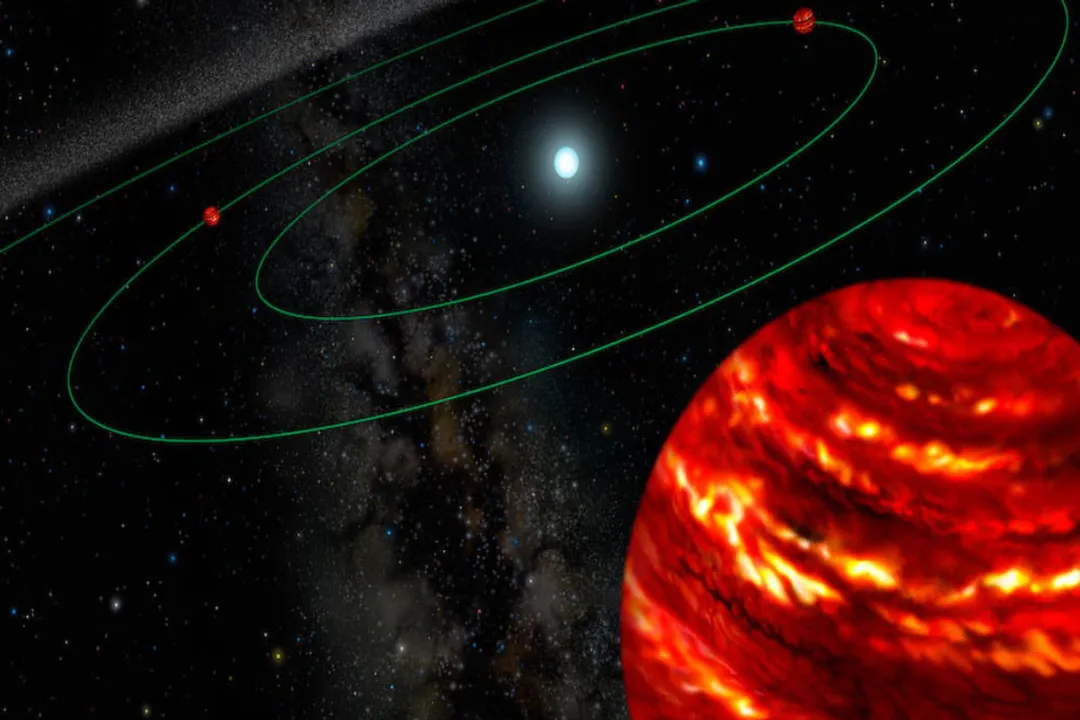
Astrometry, as a technique for exoplanet detection, requires exceptionally precise measurements of where stars appear in the sky. This precision must reach down to the level of microarcseconds. To illustrate the extreme nature of this requirement, one microarcsecond is equivalent to the apparent size of a standard euro coin if that coin were viewed from the distance of the Moon. Achieving this level of accuracy is technologically demanding, as it involves detecting extremely slight positional wobbles in the host star caused by the gravitational tug of an orbiting planet.
Related Questions
What level of accuracy is required for measuring stellar locations in astrometry?What unique planetary property does astrometry determine that radial velocity only estimates as minimum mass?Which stars were involved in historical astrometric claims later deemed unproven or doubted?When is the displacement measured by astrometry maximized for easier detection?How many candidates were reported detected via astrometry compared to the confirmed count of pure discoveries?Which specific astrometric discovery around 2020 failed subsequent radial-velocity checks, labeled a false positive?How many exoplanets does the Gaia mission forecast detecting via astrometric wobble within 1,600 light-years?What is the precision targeted by the Gaia mission for its brightest stars based on cumulative data?How does astrometry's sensitivity to detection change relative to the planet's orbital distance from its star?What essential measurement does astrometry rely upon in the context of planet hunting?