When is the displacement measured by astrometry maximized for easier detection?
Answer
If the orbital plane is perfectly face-on relative to Earth
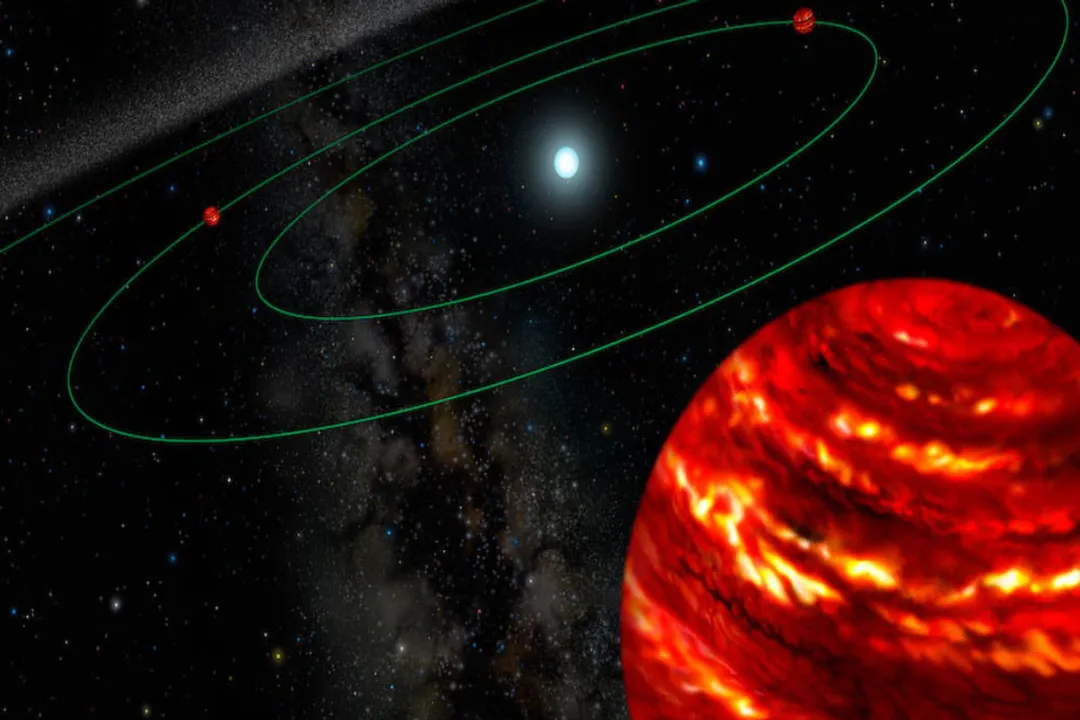
The effectiveness of astrometry is heavily dependent on the orientation of the exoplanet's orbit relative to our observation point on Earth. Astrometry measures the star's apparent positional shift, or wobble, caused by the planet's gravitational pull sideways across the sky. This sideways displacement is maximized when the entire orbital plane is perfectly face-on relative to Earth. Conversely, the radial velocity method, which measures movement along the line of sight (toward or away from Earth), works best when the orbit is edge-on. A face-on orbit minimizes the radial velocity signal but maximizes the astrometric signal.
Related Questions
What level of accuracy is required for measuring stellar locations in astrometry?What unique planetary property does astrometry determine that radial velocity only estimates as minimum mass?Which stars were involved in historical astrometric claims later deemed unproven or doubted?When is the displacement measured by astrometry maximized for easier detection?How many candidates were reported detected via astrometry compared to the confirmed count of pure discoveries?Which specific astrometric discovery around 2020 failed subsequent radial-velocity checks, labeled a false positive?How many exoplanets does the Gaia mission forecast detecting via astrometric wobble within 1,600 light-years?What is the precision targeted by the Gaia mission for its brightest stars based on cumulative data?How does astrometry's sensitivity to detection change relative to the planet's orbital distance from its star?What essential measurement does astrometry rely upon in the context of planet hunting?