What essential measurement does astrometry rely upon in the context of planet hunting?
Precision measurement of stellar locations in the sky
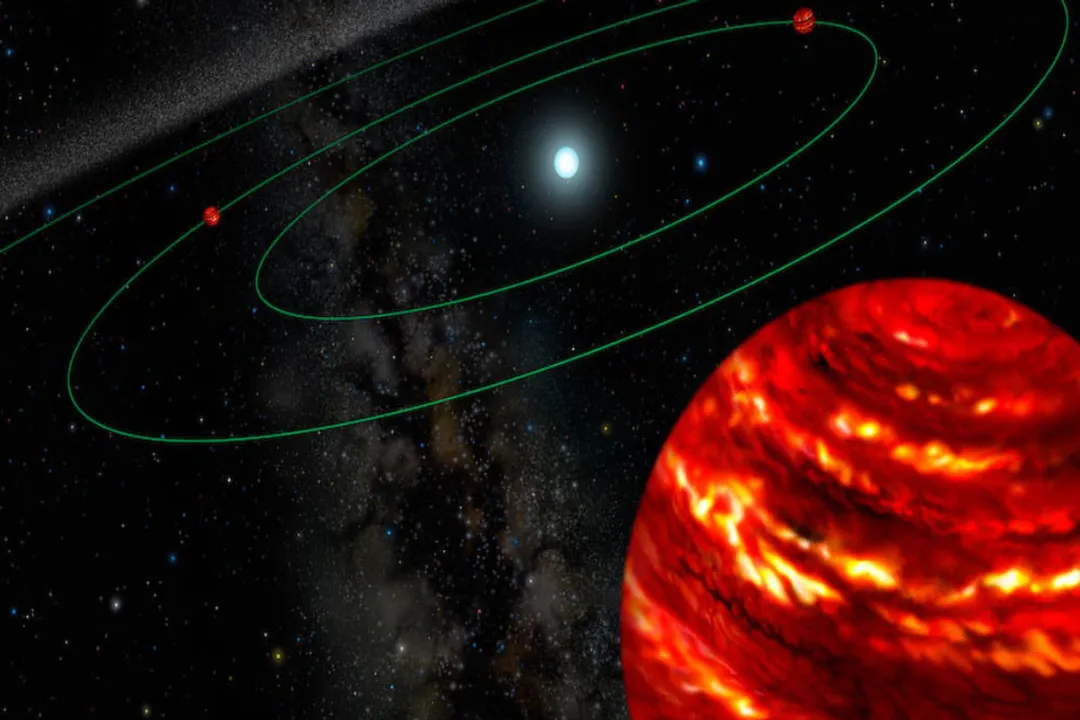
Astrometry, in the specific application of searching for exoplanets, is fundamentally defined by its measurement approach: the precise determination of a star's location in the sky over time. This method exploits the fact that an orbiting planet gravitationally tugs its host star, causing the star itself to trace a tiny orbit around the system's common center of mass. This stellar movement translates into a minute, regular, periodic shift in the star’s proper motion—its apparent movement across the sky. This precise positional tracking, requiring measurements down to microarcsecond accuracy, is the core principle that differentiates it from transit photometry (measuring brightness changes) or radial velocity (measuring spectral shifts).