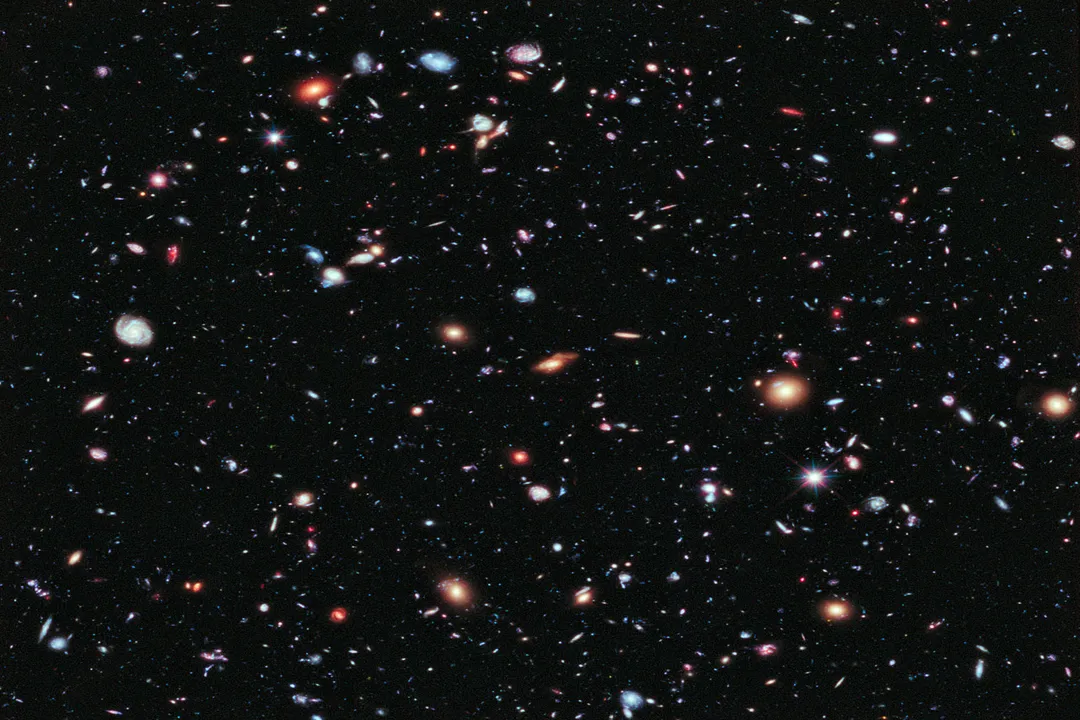
How small was the angular size targeted by the original Hubble Deep Field (HDF) in Ursa Major?
The angular size equivalent of holding a pinhead at arm's length.
The area chosen for the original Hubble Deep Field observation was incredibly small, emphasizing the audacity of the experiment. This specific, seemingly barren patch in the constellation Ursa Major was often described using an analogy related to visual perception: it was the angular size equivalent of holding a pinhead at arm's length. To provide a less subjective measure, this area covered roughly one-quarter the width of the full Moon across, translating to only about one 24-millionth of the entire sky. The astonishing outcome was that despite viewing such a minuscule fraction of the celestial sphere, astronomers were able to detect thousands of galaxies within that tiny, dark region.