Which instrument detected intense star formation within dust-enshrouded galaxies in the HDF sample using infrared capabilities?
Answer
Spitzer.
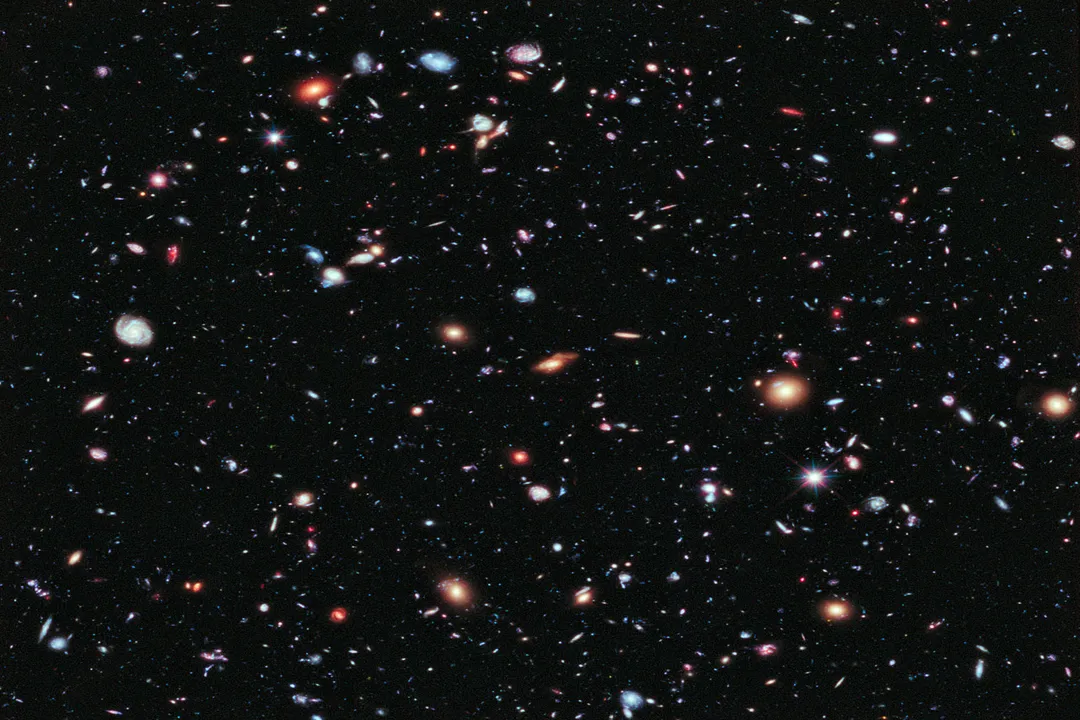
While Hubble gathered the primary optical data for the Deep Fields, follow-up observations using other specialized Great Observatories provided crucial complementary information about the environment within those distant fields. The Spitzer Space Telescope, which observes in the infrared spectrum, was able to penetrate the dense shrouds of cosmic dust that often hide active stellar nurseries. By analyzing the HDF field with Spitzer, astronomers successfully detected galaxies that were intensely forming stars but were obscured from Hubble's visible light view. Similarly, the Chandra X-ray Observatory provided data on active galactic nuclei and elliptical galaxies within the sample.
Related Questions
What criteria guided the target selection for the original 1995 Hubble Deep Field (HDF)?How small was the angular size targeted by the original Hubble Deep Field (HDF) in Ursa Major?What was the total integration time for the initial Hubble Deep Field (HDF) observation in December 1995?What specialized technique did scientists develop to boost image resolution beyond the detector's native pixel size for the Deep Fields?What age range did the Hubble Ultra Deep Field (HUDF) reveal galaxies existing after the Big Bang?What shape characterized the faintest and reddest galaxies observed in the HDF and HUDF images?Why was infrared vision essential for pushing the observational limits beyond the initial HUDF in 2009?Which instrument detected intense star formation within dust-enshrouded galaxies in the HDF sample using infrared capabilities?What theory regarding galaxy formation is supported by the observation that early galaxies were small and irregular?How did the Frontier Fields campaign detect galaxies 100 times fainter than those in the HUDF?