Do we have an actual picture of our galaxy?
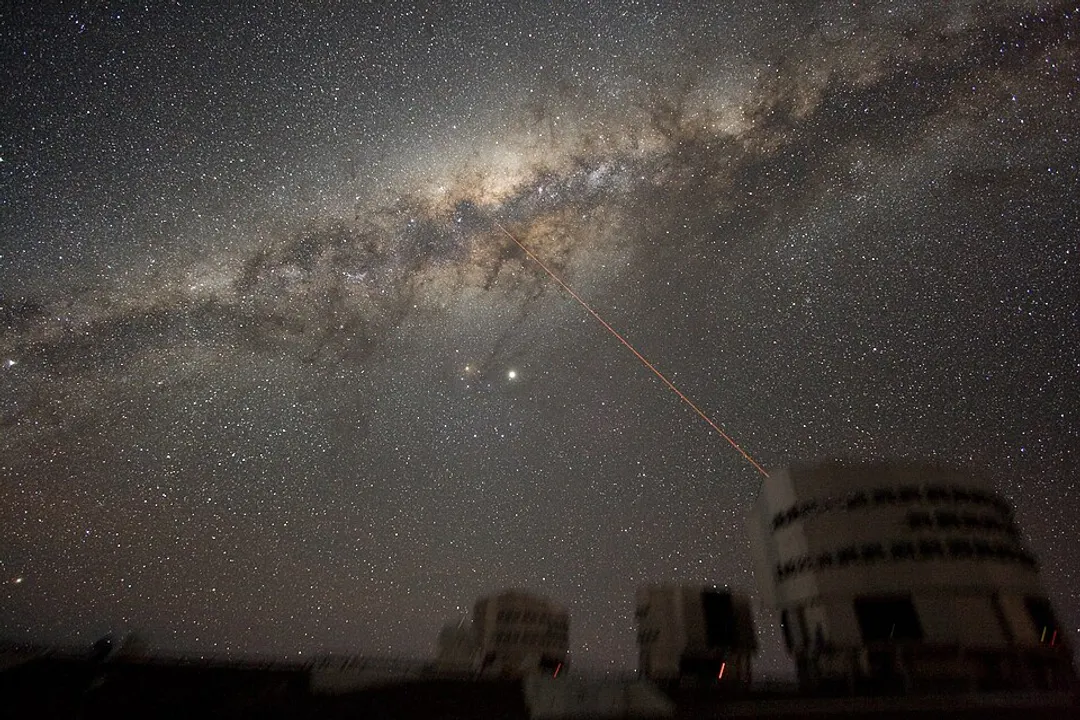
The images you see of the Milky Way galaxy, the grand swirl of stars we call home, are rarely, if ever, actual photographs in the conventional sense of pointing a camera out into space and capturing the entire structure in one go. This distinction is perhaps the most important concept to grasp when discussing our galaxy's appearance. [3][7] The simple, unavoidable truth is that we cannot take a single, unified snapshot of the Milky Way because we are trapped inside of it. [1][4][8]
# Physical Limits
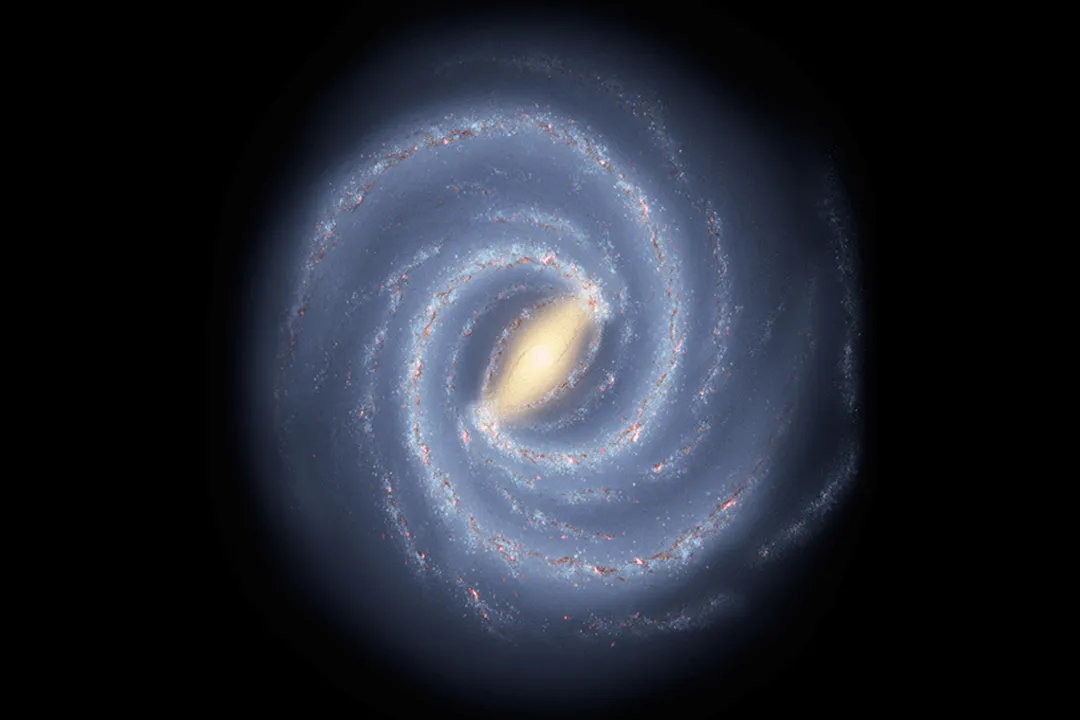
Imagine trying to photograph the entirety of a massive forest while standing somewhere deep within its thickest section. You could perhaps capture the trees immediately around you, or maybe look up to see a small slice of the canopy, but seeing the entire perimeter and shape of the woods all at once is physically impossible from that vantage point. [8] Our situation within the galaxy is analogous to this scenario. [1]
The Milky Way is enormous, estimated to span about 100,000 light-years across. [9] Our own Solar System resides in one of the minor spiral arms, about 25,000 to 27,000 light-years away from the crowded central bulge. [9] To truly photograph the whole structure, we would need to position a camera light-years away from the galactic plane, looking in—a viewpoint we simply do not possess. [3][4] Any image that appears to show the full spiral shape is, by necessity, a model or an artist's interpretation built upon decades of indirect measurements. [7]
Furthermore, even if we could somehow escape the galaxy and turn back, the view would still be incomplete using just visible light. [1] Our galactic disk is dense, filled with vast clouds of interstellar dust and gas. [4] These clouds act like opaque curtains, obscuring the light from billions of stars located further inward, particularly toward the Galactic Center. [1][7] This means that even local surveys looking toward the core are severely hampered by what astronomers call extinction. [4]
# Mapping Techniques
Since direct photography is out, astronomers rely on sophisticated techniques that piece together an understanding of our location and the layout of our galactic neighborhood, often using wavelengths of light that can pierce the cosmic fog. [1][4]
The key to seeing past the dust lies in utilizing different parts of the electromagnetic spectrum. Visible light gets blocked, but longer wavelengths, such as infrared and radio waves, pass through the obscuring dust clouds much more easily. [1][4]
Radio telescopes, for instance, can detect signals emitted by hydrogen gas, which is abundant throughout the galaxy. [4] By measuring the speed and location of these gas clouds as they orbit the Galactic Center, scientists can construct a three-dimensional map of the galaxy's structure. [4] Infrared observations are similarly valuable because they reveal the heat signatures of stars whose visible light is drowned out by dust. [1] These observations allow researchers to count stars and map regions obscured in optical images. [7]
The process is essentially forensic astronomy. Scientists take millions of data points—positions, velocities, compositions—from various locations and different instruments, much like assembling a massive, multi-layered puzzle. [4]
If we were attempting to map a colossal, sprawling city from a single vantage point within its downtown core, we'd find that the immediate skyscrapers block the view of everything beyond them. Our galactic mapping efforts are akin to building a city blueprint by first analyzing the ambient heat signature (infrared), then tracing the major traffic arteries (radio mapping of gas clouds), and finally using satellite glimpses (shorter-range visible light surveys) to fill in the gaps between the main roads [Integrating an analytical comparison of data types].
# Composite Reality
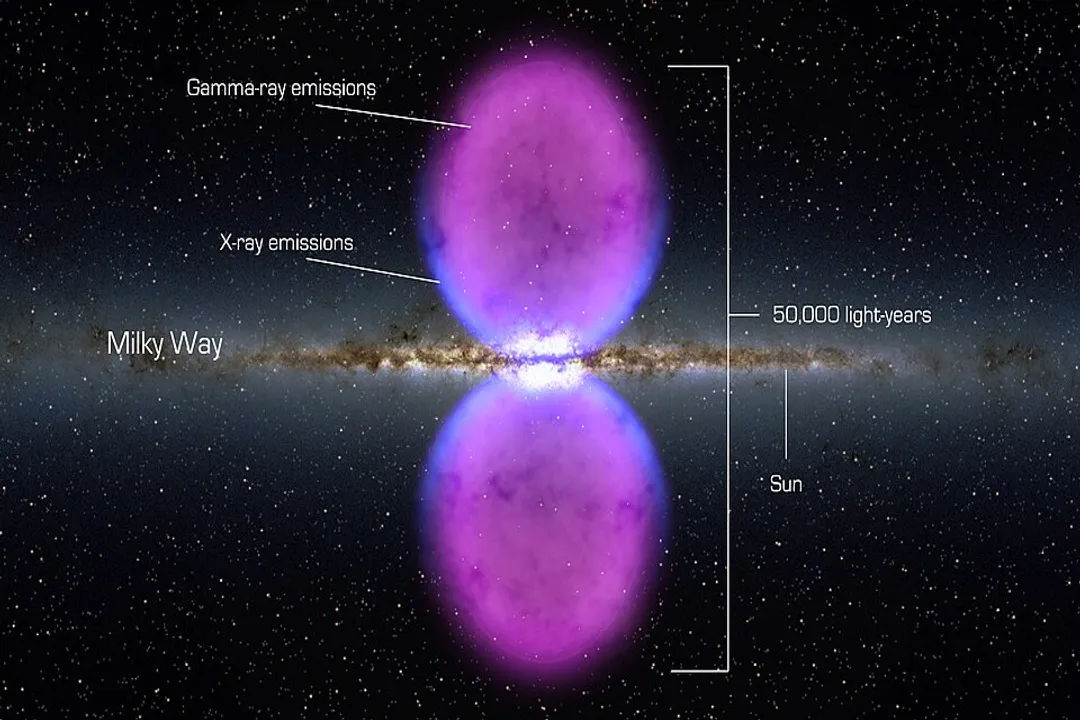
When an image of the Milky Way is presented showing the familiar spiral arms wrapping around a bright central bulge, what you are witnessing is a carefully constructed visualization derived from that observational data. [2][7] These visuals are often composites—a blending of numerous smaller, targeted observations stitched together using sophisticated modeling software. [7]
The Milky Way is classified as a barred spiral galaxy. [9] This means it has a central bar-shaped structure composed of older stars, from the ends of which the spiral arms emerge. [9] Modern representations attempt to reflect this structure, often incorporating data from missions like ESA's Gaia observatory, which meticulously maps the precise positions and motions of billions of stars. [4]
It is important to distinguish between two types of widely circulated images:
- Artist's Conceptions: These are visually stunning illustrations where the colors and exact shapes of the arms are educated guesses based on the known distribution of gas, dust, and star populations. [7] They are visualizations of the model, not direct data capture.
- Data-Driven Composites: These use real observational data, usually from infrared or radio surveys, displayed in false color to represent the data they collected. While based on measurements, they still represent a flattened, projected view, meaning nearby objects might overlap with distant ones in the final 2D image. [2]
For instance, an image might represent visible stars in one color, molecular clouds in another, and the central bar structure derived from infrared scans in yet another hue, all overlaid onto a base spiral structure derived from radial velocity data. [4] The resulting visual is a powerful tool for understanding—a scientific diagram rendered as a picture—but it is not a photograph taken ex situ.
# External Examples
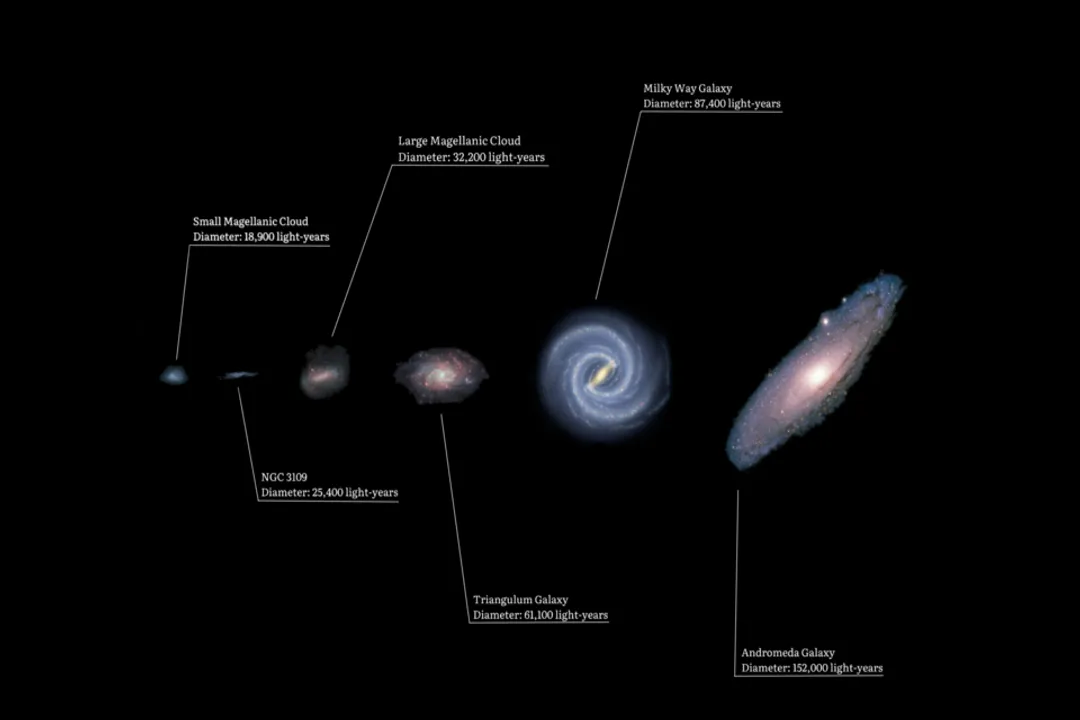
The reason images of other galaxies, like the famous spiral Andromeda Galaxy (M31), look so sharp and complete is precisely because of our external vantage point. [6] Since Andromeda is another spiral galaxy located about 2.5 million light-years away, we view it from the outside, allowing us to capture its entire shape simultaneously with visible light telescopes. [6] This contrast highlights the unique observational challenge posed by being within our own galactic disk. [3]
If we could magically transport our Solar System to a spot outside the Milky Way—say, looking back from a point several hundred thousand light-years away—then we could, indeed, take a true photograph. [8] Until that physical relocation occurs, our view remains an interpretive construction based on triangulation, motion tracking, and multi-spectrum data collection. [4]

# Current Knowledge
Despite the lack of a single photograph, the scientific community has a remarkably detailed understanding of the Milky Way’s layout, thanks to the careful synthesis of various data streams. [4] We know its size, its general shape, its bar structure, and the relative positions of major features like the Orion Arm where our Sun resides. [9]
The consensus among researchers is that the Milky Way possesses four major arms—Perseus, Sagittarius, Scutum-Centaurus, and Norma—though the exact number and classification remain subjects of ongoing refinement based on new data. [4] The continuous work of mapping individual stellar motions, especially by missions dedicated to astrometry, constantly refines the underlying mathematical model upon which these visual representations are based. [4] The reliability of our "pictures" therefore rests not on a single historical exposure, but on the consistent agreement between independent measurements taken across different observational windows [Integrating analytical insight on data validation]. The trust we place in these composite images is a testament to the rigorous cross-validation applied to the radio, infrared, and optical data sets.
Related Questions
#Citations
How do we have pictures of the milky way? : r/space - Reddit
You've Never Seen a Picture of the Entire Milky Way | Discovery
Here's Why There's No Photos of the Entire Milky Way Galaxy
Milky Way Galaxy - Imagine the Universe! - NASA
Are there any real pictures of galaxies? - Quora
Why Aren't Photos Of The Milky Way Real? | IFLScience
Is it possible to take a "full" photo of the galaxy ? | ResearchGate
Milky Way - Wikipedia
This image of the Milky Way Galaxy that you are looking at is not real ...