What does Hubble's discovery indicate about the universe?
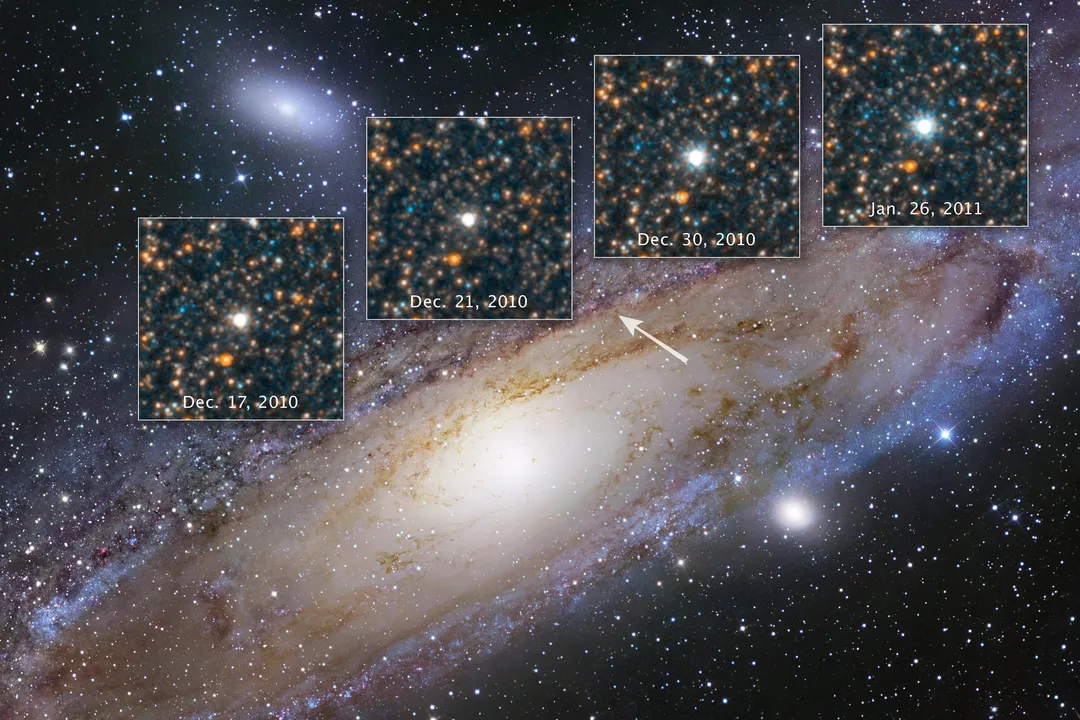
The universe, as observed through the lens of early 20th-century astronomy, was largely assumed to be static, eternal, and unchanging—a backdrop against which celestial mechanics played out. Edwin Hubble’s observations, however, dramatically overturned this settled view, revealing a cosmos in motion, expanding outward from a common point in its history. [5][6] This single, monumental discovery, rooted in painstaking work at observatories like Mount Wilson using instruments like the 100-inch Hooker Telescope, [4] didn't just add another data point to the growing list of astronomical facts; it fundamentally redefined our understanding of space and time itself. [2][5]
# Measuring Recession
Hubble’s breakthrough relied heavily on analyzing the light spectra from distant galaxies, a technique that reveals whether an object is moving toward or away from us through the Doppler effect—observed in astronomy as redshift or blueshift. [2] Working alongside colleagues, often including Milton Humason, Hubble meticulously measured the distances to these faint smudges of light and compared those distances to their measured velocities. [4] What he found was completely counterintuitive to the contemporary model of a fixed universe: nearly every galaxy observed was rushing away from us. [2][6]
The key indication was not just that things were moving, but how they were moving. The farther away a galaxy was, the faster it appeared to be receding. This relationship indicated that the expansion wasn't centered on our location; rather, it was an expansion of space itself, carrying the galaxies along for the ride. [5][9] If we imagine dots painted on the surface of an inflating balloon, every dot sees every other dot moving away from it, with those dots farther away moving faster across the surface, which perfectly mirrors Hubble’s observations of the recession velocities. [2][5]
# A Historical Paradigm Shift
Prior to Hubble’s confirmation in 1929, while theoretical work suggested a dynamic universe might be possible based on Einstein’s general relativity, observational evidence was lacking or contradictory. [2][5] Many astronomers favored the idea of a steady-state, infinite cosmos. [5] Hubble's data, showing a clear linear dependence between distance and velocity, provided the first solid empirical proof that the universe had a history and an evolving structure, cementing the foundation for what would become the Big Bang theory. [9]
This initial discovery shifted astronomy from being primarily a study of local celestial mechanics to becoming a true study of cosmology—the study of the origin, structure, and evolution of the entire universe. [6]
# Linear Relation
The mathematical description that quantifies this universal outward rush is known as Hubble’s Law, often expressed simply as . [3] Here, is the recessional velocity of the galaxy, is its distance from us, and is the Hubble Constant. [3]
The Hubble Constant is the crucial proportionality factor; it represents the current rate at which the universe is expanding. [8] If you measure a galaxy twice as far away, Hubble's Law predicts it should be moving away at twice the speed. [3] This constancy of the ratio, irrespective of which direction or how far the galaxy is, is what defines the expansion as uniform across space. [5]
It is important to note that the Hubble Constant does not imply that the speed of expansion is constant over time. An analogy can be made between measuring the speed of a car that is actively pressing the accelerator. If you take snapshots one second apart, you can determine its current rate of speed increase (acceleration) based on its current speed and the distance it has covered in that second. Similarly, is a measure of the expansion rate now. [8] The value of itself is not static across cosmic history; it changes as the universe ages and the dominant forces (like dark energy) evolve. [8]
# Calculating Cosmic Scale
One of the most immediate and profound indications of Hubble's discovery was its use as a universal yardstick. [3] By measuring the speed at which a galaxy is moving away (its redshift) and applying the established value of , astronomers could reliably estimate the distance to that galaxy. [3]
Furthermore, if the expansion rate () has been relatively steady throughout time, one could theoretically run the clock backward. By taking the distance to a galaxy and dividing it by its recession speed, one arrives at a time—the estimated age of the universe, assuming it started from a single point. [3] Hubble’s initial measurements provided the first concrete numbers suggesting the universe was finite in age, likely measured in billions of years, a figure far less than the static, eternal cosmos previously envisioned. [9]
# Cosmic Age
The relationship between and the age of the universe () is reciprocal, meaning a higher Hubble Constant implies a faster expansion and, consequently, a younger universe, while a lower constant suggests a slower expansion and an older universe. [3][8] This mathematical linkage gave cosmology a concrete timeline to work with, moving it away from philosophical debate toward testable physics.
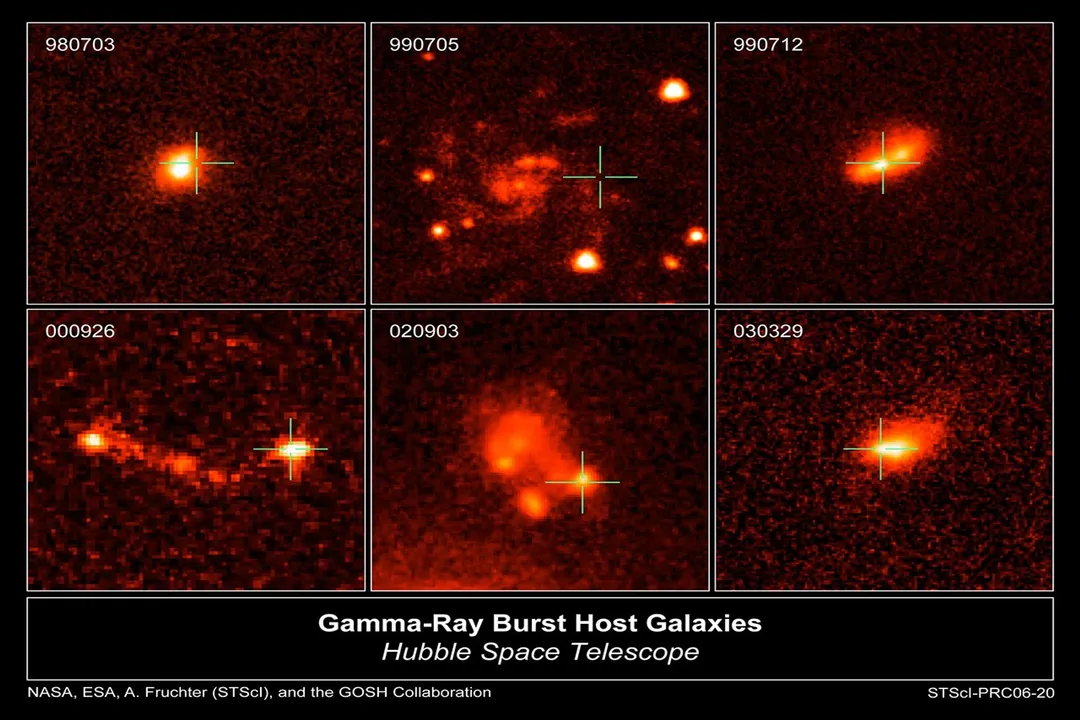
Consider the implications for scale. The Hubble Space Telescope, named in his honor, has offered breathtaking views into the deepest reaches of space, such as the Deep Field observations. [7] These images reveal galaxies that existed billions of years ago, whose light has been traveling toward us ever since. The sheer number of galaxies visible, stretching back in time across immense distances, confirms the vastness implied by the expansion itself. [7]
To illustrate how critical the precise value of is, we can examine the tension that now exists in modern measurements. Early estimates derived from local measurements (using techniques like those Hubble employed, but refined) provided one value, perhaps around (kilometers per second per megaparsec). [8] However, measurements derived from the faint echoes of the Big Bang—the Cosmic Microwave Background radiation—yield a slightly lower, different value. [8] This discrepancy, which is a focus of current research, suggests either an unknown error in one of the measurement techniques or, more excitingly, that our understanding of the universe’s evolution during the early phases might be incomplete. [8] The precision of Hubble's initial finding has now evolved into a high-stakes scientific disagreement over the universe's true expansion rate, showing the profound legacy of his initial work.
| Pre-Hubble View | Hubble's Discovery (1929) | Modern Implication (Post-1998) |
|---|---|---|
| Universe is static and eternal. [5] | Universe is expanding uniformly. [2][5] | Expansion is accelerating due to Dark Energy. [1] |
| Size/Age unknown or infinite. | Finite age suggested by recession velocity. [3][9] | defines scale, but its value is debated (tension). [8] |
| Galaxies are "island universes" of unknown size. | Galaxies are receding proportional to distance (). [3] | Deep Fields confirm vast number of galaxies across cosmic time. [7] |
# Accelerating Shift
While Hubble’s discovery confirmed expansion, it was initially thought that the mutual gravitational pull between all the galaxies would cause this expansion to slow down over time. Scientists expected to find that was larger in the past than it is now, meaning the expansion was decelerating. [1]
However, in a discovery made in the late 1990s—a direct extension of Hubble's foundational work—two independent teams studying distant Type Ia supernovae found the opposite. [1] These distant stellar explosions, which act as standard candles, indicated that galaxies farther away were moving slower in the past than expected. This meant the expansion of the universe is not slowing down; it is speeding up—it is accelerating. [1]
This acceleration requires a repulsive force acting against gravity on the largest scales, a mysterious phenomenon now attributed to dark energy. [1] While Hubble established the expansion, the discovery of its acceleration indicated that the universe is dominated by a component we cannot see, touch, or directly measure, which constitutes about 70% of the total energy density of the cosmos. [1] The initial finding of movement was just the first chapter; the realization that this movement is speeding up is perhaps the most mind-bending subsequent insight.
The initial finding that recession velocity is proportional to distance gave us a dynamic universe. The later finding that the rate of that recession increases with time tells us the universe has a destiny dominated by unknown forces. [1] If we track a galaxy's journey outward, its trajectory curves upward relative to what gravity alone would predict, suggesting that the very fabric of spacetime is being stretched at an ever-increasing rate. [1]
# Legacy Defined
Hubble's initial results, confirming the expansion described by General Relativity, provided the observational anchor for the Big Bang model. [9] Everything we now know about cosmic evolution—from the existence of a dense, hot beginning to the formation of structures over billions of years—rests upon the fact that the universe is expanding today. [9]
If the universe were static, our models for its history would collapse, and concepts like the Hubble Constant, which ties the present rate to past and future states, would be meaningless. [3] Because Hubble proved the expansion, we are able to calculate the approximate age of the cosmos and model the physics that governed its very first moments. [9] The legacy is therefore two-fold: establishing the motion of the cosmos, and providing the first quantitative measurement—the Hubble Constant—that allows us to attempt to measure its size, age, and ultimate fate. [3][8]
Related Questions
#Citations
Discovering a Runaway Universe - NASA Science
This Month in Physics History | American Physical Society
Hubble's law - Wikipedia
The universe: Historical discoveries from Edwin Hubble and others
Hubble Confirms the Expanding Universe | Research Starters
Who is the Man That Discovered the Universe?
The Hubble Deep Fields
The Hubble constant, explained - UChicago News
The early universe | CERN