What did Edwin Hubble conclude about the universe?
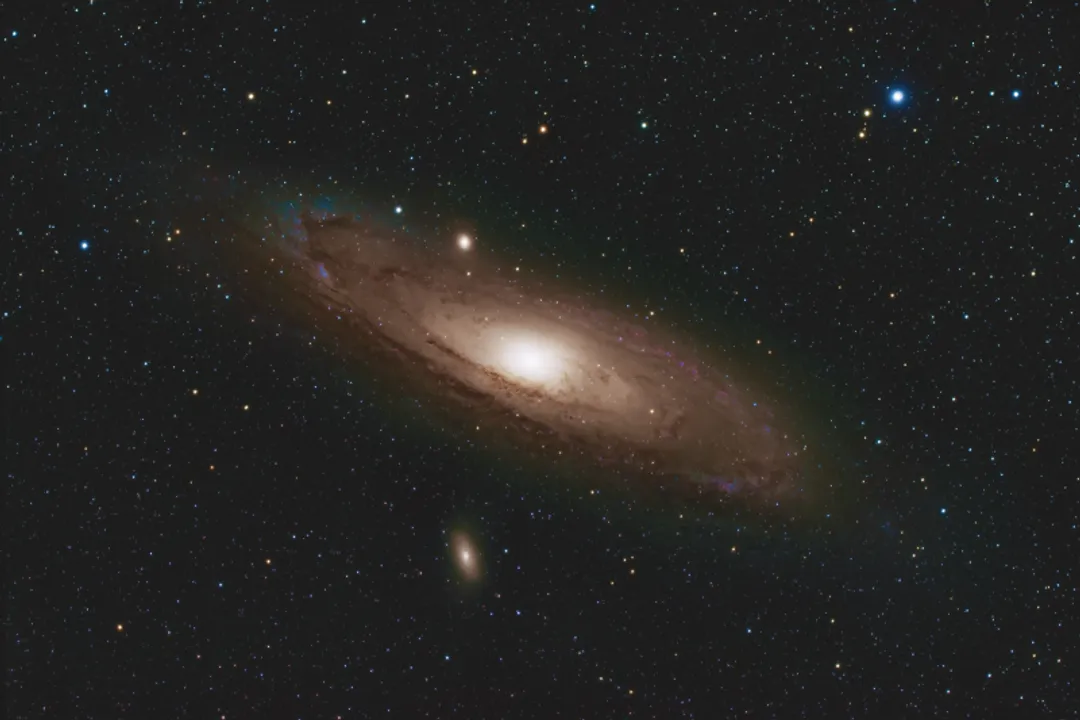
The work of Edwin Hubble irrevocably changed humanity’s perception of its place in the cosmos, moving the context of our existence from a static, finite local neighborhood to an immense, dynamic arena. His conclusions, rooted in meticulous observation during the 1920s, addressed two fundamental questions: the size of the universe and its state of motion. Before Hubble, the prevailing view often placed our Milky Way galaxy as the entirety, or nearly the entirety, of existence. [1][3] His observations, however, proved that the "spiral nebulae" scattered across the night sky were not gaseous clouds within our own system but were, in fact, vast, independent "island universes" far beyond the boundaries of the Milky Way. [1][3][6] This re-contextualization alone was revolutionary, multiplying the perceived size of the observable universe almost instantly. [3][6]
# Defining Galaxies
Hubble’s early career involved studying these mysterious fuzzy patches known as spiral nebulae. [6] His critical achievement was demonstrating that these nebulae were separate stellar systems, or galaxies, in their own right. [1][3] To accomplish this, he needed a reliable way to measure the distances to these incredibly remote objects. [6]
# Measuring Distance
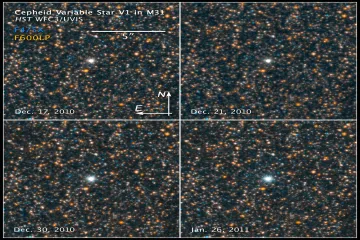
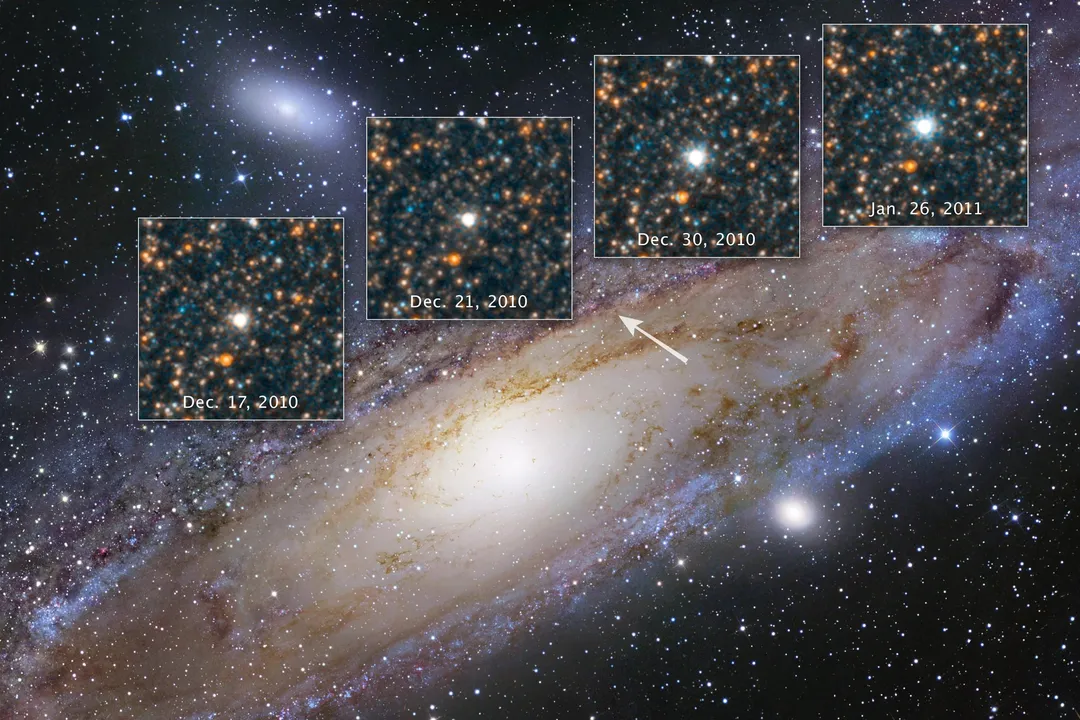
The key to unlocking their distance lay in identifying standard candles—stars whose true brightness was known. [6] Hubble successfully used Cepheid variable stars within some of these nebulae. [6] By observing how quickly these stars brightened and dimmed, he could calculate their absolute luminosity and compare it to their apparent brightness as seen from Earth, thus deriving the distance. [6] This method provided the necessary yardstick to prove that nebulae like the Andromeda Nebula were millions of light-years away, placing them far outside the confines of the Milky Way. [3]
If we consider the shift in scale, the impact is stark. Before Hubble confirmed these as external galaxies, the known universe might have been conceptualized as spanning a few tens of thousands of light-years—the extent of the Milky Way. After his definitive measurements, the known universe instantly expanded to distances in the millions of light-years, fundamentally changing the spatial boundaries of reality for astronomers. [6]
# Observing Recessions
Once Hubble had established the distances to other galaxies, he began charting their velocities. This required looking beyond simple positional astronomy and diving into spectroscopy—analyzing the light emitted by these distant objects. [7]
# Redshift Evidence
The light from distant galaxies exhibited a phenomenon known as redshift. [7] This occurs when the light waves from an object moving away from an observer are stretched, causing their wavelength to shift toward the red end of the spectrum. [7] Working alongside colleagues, including Milton Humason, Hubble systematically measured these redshifts for numerous galaxies. [4] These measurements consistently indicated that nearly all observed galaxies were moving away from the Earth. [5][7][9] This was a startling observation because a static or randomly moving universe would predict a mix of objects moving toward us (blueshift) and objects moving away (redshift). [5] The overwhelming dominance of redshift implied a systematic, large-scale motion affecting everything.
# The Proportionality Established
The true breakthrough wasn't just that galaxies were moving away, but how they were moving away relative to where they sat in the sky. [3] It was in 1929 that Hubble published his findings that linked distance and velocity. [3][5]
# Hubble's Law
Hubble concluded that the recessional velocity of a galaxy was directly proportional to its distance from Earth. [2][9] In simple terms: the farther away a galaxy is, the faster it is speeding away from us. [5] This relationship is now famously known as Hubble’s Law. [2] Mathematically, this relationship is expressed as , where is the recession velocity, is the distance, and is the proportionality constant, now called the Hubble Constant. [2] Hubble announced this finding formally in 1929. [5]
It is important to recognize that this observation aligned remarkably well with theoretical concepts already being developed by others, most notably Georges Lemaître, who had previously proposed a model for an expanding universe based on Einstein’s General Relativity. [4][7] Hubble's observational data provided the concrete evidence supporting these early theoretical predictions. [4][7]
Consider the implication of this uniformity. If we imagine the universe as a loaf of raisin bread rising in the oven, every raisin moves away from every other raisin, and the raisins farther apart separate faster. [8] Hubble's conclusion supported a universe where the expansion is both uniform and isotropic—the same in all directions and everywhere in space. [2] This means an observer on any other galaxy would measure the same pattern: all other galaxies receding from them, with the speed dependent only on the distance. [2]
| Property | Before Hubble's Conclusion | After Hubble's Conclusion |
|---|---|---|
| Size of Universe | Limited to the Milky Way system [3] | Vast, containing countless external galaxies [1][6] |
| State of Motion | Assumed static or random [5] | Systematically expanding outwards [4][7] |
| Key Measurement | Stellar positions [6] | Galaxy distance and recessional velocity [2][9] |
# The Expanding Cosmos
Hubble’s primary, monumental conclusion—the one that defined his legacy—was that the universe is expanding. [4][7] By establishing the distance-velocity relation, he provided the observational proof that the cosmos was not a fixed, eternal structure but was actively growing in scale. [5][9]
When one contemplates this expansion, it is often misconstrued as an explosion in space, where galaxies are flying through static space away from a central point. [7] Hubble's data, however, points to a more subtle and profound conclusion: it is space itself that is expanding. [7] The galaxies are carried along by this stretching of the fabric of spacetime, which explains why the apparent recessional velocity is proportional to distance—more distance means more space is stretching between the observer and the distant object. [2] This understanding is crucial; it means there is no discernible "center" to the expansion; every point sees the same result. [2]
Hubble himself recognized the profound implications of his discovery, which signaled the beginning of modern cosmology, allowing scientists to begin charting the history and fate of all things. [1][8] His work, culminating in that 1929 announcement, marked the moment astronomy truly grasped the scale and dynamism of the universe beyond our immediate stellar neighborhood. [5][9]
# Lasting Scientific Footprint
Edwin Hubble's definitive conclusions—that the universe contains innumerable galaxies and that these galaxies are systematically moving apart in an expanding cosmos—laid the foundation for nearly all subsequent cosmological study. [1][8] While the specific value of the Hubble Constant () he calculated in 1929 has been refined significantly over the decades by later researchers, such as Allan Sandage who worked at Carnegie Science, [8] the underlying principle of the expansion remains the cornerstone of our model of the universe. [2][8]
His initial findings, based on observation and measurement, transitioned cosmology from a field of speculation into a quantitative science driven by data. The clarity and scale of his conclusions remain staggering; he took the faint smudges in his telescope and revealed a universe that was, and still is, growing larger every second. [4][5]
Related Questions
#Citations
Edwin Hubble - NASA Science
Hubble's law - Wikipedia
This Month in Physics History | American Physical Society
Edwin Hubble born today and the expanding universe - EarthSky
Who is the Man That Discovered the Universe?
Hubble Confirms the Expanding Universe | Research Starters
Carnegie Science celebrates Edwin Hubble's discovery of the ...
How Astronomers Discovered the Universe Is Expanding - History.com