What is Edwin Hubble remembered for?
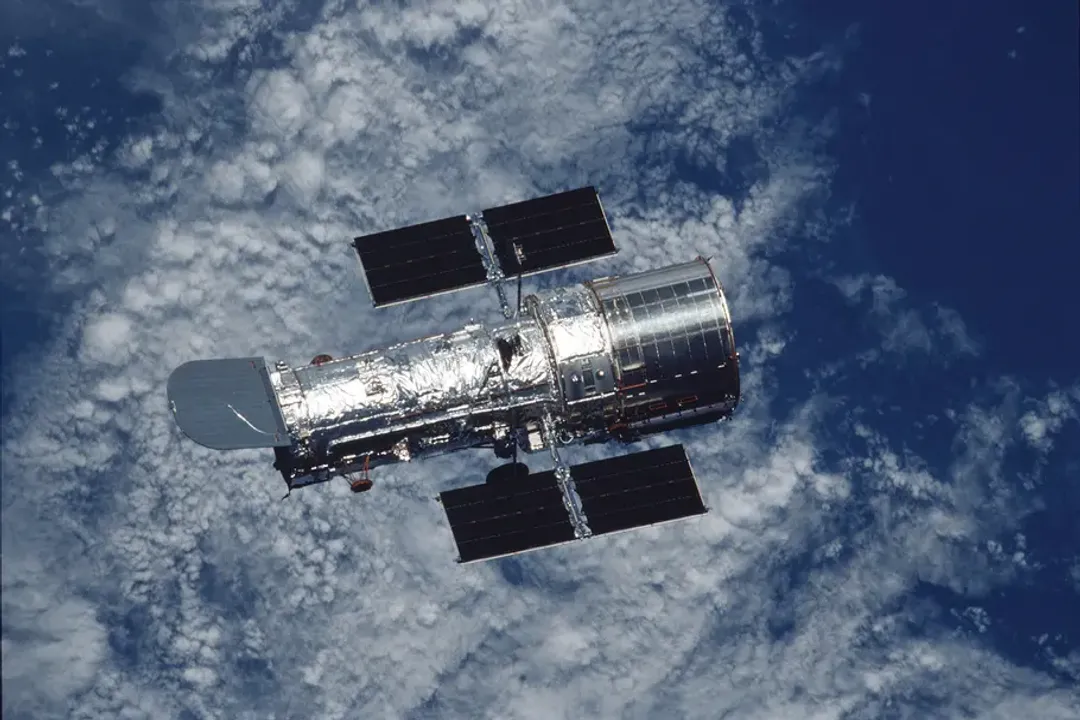
Edwin Hubble is one of the towering figures in 20th-century science, forever remembered because his work fundamentally reshaped humanity’s understanding of its place in the cosmos. Before his groundbreaking observations, the prevailing view held that the Milky Way galaxy comprised nearly the entire universe, a vast but ultimately finite and static entity. Hubble's meticulous research, conducted primarily at the Mount Wilson Observatory, definitively proved that the faint, fuzzy "spiral nebulae" scattered across the sky were, in fact, independent star systems—entire galaxies far removed from our own. This realization instantly expanded the perceived size of the universe by an unimaginable factor, moving us from a local neighborhood view to a realization of a sprawling island universe structure. His second monumental contribution cemented his fame: demonstrating that this newly expanded universe was not static but actively expanding, a discovery that laid the groundwork for modern cosmology and the Big Bang theory.
# Spiral Identity
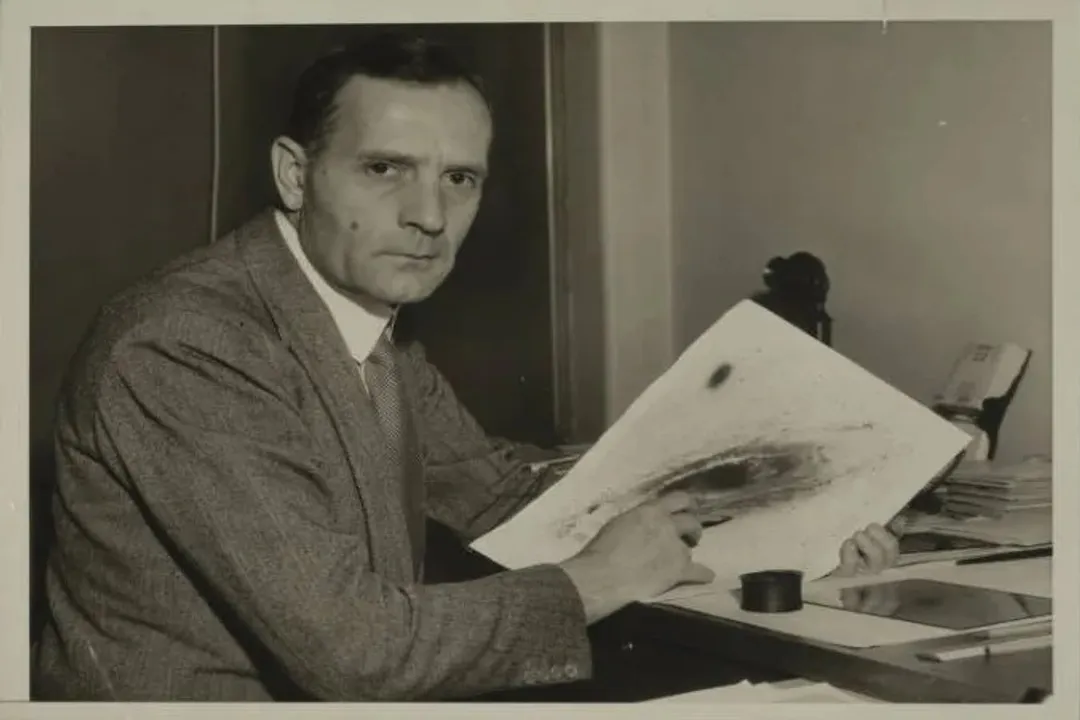
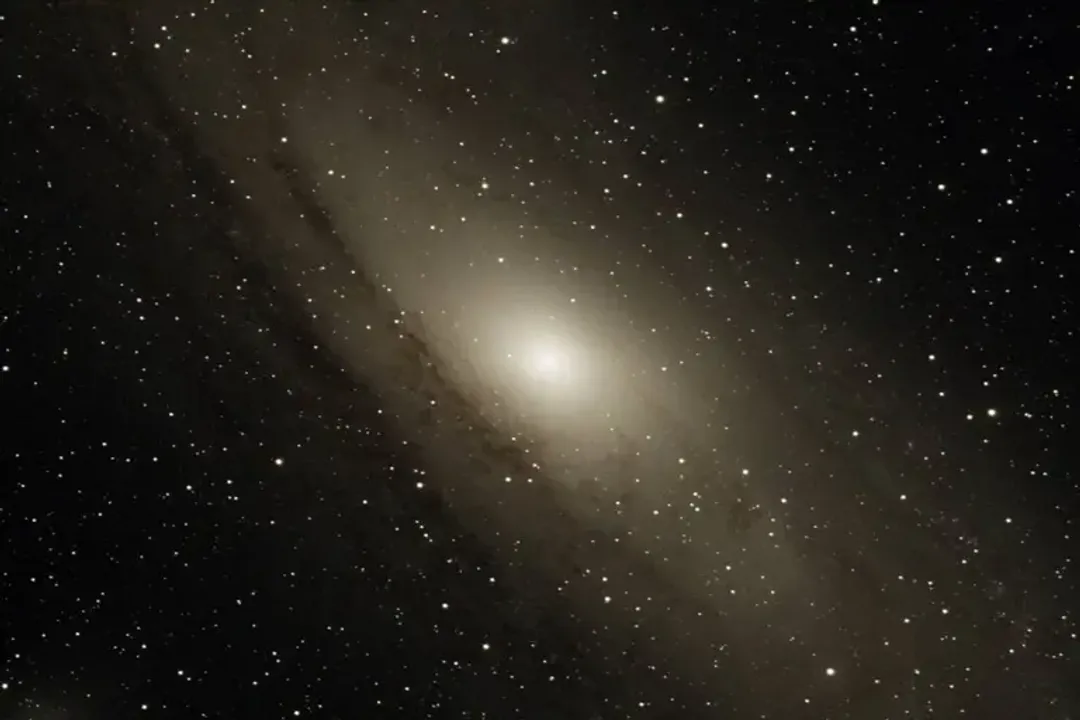
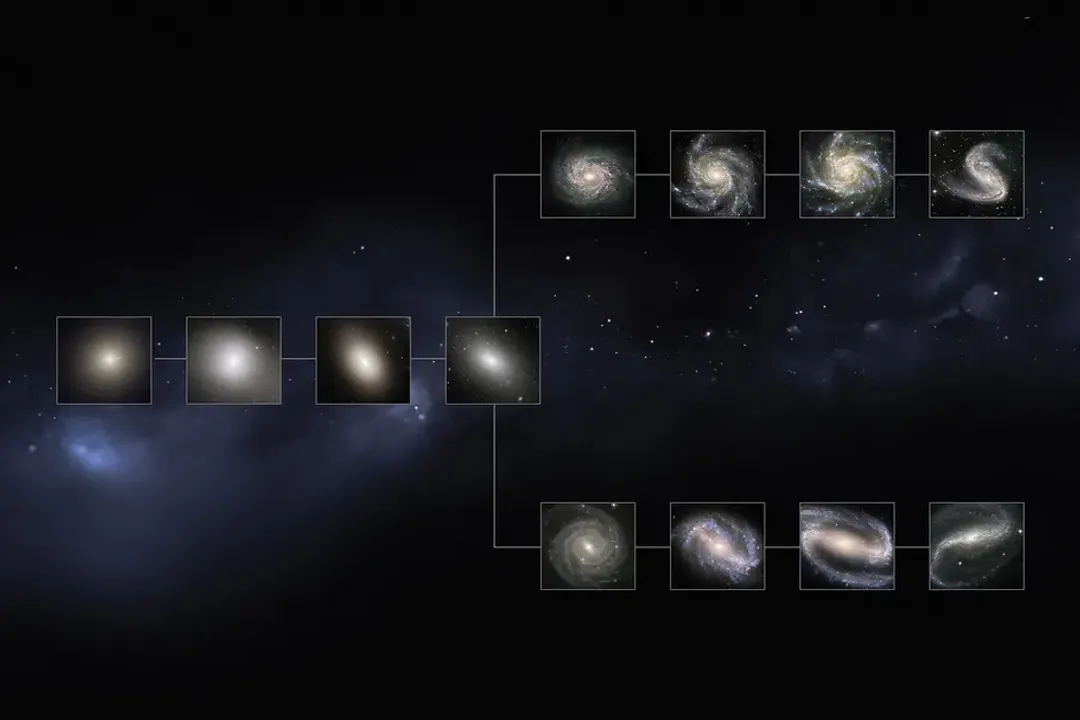
For decades preceding Hubble's definitive work, astronomers debated the nature of the "spiral nebulae," such as the Andromeda Nebula. Were these objects merely clouds of gas and dust within the Milky Way, or were they something far more profound? Hubble, employing the powerful 100-inch Hooker Telescope at the Mount Wilson Observatory in California, possessed the observational capability needed to settle this question.
The key to his breakthrough lay in identifying a particular type of star within these nebulae: Cepheid variables. Henrietta Leavitt had previously established a crucial relationship: the period it took for these stars to brighten and dim was directly related to their actual, intrinsic luminosity. By measuring the period, astronomers could determine the star's true brightness, and by comparing that to how dim it appeared from Earth, they could calculate its distance with unprecedented accuracy.
In $1924$, Hubble successfully identified Cepheid variables in the Andromeda Nebula. The calculations derived from these stars placed Andromeda far beyond the accepted boundaries of the Milky Way. This was an epoch-making moment; the universe suddenly contained not just one massive collection of stars, but countless others, each a comparable island of suns. The sheer shift in scale is difficult to overstate for a modern observer. To put this in perspective, imagine believing your entire world consisted only of your home continent, and then suddenly realizing that every pinprick of light you had ever seen in the night sky was actually another entire continent, each filled with its own oceans and cities. Hubble’s discovery turned astronomy from the study of one galaxy into the study of the universe of galaxies.
# Velocity Measurement
Having established that these nebulae were extragalactic systems, Hubble's attention turned to how these new "island universes" were behaving. Collaborating with Vesto Slipher, who had already pioneered spectroscopic measurements of these objects, Hubble began comparing the calculated distances to the observed Doppler shifts in their light.
Doppler shifts, which manifest as a shift toward the red end of the spectrum (redshift) or the blue end (blueshift), indicate whether an object is moving away from or toward an observer, respectively. Slipher had already noted that the vast majority of these nebulae exhibited significant redshift, meaning they were receding from the Earth. Hubble's task was to plot these recession velocities against the newly calculated distances for each galaxy.
In $1929$, Hubble published his analysis, demonstrating a clear, linear relationship between a galaxy’s distance () and its recessional velocity (): . This relationship, now universally known as Hubble's Law, provided the first quantitative evidence that the universe itself was expanding. The further away a galaxy was, the faster it appeared to be moving away from us.
This discovery was revolutionary because it suggested a dynamic cosmos, contradicting the established view of a static universe held by many scientists, including Albert Einstein, who had previously introduced a "cosmological constant" into his equations specifically to force a static result. Hubble’s observational data simply showed the universe was in motion, expanding like the surface of an inflating balloon, where every point moves away from every other point.
# Defining the Constant
The numerical value of the proportionality constant in Hubble's Law, , is known as the Hubble Constant. While Hubble is remembered for establishing the existence of the relationship, determining the precise value of has occupied cosmologists ever since.
Hubble’s initial estimate for the constant, based on his data from the $1920$s, suggested a universe much smaller and younger than current models estimate. The initial measurements often placed the constant in the range of about (kilometers per second per megaparsec). While modern telescopes and measurement techniques have refined this value significantly—with current measurements clustering around (though a slight tension exists between local and cosmic background measurements)—the historical context is important. The difference between Hubble's initial figure and today's accepted values is largely due to the subsequent refinement of the standard candle scale, particularly reassessing the true luminosity of Cepheid variables and incorporating newer distance indicators. Nevertheless, the crucial scientific achievement was identifying the rule itself, providing the necessary observational foundation for the Big Bang model proposed by Georges Lemaître.
# Scientific Background

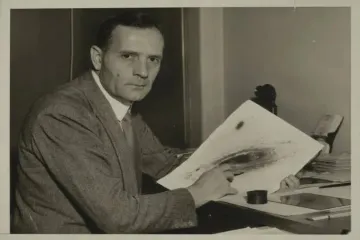
Hubble’s capacity for such groundbreaking work was built on a strong educational foundation and a period of service that honed his discipline. Born in $1889$ in Marshfield, Missouri, he was an exceptional student, earning an athletic scholarship to the University of Louisville before attending Oxford University as a Rhodes Scholar. While at Oxford, he studied law, but he also immersed himself in Greek, mathematics, and astronomy. He returned to the United States and taught high school in Kentucky for a period, even coaching the basketball team, before pursuing graduate work in astronomy at the University of Chicago, earning his Ph.D. in $1917$.
His career trajectory was briefly interrupted by service in World War I, where he served in the Army and later the Army Air Service, achieving the rank of major. Upon returning, he worked at the Yerkes Observatory before joining the staff at the Mount Wilson Observatory in California, which housed the world's premier instrument for extragalactic research at the time, the $100$-inch Hooker Telescope. His association with the Carnegie Institution for Science was long and productive, deeply influencing its research direction.
# Enduring Recognition
The impact of Edwin Hubble's discoveries is impossible to overstate; they completely redefined cosmology. His identification of other galaxies and the subsequent proof of cosmic expansion are foundational texts in modern astrophysics. This enduring influence is formally recognized through several memorials, most notably the instrument that carries his name into the modern era: the Hubble Space Telescope (HST).
The HST, launched in $1990$, was designed, in part, to provide observations unobtainable from the ground, thereby continuing the legacy of measurement and discovery that Hubble began. Its success in capturing stunning, high-resolution images and providing precise distance measurements across vast cosmic scales acts as a direct extension of his life’s work, peering even deeper into the "island universes" he first recognized.
It is interesting to reflect on the nature of scientific paradigm shifts. When Hubble proved that the spiral nebulae were external galaxies, he wasn't just adding space; he was changing the meaning of that space. The universe was no longer dominated by the structure of the Milky Way, but was instead an ocean filled with countless similar structures, all racing away from one another. This conceptual shift from a static container to a dynamic, evolving system is perhaps a greater legacy than any single number he calculated, as it opened entirely new avenues for theoretical physics, including models of the universe’s origin and fate. Furthermore, his pioneering work helped establish the systematic, observational approach to large-scale cosmic structure that remains standard practice. For example, subsequent astronomers have often used his methodology—finding a standard candle, measuring its distance, and comparing it to redshift—to chart the very furthest reaches of the observable universe, illustrating the timeless utility of the Hubble-Lemaître relation in mapping the cosmic web.
# Posthumous Honors
Hubble’s contributions were recognized within his lifetime, including his induction into the National Space Hall of Fame in $1960$. He was also a highly respected member of the American Philosophical Society (APS), having served as its president from $1939$ to $1940$. His dedication to science was recognized by his home state; he is listed as a Famous Missourian. Even after his death in $1953$, the scientific community ensured his name remained synonymous with the expanding frontier of space. The development and launch of the HST ensures that nearly every person who looks up at an image taken by that famous telescope is immediately reminded of the astronomer who first mapped the true, staggering scale of what they are seeing.
Related Questions
#Citations
Edwin Hubble - NASA Science
Edwin Hubble - Wikipedia
Edwin Hubble | Biography, Discoveries, Education, & Facts | Britannica
Carnegie Science celebrates Edwin Hubble's discovery of the ...
Edwin Powell Hubble - The man who discovered the cosmos
This Month in Physics History | American Physical Society
Edwin P. Hubble - New Mexico Museum of Space History
A Science Odyssey: People and Discoveries: Edwin Hubble - PBS
Who is the Man That Discovered the Universe?
Hubble