What did Edwin Hubble prove about the "spiral nebulae" observed across the night sky in the 1920s?
Answer
They were vast, independent "island universes" far beyond the boundaries of the Milky Way.
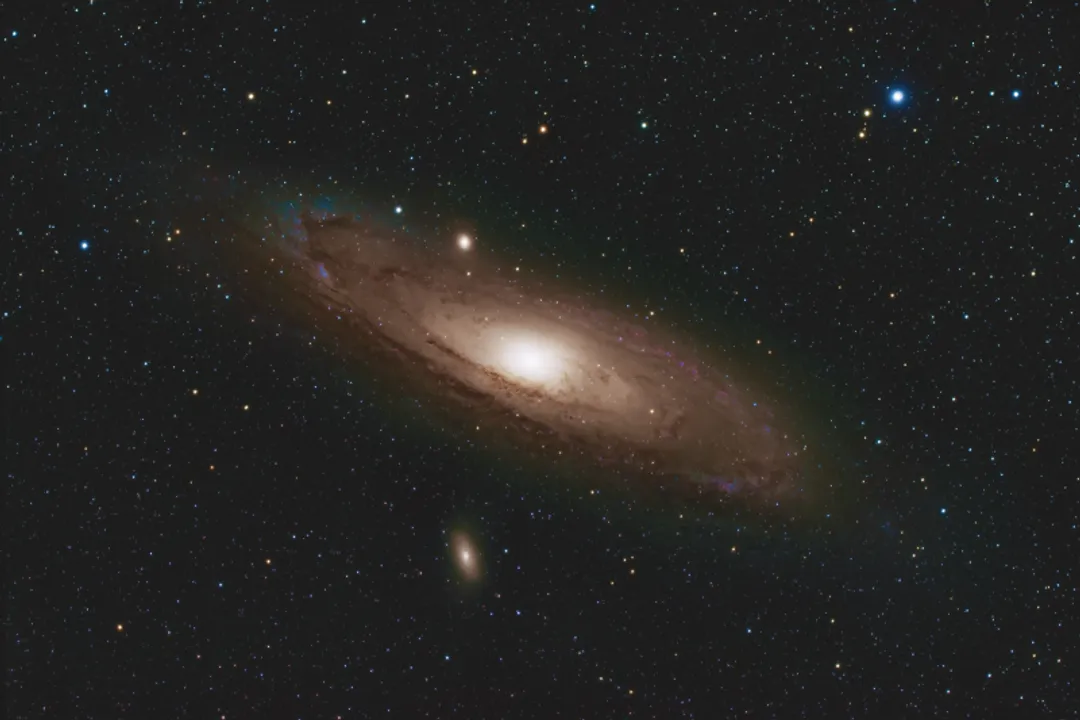
Edwin Hubble's meticulous observations provided the conclusive proof that objects previously cataloged as fuzzy patches, known as spiral nebulae, were not merely localized gaseous clouds within our own galaxy. Instead, these structures were identified as entirely separate stellar systems, vast collections of stars existing independently at immense distances. This realization instantly multiplied the perceived size of the observable universe, shifting the context of human existence from being contained within the Milky Way to being part of an immense collection of galaxies.
Related Questions
What did Edwin Hubble prove about the "spiral nebulae" observed across the night sky in the 1920s?Which specific standard candles did Hubble utilize to accurately calculate the distances to remote nebulae like the Andromeda Nebula?What proportionality did Hubble establish in 1929 concerning a galaxy's recessional velocity and its distance from Earth?What physical phenomenon causes the light from distant galaxies to be shifted toward the red end of the spectrum during spectroscopic analysis?What is the mathematical expression used to represent the proportionality described by Hubble's Law?What crucial insight did Hubble's data provide regarding the nature of the cosmic expansion, as opposed to a simple explosion scenario?According to the implications of Hubble's findings, what geometric property describes the expansion as being the same in all directions and everywhere in space?Whose theoretical work, rooted in Einstein’s General Relativity, proposed a model for an expanding universe that Hubble's observational data later substantiated?After Hubble confirmed that spiral nebulae were external galaxies, how drastically did the perceived size of the known universe change?What task, undertaken alongside Milton Humason, was required after establishing galaxy distances to determine their movement?