What is Edwin Hubble's legacy?
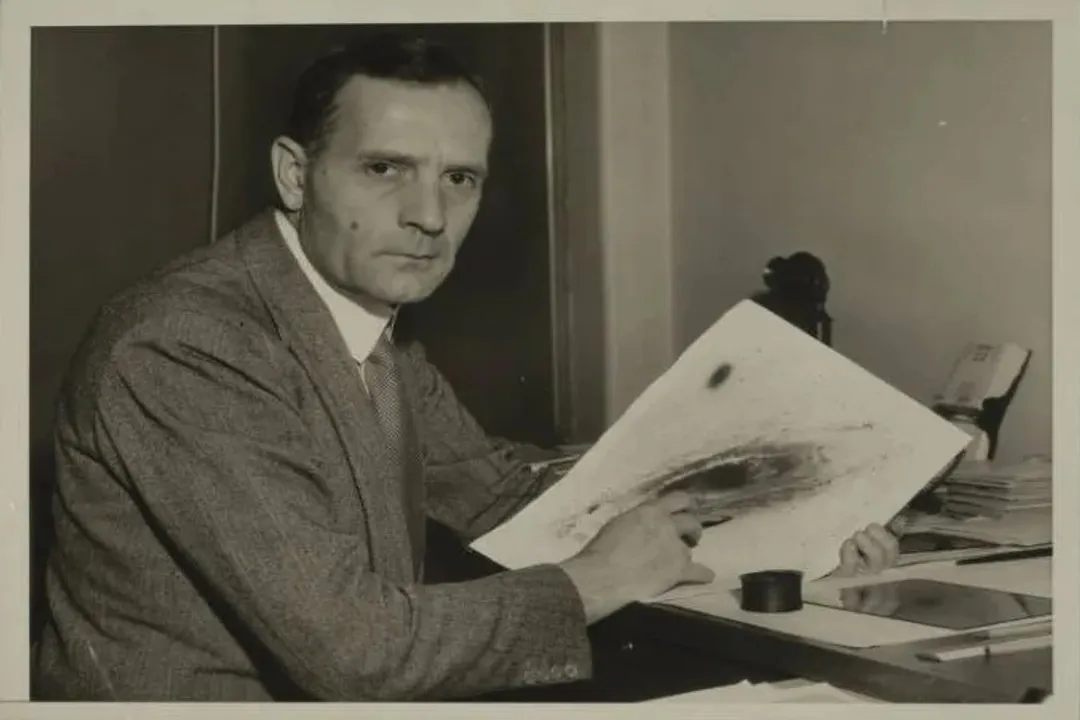
Edwin Hubble’s name is synonymous with the vastness of space itself. His work didn't just refine existing astronomical models; it ripped the existing map of reality wide open, fundamentally shifting humanity’s perception of our place in the cosmos. [1][5] Before Hubble's key discoveries in the 1920s, the prevailing wisdom suggested that the Milky Way galaxy constituted the entirety of existence—a grand island in an otherwise empty void. [5][6] Hubble, operating from the unparalleled vantage point of the Mount Wilson Observatory, used the immense power of the 100-inch Hooker telescope to demonstrate that this island was just one among millions. [1]
# Early Career
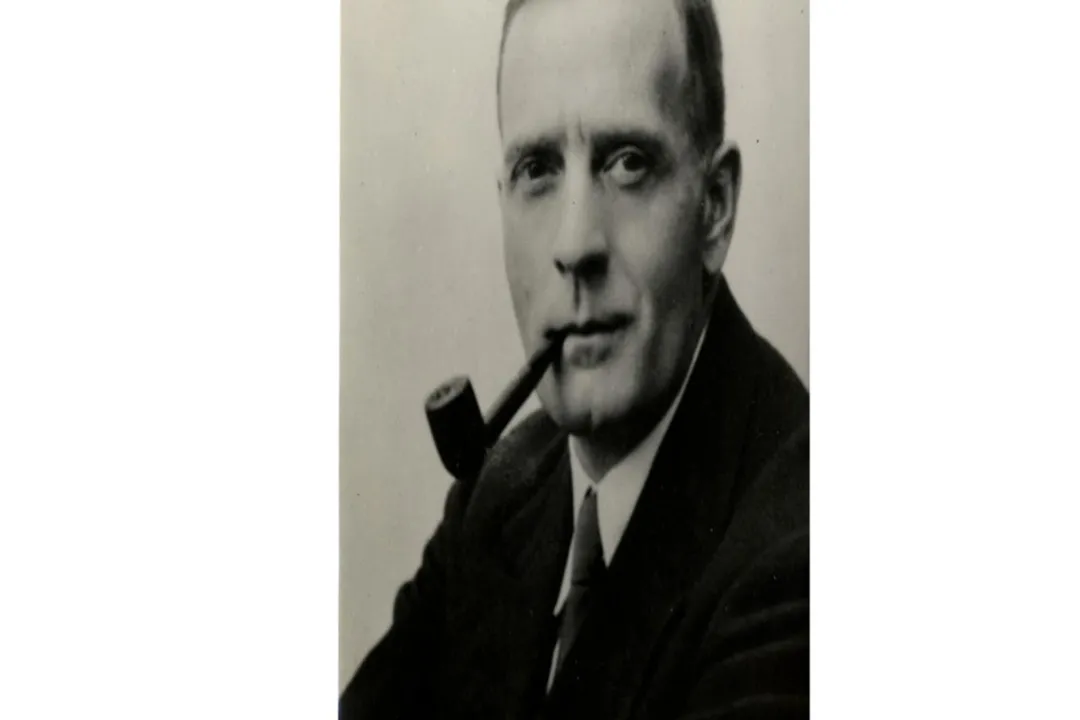
Hubble's path to astronomical revolution was surprisingly circuitous. Born in Marshfield, Missouri, in 1889, he exhibited excellence in both academics and athletics, excelling in sports like basketball and track. [1][6] His intellectual curiosity was strong, even having an article about Mars published locally at age twelve. [1] Despite this early scientific bent, his father’s wishes led him to pursue law after earning degrees in mathematics and astronomy from the University of Chicago and studying at Oxford as a Rhodes Scholar. [1][6] He practiced law half-heartedly in Kentucky before realizing his true calling lay back in the sciences, returning to the University of Chicago for postgraduate astronomy studies, earning his doctorate in 1917. [1][6]
His career was briefly interrupted by military service during World War I; he enlisted just days after completing his thesis and receiving an invitation from George Ellery Hale to join the staff at Mount Wilson Observatory. [1][6] Returning as a major in 1919, Hubble finally arrived at the world-leading center of observational astrophysics, where he would spend the next two decades transforming cosmology. [1][6]
# Nebulae Mystery
When Hubble arrived at Mount Wilson, the primary scientific contention revolved around the nature of "nebulae"—those faint, hazy patches of light scattered across the night sky. [1][3] The "Great Debate" of 1920 pitted Harlow Shapley, who argued the Milky Way was the entire universe, against Heber Curtis, who championed the idea of "island universes". [7]
Hubble, working with his night assistant Milton Lasell Humason, took on this challenge by searching for a specific type of star within these nebulae: Cepheid variables. [1][5] This method, pioneered by Henrietta Swan Leavitt, allowed astronomers to measure immense distances based on the period of a Cepheid’s brightening and dimming cycle. [3][7]
In October 1923, Hubble found the decisive evidence in the Andromeda Nebula (M31). [1] He identified a Cepheid variable star, famously marking his photographic plate with a dramatic, almost unique exclamation point: VAR!. By measuring the periods of several such stars in Andromeda, he calculated its distance to be roughly 900,000 light-years away. [1][5] Since the established diameter of the Milky Way was only a few hundred thousand light-years, Hubble’s measurement placed Andromeda far outside our own galactic boundaries. [1][7] By 1924, his conclusion was firm: Andromeda was not a cloud within the Milky Way, but an entirely separate galaxy. [1][6] This single finding expanded the known universe by an order of magnitude, settling the Great Debate and cementing the concept of "island universes". [1]
# Galactic Types
Having established that the universe was populated by countless other galaxies, Hubble did not stop there. He began the methodical work of organizing this newfound cosmic census. [1] Focusing on the photographic plates gathered through the Hooker telescope, he established a system to categorize galaxies based on their visual structure. [3][5]
This system, known today as the Hubble Classification Scheme or the Hubble Tuning Fork Diagram, remains the standard template for classifying galactic morphology, a testament to its enduring utility. [1][5][6] It organizes galaxies primarily by shape into three main families: elliptical, spiral, and barred spiral. [1][6]
The scheme proceeds along the prongs of the "tuning fork":
- Elliptical Galaxies (E0–E7): Ranging from nearly perfectly spherical (E0) to highly flattened (E7). [1] These generally consist of older stars with more random stellar motions. [1]
- Spiral Galaxies (Sa–Sd): Characterized by a central bulge and surrounding arms. The classification a, b, c denotes how tightly wound the arms are; Sa has tightly wound, smooth arms, while Sc features much looser, more open arms, where luminosity is more focused in the arms than the central disk. [1][5]
- Barred Spirals (SBa–SBc): Similar to spirals but featuring a central bar of stars extending across the nucleus from which the spiral arms emerge. [1] Our own Milky Way has been classified as a barred spiral (SBb). [1]
Even though this framework does not neatly account for all forms—such as irregular or dwarf galaxies—it provided the essential language for extragalactic astronomy, allowing subsequent generations to analyze galactic evolution based on observable form. [3]
# Expansion Rate
Hubble’s most profound legacy, however, relates to the dynamics of the universe itself. Following up on earlier redshift measurements by astronomer Vesto Slipher, [3][7] Hubble plotted the distances he calculated for these galaxies against their measured velocities. [1][5] The pattern that emerged was undeniable and startling: the farther away a galaxy was, the faster it appeared to be moving away from the Earth. [1][5][6]
This proportionality—galaxies receding at a speed directly related to their distance—is formalized as Hubble’s Law (though later co-credited as the Hubble–Lemaître law). [1][5][6] This observation, published in 1929, served as the first compelling empirical evidence that the universe was not static, as was widely assumed, but actively, uniformly expanding. [1][5]
The implications were cosmological dynamite. The idea that space itself was stretching meant that, working backward, everything must have originated from a single point—the conceptual underpinning of the Big Bang theory. [1][5] In fact, Albert Einstein, whose General Relativity equations had initially suggested an expanding universe but who had subsequently modified them to fit the static model, reportedly admitted to Hubble that adjusting his equations based on prevailing wisdom was "the greatest blunder of my life". [1][7] This moment—where observation definitively corrected theory—is a monumental achievement in scientific history. [1][7]
| Parameter | Hubble's Initial 1929 Estimate | Current Scientific Estimate | Significance |
|---|---|---|---|
| Distance to Andromeda | light-years | million light-years | Confirmed Andromeda as external galaxy [1][7] |
| Hubble Constant () | Sets the rate of cosmic expansion [1][7] | ||
| Universe Age Implied | billion years | billion years | Foundation for Big Bang timing [1] |
Hubble’s original calculation for the Hubble Constant was approximately . [1] While current measurements cluster around , [7] and his initial age estimate for the universe was off by billions of years, the relationship itself—the formulation—remains the cornerstone of modern cosmology. [1][6] The ongoing refinement of the Hubble Constant, even today, speaks to the enduring relevance of the measurement he initiated. [5]
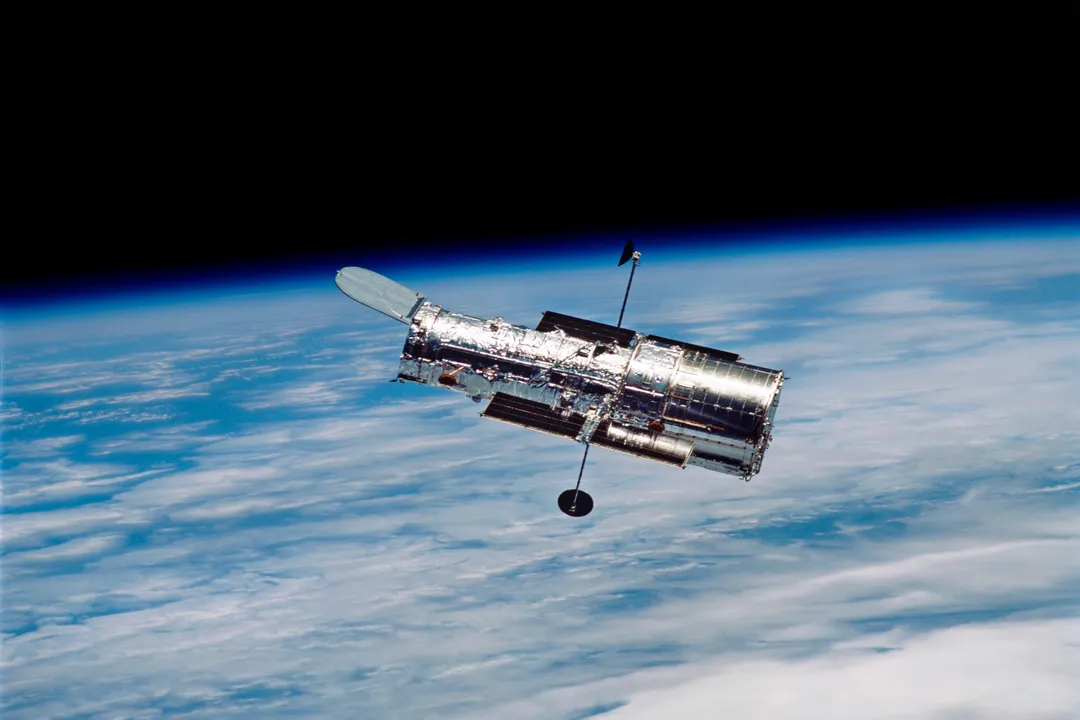
Observing the universe through a device that removes atmospheric distortion is a critical step for accuracy, a lesson Hubble helped drive home. His work was done through the best ground-based optics available, but consider this: if Hubble had the advantage of being above the air, his initial distance calculations might have been significantly closer to today's accepted values, demonstrating how instrumental observing location is to the precision of cosmological metrics. [3] He pushed the limits of what ground-based technology could reveal, laying the groundwork for the next great leap.
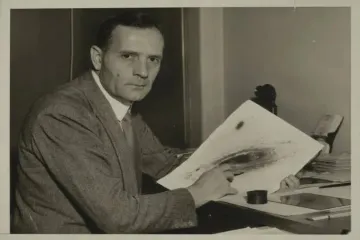
# Later Life and Recognition
Hubble continued his astronomical pursuits, serving in war duties during WWII, which earned him the Medal of Merit in 1946 for his contributions to ballistics research. [1][5] His final major contribution involved the design and construction of the next generation of instruments: the 200-inch Hale telescope at Palomar Observatory. [1][6] He had the distinct honor of being the first person to use this telescope when it saw first light in 1949. [1][6] The Hale telescope was four times more powerful than the Hooker and stood as the world's largest for decades. [1]
Hubble passed away in 1953 from a cerebral thrombosis. [1][6] An interesting footnote to his career is his vigorous, yet unsuccessful, lobbying for astronomy to be recognized under the Nobel Prize in Physics during his lifetime. [1] The Nobel committee only agreed to allow astronomy-related discoveries to qualify for the Physics prize a few months after his death. [1]
His legacy is secured not only through the multitude of eponymous scientific terms—the Hubble radius, the Hubble luminosity law, etc.—but most tangibly through the Hubble Space Telescope (HST). [5][6] Launched in 1990, the HST, unburdened by the Earth’s atmosphere, has provided the stunning visual confirmation of Hubble’s theoretical framework, offering humanity an aperture to see the distant cosmos with clarity he could only dream of. [3] In a philosophical sense, Hubble’s work was perhaps the final dethroning of humanity from the center of creation, first suggested by Copernicus, and fully realized by Hubble’s discovery that our galaxy was merely one small part of an enormous, dynamic system. That realization—that the universe is expansive, evolving, and fundamentally bigger than our own neighborhood—is the true, undying core of his contribution. [1]
Related Questions
#Citations
Edwin Hubble - NASA Science
How Astronomers Discovered the Universe Is Expanding - History.com
Edwin P. Hubble - New Mexico Museum of Space History
Celebrating Edwin Hubble, Legendary Astronomer
Case Files: Edwin Hubble | The Franklin Institute
The universe: Historical discoveries from Edwin Hubble and others
Edwin Powell Hubble - The man who discovered the cosmos