What is the only thing left after a supernova explosion?

The spectacular end of a massive star, a supernova explosion, is one of the most violent and energetic events in the cosmos. It often conjures an image of complete destruction, a star simply winking out of existence. However, the reality is far more complex; a supernova does not result in nothingness. Instead, it leaves behind one of two drastically different, yet equally fascinating, outcomes: a dense, exotic stellar corpse at the center, enveloped by a vast, expanding cloud of stellar debris. To understand what is left, one must look both inward toward the collapsed core and outward toward the expanding shockwave.
# Remnant Cloud
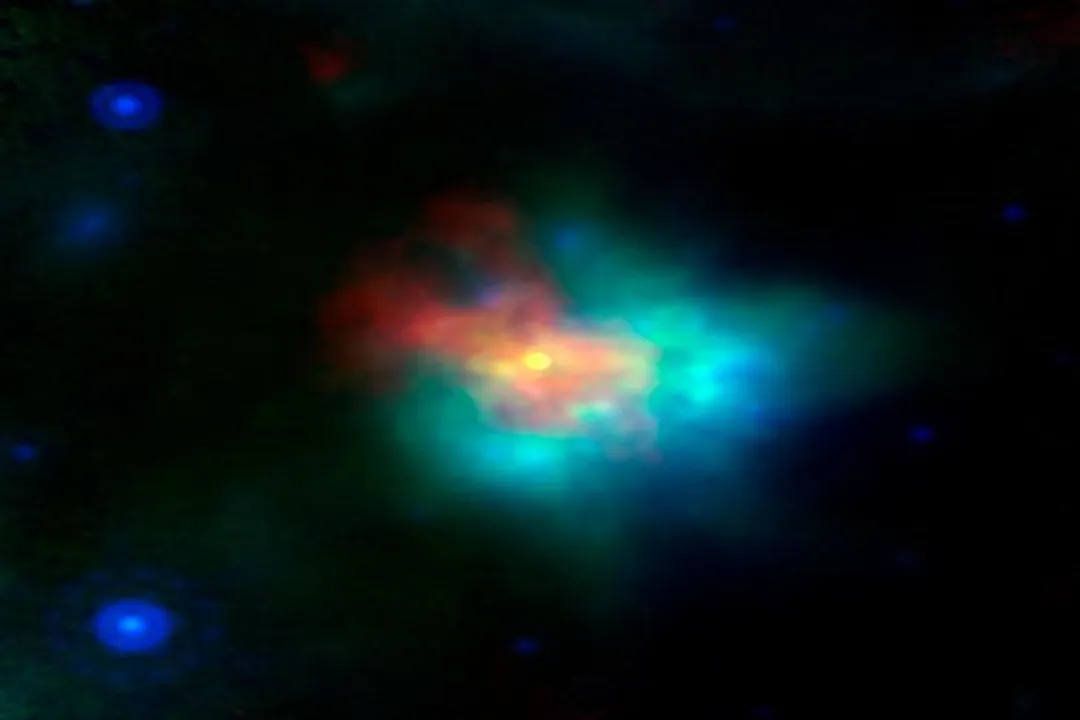
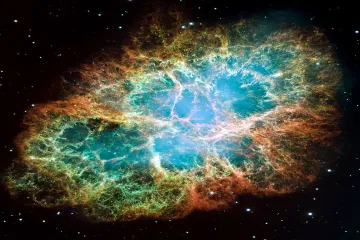
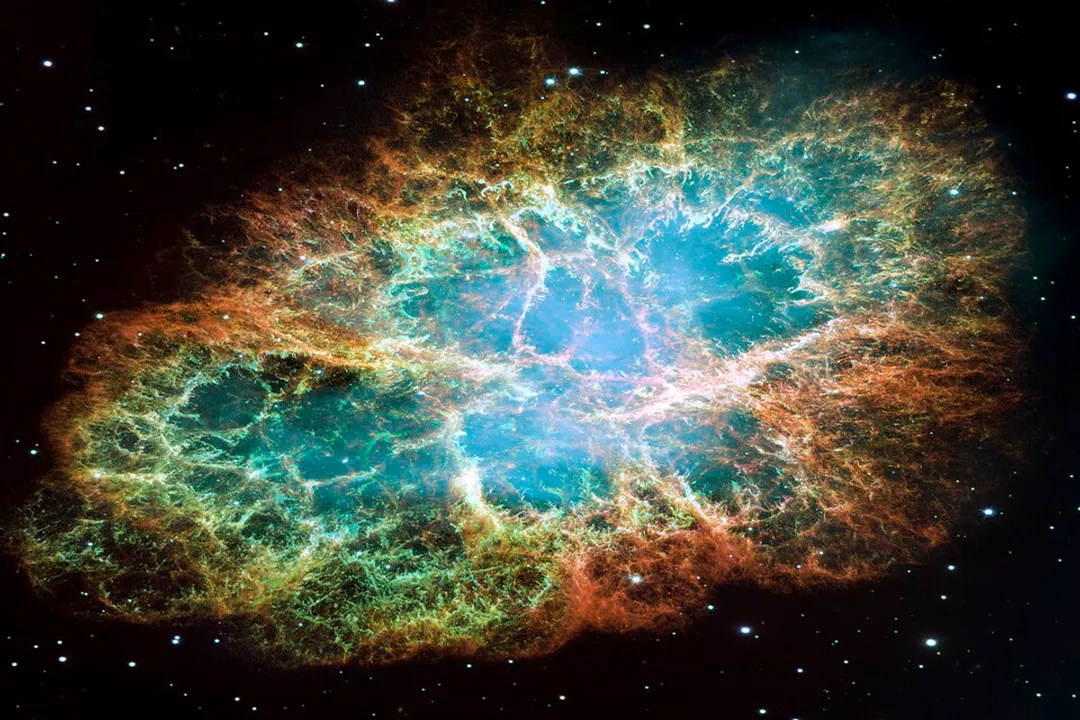
The most visible and immediate aftermath of any supernova, regardless of the core's fate, is the supernova remnant (SNR). This isn't a single object but rather a gigantic, expanding bubble of gas and dust, heated to millions of degrees by the shockwave propagating outward from the explosion site. When a star meets its end, it blasts most of its outer layers into space at tremendous speeds, sometimes reaching tens of thousands of kilometers per second.
This ejected material carries heavy elements synthesized during the star's life and during the explosion itself, like iron, gold, and uranium, seeding the interstellar medium for future generations of stars and planets. The SNR expands over thousands of years, interacting with the surrounding interstellar medium (ISM). This interaction generates powerful X-rays and radio waves, which astronomers can observe using specialized telescopes like the Chandra X-ray Observatory. The remnant itself can grow to be light-years across, taking on complex, filamentary structures as the shockwave slams into denser patches of gas and dust. The remnants are essentially the star's expelled guts, traveling outward, eventually mixing with the galaxy's overall composition.
A critical distinction exists in how we classify these objects based on their age and visibility. Initially, the expanding shell of gas is observed. Over time, the gas cools and slows down, eventually blending back into the general interstellar material, perhaps over tens of thousands of years. In this sense, the only thing left after the visible remnant fades is the central object, though the ejected material has fundamentally altered the composition of the surrounding space.
# Stellar Corpse
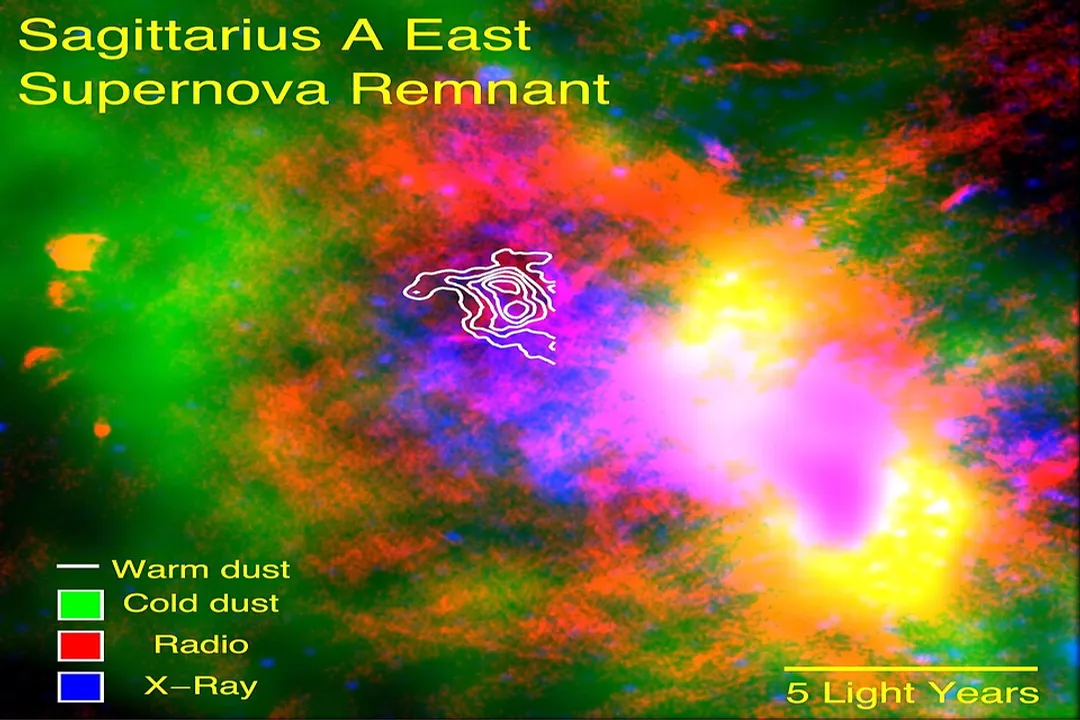
While the outer layers are cast off, the star's original core—the part that triggered the explosion—undergoes a catastrophic collapse. The fate of this core is determined almost entirely by its mass after the explosion. If the remaining core mass is between about $1.4$ and $3$ times the mass of our Sun, the incredible pressure halts the collapse, creating an neutron star. This object is staggeringly dense; a teaspoon of neutron star material would weigh billions of tons. The collapse is halted by neutron degeneracy pressure, a quantum mechanical effect where neutrons resist being squeezed into the same quantum state.
If the progenitor star was significantly more massive, the remnant core will exceed the mass limit where even neutron degeneracy pressure can resist gravity. In this scenario, the core collapses completely, forming a black hole. This is the most extreme end state, where gravity overcomes all known forces, creating a singularity from which nothing, not even light, can escape.
The question of when these objects form is also illuminating. The collapse of the core into a neutron star or black hole happens during the supernova event itself, often preceding the arrival of the visible shockwave at the stellar surface. The collapse is what powers the outward explosion. Therefore, the compact object is present from the very beginning of the visible explosion process.
Here is a quick overview of the possibilities for the core:
| Initial Stellar Mass (Approx.) | Core Remnant Type | Final Density State |
|---|---|---|
| to | Neutron Star | Degenerate Neutron Matter |
| Black Hole | Singularity | |
| White Dwarf (Type Ia) | Supported by electron degeneracy |
Note: represents the mass of the Sun.
# Comparing Outcomes
It is crucial to clarify that the "only thing left" depends on the perspective. If you are observing the location shortly after the event, you see two things: the expanding shell (the SNR) and the central engine (the compact object). If you wait a very long time—far longer than the age of the universe if the core is a black hole, or tens of thousands of years if it is a neutron star—the supernova remnant will dissipate and merge with the surrounding gas. In that distant future, the only permanent, gravitationally bound object remaining from the star's original bulk would be the neutron star or black hole. A black hole, for instance, leaves an enduring gravitational scar on spacetime, while a neutron star remains a highly compact, observable beacon, perhaps as a pulsar.
Considering the general reader's perspective, the ejected material is often what defines the event visually, but the compact object is the more lasting physical remnant of the original stellar core. Think of it like detonating a massive firework: the colorful explosion disperses outward (the SNR), but the metal casing that falls back to Earth is the inert, long-lasting component (the compact object).
# Insights on Stellar Evolution
Observing a supernova remnant like the one from Cassiopeia A allows astronomers to trace the history of the explosion. By studying the material ejected, scientists can effectively work backward to determine the mass and type of the star that died. The relative abundance of elements like silicon, sulfur, and argon in the remnant gas tells a story about the specific fusion processes that occurred inside the star just before its collapse. The fact that the visible remnant is composed of material that was outside the stellar core when the explosion happened provides an unparalleled sample of processed stellar matter, something we cannot obtain from studying the Sun, which has not yet begun core collapse.
Furthermore, it is interesting to consider the environment that forms these remnants. Most core-collapse supernovae occur in regions rich with gas and dust, which the supernova shock then compresses and heats. This compression can actually trigger new star formation in the compressed gas shells of the remnant shell decades or centuries later, long after the initial blast has subsided. Thus, the supernova explosion is not just an ending, but a necessary, if violent, step in the galactic recycling process, leaving behind both a dense stellar anchor and the enriched building blocks for the next stellar generation.
#Videos
After A Supernova Event, What Is Left Behind? - Physics Frontier
Related Questions
#Citations
What gets left behind in the aftermath of a massive star's death ...
Supernova remnant - Wikipedia
What is the aftermath of a supernova? Is there any remnants left ...
Supernova Remnants - Imagine the Universe!
Why does matter stay collapsed in the core, following a supernova ...
When Does a Neutron Star or Black Hole Form After a Supernova?
Q..What is the name given to remnants of supernova explosions left ...
After A Supernova Event, What Is Left Behind? - Physics Frontier
Chandra :: Resources :: Q&A: Supernova Remnants and Neutron Stars