What's left behind after a supernova explosion?
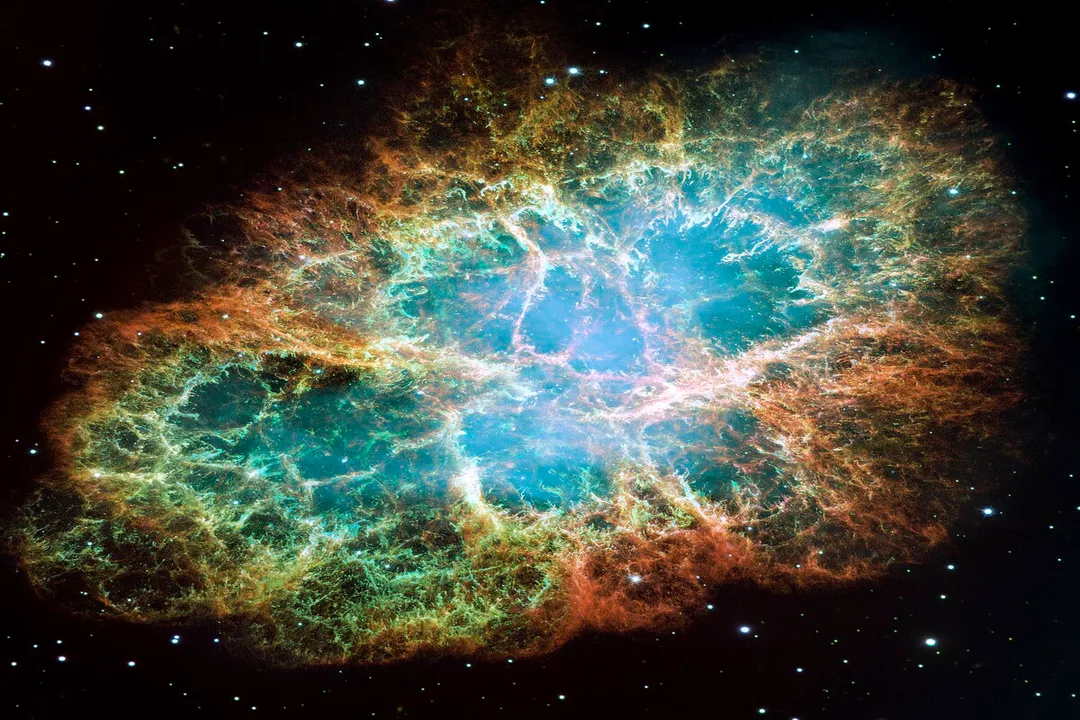
The violent death throes of a massive star, a supernova explosion, is one of the most spectacular events in the cosmos, but it is not an ending without consequence. While the star’s outer layers are blasted outward at incredible speeds, the process leaves behind a complex mixture of structures, ranging from vast, expanding shells of gas to incredibly dense, exotic stellar cores. [1][4] Understanding what remains requires looking both far out into the expanding debris field and deep into the collapsed heart of the former star.
# Remnant Structure
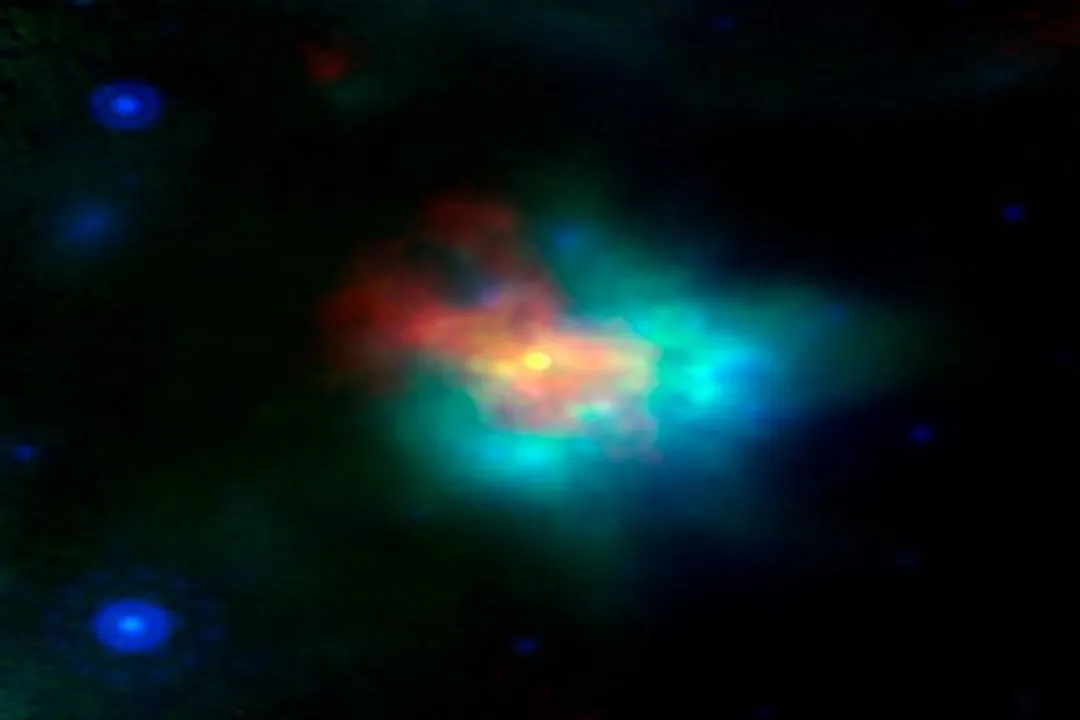
The most immediate and visually striking aftermath is the supernova remnant (SNR). [1][6] This is essentially the expanding, illuminated cloud created by the ejected stellar material slamming into the surrounding interstellar medium (ISM). [1] These remnants are not merely passive puffs of gas; they are dynamic, high-energy environments. As the shockwave from the explosion sweeps outward, it heats the gas to millions of degrees, causing it to glow intensely across the electromagnetic spectrum, particularly in X-rays and radio waves. [1]
The expansion of these clouds is an extended process. While the initial explosion happens in moments, the resulting SNR can persist for tens of thousands of years, slowly spreading and mixing its contents with the rest of the galaxy. [1] In some cases, these remnants are observed to contain a pulsar, which is a rapidly spinning, highly magnetized neutron star left at the center. [1] The distinctive pulses of radio waves emitted by these pulsars are one way astronomers trace the initial energetic blast wave. [1]
A key contrast exists in what the progenitor star leaves behind depending on the explosion type. If the star was a massive one undergoing core collapse (Type II), the result is almost always an SNR containing a compact object. [4] However, if the event was a Type Ia supernova, which typically involves a white dwarf star accumulating too much mass and detonating completely, astronomers often expect the event to leave no compact core behind—the star essentially disintegrates entirely. [4]
# Stellar Corpses
At the very center of many core-collapse supernovae, where the initial explosion’s energy is generated, lies the compressed core of the star, now fundamentally altered. [7] The original star’s mass is the deciding factor in whether this core survives as a neutron star or collapses further into a black hole. [3] Gravity, having overwhelmed the star’s internal fusion pressure, crushes the matter down to extreme densities. [7]
# Neutron Stars
If the remnant core's mass falls below roughly three times the mass of our Sun (about ), the collapse is halted by neutron degeneracy pressure. [3][7] This creates a neutron star, an object so dense that a mere teaspoon of its material would weigh billions of tons. [7] The pressure sustaining it comes from the Pauli exclusion principle applied to neutrons packed together, resisting further compression. [7] These objects are incredibly small, often only about 20 kilometers in diameter, yet they contain more mass than the Sun. [3]
# Black Holes
When the original core mass exceeds this critical threshold—approximately —even the powerful neutron degeneracy pressure is insufficient to fight gravity. [3] In this scenario, the core collapses completely, forming a black hole. [3] A black hole is an object whose gravity is so intense that nothing, not even light, can escape its boundary, the event horizon. [3] While the supernova explosion scatters the star's outer layers across space, the singularity remains, invisible but present due to its gravitational influence. [4]
An interesting question arises regarding why this matter remains collapsed. During the explosion, the outer stellar layers rebound off the super-dense core, causing the shockwave. [7] The collapse of the core itself occurs because the pressure needed to support the mass exceeds the limits of neutron degeneracy. [7] It is this fundamental physical constraint—the maximum limit a neutron star can withstand—that dictates the formation of the singularity rather than another stable object.
When considering the sheer density contrast, it's insightful to consider the scale. If you were to compress the entire mass of the Earth down to the size of a sugar cube, you would be approaching the kind of density achieved in a neutron star. [7] The matter left behind after a supernova is truly the most extreme form of stable or near-stable matter the universe can produce from a stellar engine.
# Elemental Scatter
Beyond the compact objects and the expanding gas cloud, perhaps the most significant contribution left behind by a supernova is the chemical inventory it deposits into the galaxy. [8][1] Stars forge lighter elements through fusion, but only the immense energies of a supernova can create the heavier elements, such as gold, silver, and uranium. [8]
The explosion scatters this newly synthesized material—along with elements that were already present in the star's outer layers—into the interstellar medium. [1][8] This enriches the vast clouds of gas and dust from which future generations of stars, planets, and eventually, life, will form. [8] Essentially, the remnants serve as the galaxy's essential recycling program, seeding new cosmic construction sites with the building blocks of complexity.
# Timescales and Evolution
The evolutionary path of a supernova remnant offers a fascinating timeline. The initial shockwave races outward, potentially reaching speeds of thousands of kilometers per second. [1] However, this phase is relatively short-lived. The remnant then enters a phase where it decelerates as it sweeps up more interstellar material, becoming cooler and less energetic over thousands of years. [1]
If we think about the galaxy’s chemistry, there is a noticeable gap between the event and the full incorporation of the enriched material. A supernova remnant might be visibly detectable for perhaps $10^4$ to $10^5$ years. [1] Yet, the ejected material continues to travel outward and disperse for much longer periods.
An interesting comparison emerges when looking at the spatial extent versus the chemical incorporation time. While the visible SNR fades within the scale of tens of thousands of years, the kinetic energy imparted by the blast drives bubbles of low-density, enriched material far into the galactic halo. [1] It might take several million years for the elements ejected in that single flash to become fully homogenized into the general galactic gas reservoir, meaning the immediate neighborhood sees the enrichment first, but the galaxy digests the signature over much longer cosmic epochs.
Thus, what is left behind is not just debris, but a multi-stage legacy: an immediate, glowing shockwave, a central, hyper-dense object (or nothing at all), and a centuries-long distribution of the universe’s heaviest elements across the galaxy. [1][3][8] The explosion wipes out one star but provides the necessary materials for countless future systems.
#Videos
After A Supernova Event, What Is Left Behind? - Physics Frontier
Related Questions
#Citations
Supernova remnant - Wikipedia
What gets left behind in the aftermath of a massive star's death ...
When Does a Neutron Star or Black Hole Form After a Supernova?
What is the aftermath of a supernova? Is there any remnants left ...
After A Supernova Event, What Is Left Behind? - Physics Frontier
Supernovas & Remnants | Center for Astrophysics
Why does matter stay collapsed in the core, following a supernova ...
Studying the complex aftermath of a supernova | Astronomy.com
What happens to a neutron star after a supernova explosion?
Neutron Stars - NMSU Astronomy