Are nebulae actually visible?
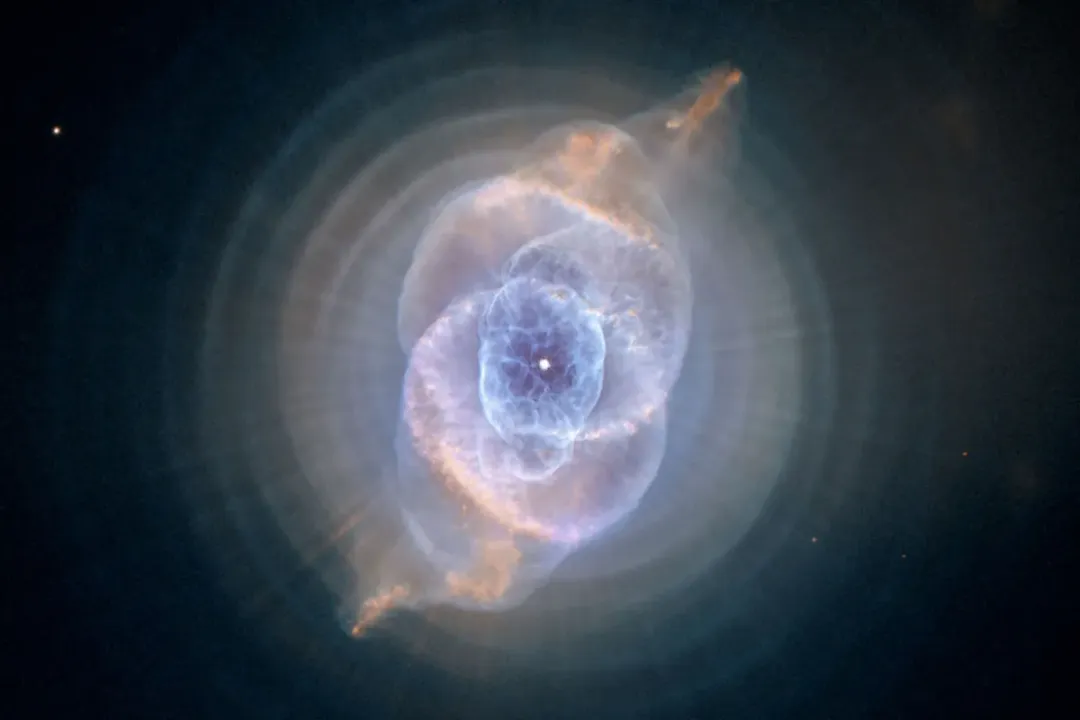
When looking at breathtaking images from the Hubble or James Webb Space Telescopes, it’s easy to assume that the cosmos is filled with vibrant, swirling clouds of pinks, blues, and greens visible to the naked eye. The reality, however, is a fascinating study in optics, biology, and the difference between what a camera can record and what the human eye can perceive in real-time. [2]
The straightforward answer to whether nebulae are visible is a qualified yes, but rarely in the glorious colors seen in photographs. [4] Most nebulae are incredibly faint and far away. While professional telescopes capture stunning visual data, your own eyes, even aided by a backyard telescope, will often reveal a much more subtle sight. [3]
# Direct View
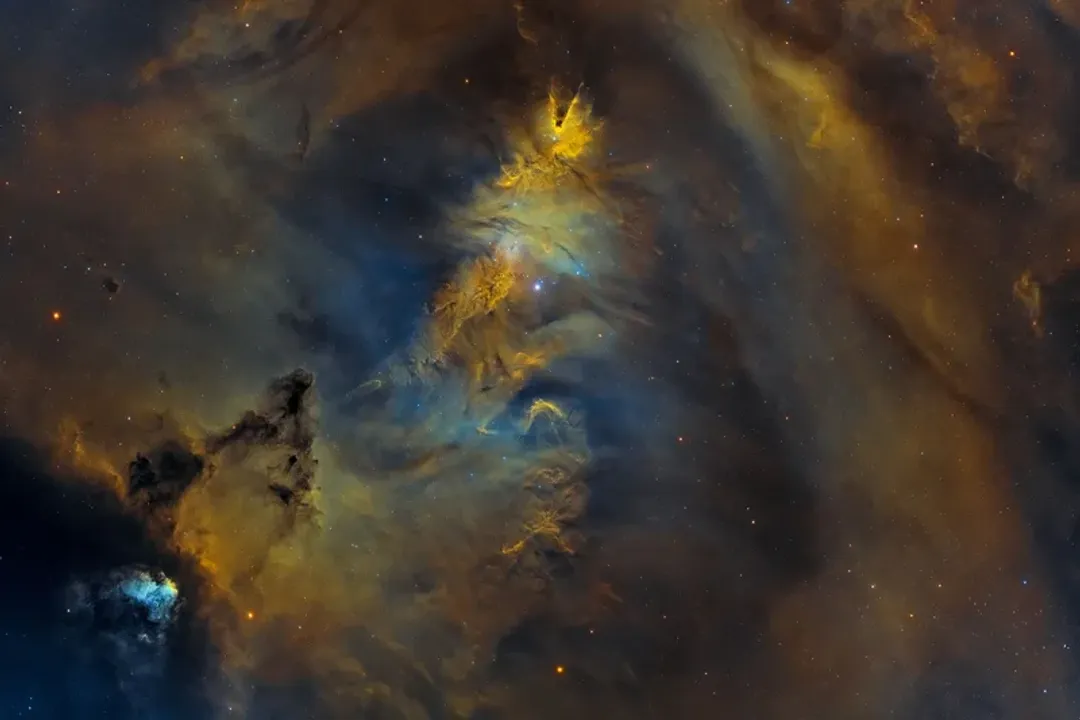
For the average amateur astronomer, the visual experience of a nebula is often one of subtlety. If you manage to find a bright target, like the Great Orion Nebula (M42), under dark skies, you will likely see a recognizable, albeit faint, patch of light. [4] For many other nebulae, the view through a telescope might be nothing more than a grayish, indistinct smudge. [7] This is particularly true for emission nebulae, which glow due to excited hydrogen gas, or reflection nebulae, which simply scatter starlight. [8]
The issue isn't that the object isn't there; it’s that the light arriving at Earth, spread out over an immense area, is simply too dim for our biological sensors to register detail or color instantaneously. [1] Even the most powerful amateur telescopes act primarily as light buckets, gathering more photons over time, but the direct, instantaneous view remains muted. [3]
# Faint Light
The reason for this dimness relates directly to how the human eye functions, specifically the difference between rods and cones. [7] Cones are the color receptors in our retina, requiring a relatively high level of light intensity to become activated, which is why we see the world in full color during the day. [7] Rods, on the other hand, are far more sensitive to low light levels, allowing us to navigate in near darkness, but they do not perceive color. [7]
When observing a faint nebula, the light hitting your eye is below the threshold needed to trigger the cones reliably. Therefore, your brain processes the input through the highly sensitive rods, resulting in a view that appears monochromatic—a faint, grayish patch. [7] This biological limitation means that even if you are looking at a region of space bursting with red hydrogen-alpha light, your eye reports only dim light, not the rich crimson seen in long-exposure images. [7]
It can be helpful to think about light accumulation. A camera sensor, or even your eye with prolonged concentration, can "add up" photons over several seconds or minutes. [2] When you look through an eyepiece, you are getting an instantaneous feed, which is why that faint signal never seems to register as color for your brain in real-time viewing. [1]
# Camera Capture

The breathtaking images that fill astronomy magazines and websites are almost never what you see looking through an eyepiece. [2] These photographs are typically long-exposure composites. [2] This means the camera shutter is left open for minutes, or even hours, gathering a massive cumulative amount of light that is impossible for the human eye to collect in a single glance. [5]
Furthermore, these images are often processed using specialized techniques:
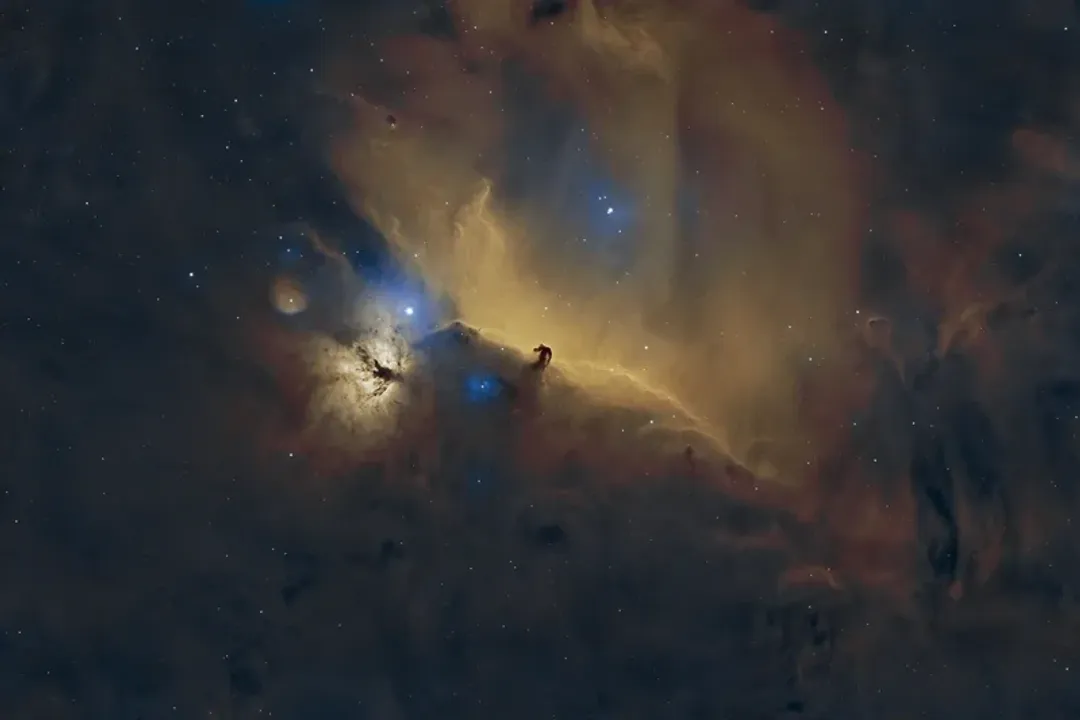
- Color Assignment: Emission nebulae often emit light at specific wavelengths (like the strong red from ionized hydrogen or blue from doubly ionized oxygen). [8] A specialized camera sensor captures these distinct wavelengths, and then software assigns those specific light signals to visible color channels (like red, green, or blue) in the final image. [8] This reveals the true spectral signature of the gas, which is different from how our eyes perceive combined light. [5]
- Stacking: Multiple short exposures are layered together to improve the signal-to-noise ratio, effectively reducing the graininess inherent in low-light photography. [2]
This process allows scientists and astrophotographers to reveal structures and colors that are simply invisible to the unaided or even telescope-aided eye because the light level is too low. [2][5] Comparing the visual result of a faint nebula to its processed photograph is like comparing a grainy black-and-white security camera feed to a high-definition cinematic movie shot using professional lighting—both depict the same subject, but the information content is vastly different. [6]
# Cloud Density
Another aspect that often confuses newcomers stems from cinematic portrayals. If you imagine flying through a nebula, you might expect to crash into thick, colorful gas clouds like those seen in Star Wars. [6] In reality, nebulae are defined by how low their density is, which is why they appear so faint from Earth. [6]
If you were positioned inside a typical nebula, the view would likely be quite dark unless you were very close to a bright, illuminating star. [6] The gas and dust are spread so thinly across such enormous distances that the space between particles is greater than the space between planets in our own solar system. [6] You would pass through the stellar nursery relatively unimpeded; the material density is simply too low to obscure your view significantly from an internal perspective. [6] The vibrant colors we see are a result of the sheer scale of the cloud when viewed from millions of light-years away, allowing the collective light from billions of atoms to finally become apparent. [8]
# Viewing Tips
While the spectacle of deep-sky photography is out of reach for direct visual observation, dedicated effort can maximize what you can see through a telescope. [4] Success hinges on minimizing light interference and maximizing your eye’s sensitivity.
- Go Dark: Light pollution is the single greatest enemy of faint object viewing. [3] Seek locations far away from city lights. Even a small amount of ambient light washes out the delicate signals from nebulae. [3]
- Dark Adaptation: Allow your eyes at least 20 to 30 minutes to fully adjust to the darkness. [4] This process maximizes the sensitivity of your rod cells. Use only a dim, red-filtered flashlight for charts or equipment adjustments, as red light minimally disrupts dark adaptation. [4]
- Use averted Vision: This technique exploits the fact that the center of your retina (the fovea, packed with cones) is poor at seeing faint light, while the peripheral vision (richer in rods) is better. [1][3] When you look slightly away from the nebula, it may suddenly "pop" into faint view, even though you aren't looking directly at it. [3]
- Choose the Right Target: Start with the brightest targets. The Orion Nebula (M42), the Lagoon Nebula (M8), and the Dumbbell Nebula (M27) are relatively bright targets that offer the best chance of seeing some structure or hint of color, even if it's just a hint of green or grey. [4]
Understanding what you are seeing through the eyepiece—a ghost of light accumulated over millennia—changes the experience from disappointment to appreciation. [1] You are witnessing the faint, real-time accumulation of photons gathered by your own instrument, a process distinct from the processed, color-enhanced vistas captured by space-based observatories. [2][5] This subtle gray smudge is, in fact, the same physical entity that appears so dazzling in professional images.
Related Questions
#Citations
ELI5:Does Nebula actually look like that or is it just the camera?
Decoding Nebulae - NASA Science
How can I see a nebula? - Astronomy Stack Exchange
What is a nebula? Cosmic clouds and how to see them
Lighting Up the Universe - Bell Museum
How would a nebula actually look if you were flying through ... - Quora
Do Nebulas actually have visible colour? - Stargazers Lounge
Do Nebulae Actually Look This Impressive? | Space - Labroots
When we see footage from space, we see colorful nebulae, gas ...