Can you actually see nebulae?
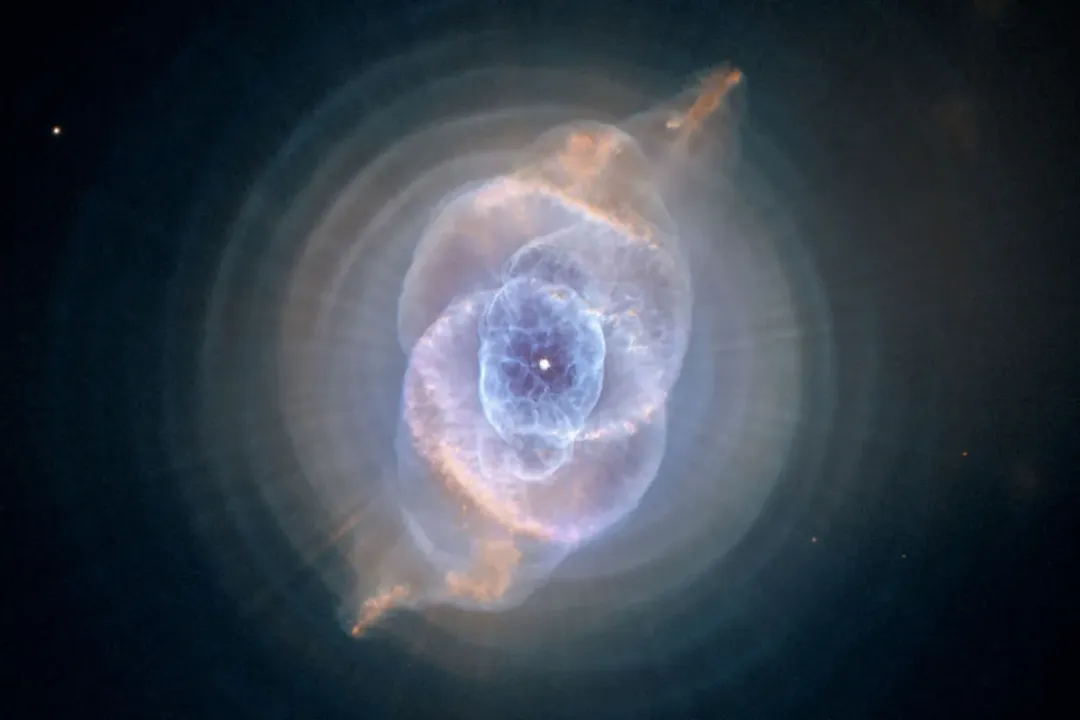
The reality of viewing celestial clouds like nebulae, those vast structures of gas and dust where stars are born or die, often clashes sharply with the breathtaking images captured by instruments like the Hubble Space Telescope. When people first look through a telescope or even attempt to spot one with the naked eye, the immediate question is whether the faint smudge they see corresponds to the vibrant cosmic artwork they expect. [3][9] The short answer is yes, you can see them, but the experience is profoundly different from the colorful photographs we usually encounter.
# Light Dimness
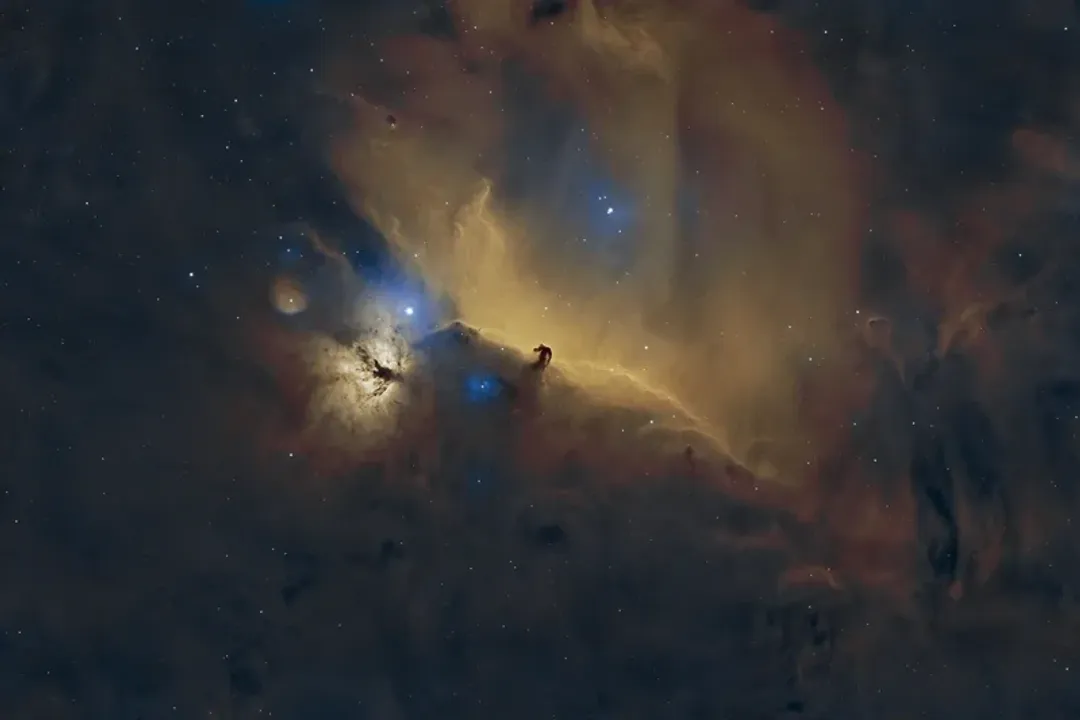
The primary hurdle in observing nebulae is their sheer faintness, or low surface brightness. [3][9] Nebulae are spread out over enormous areas of the sky, meaning the total light they emit is spread very thin across a wide apparent area, unlike a star whose light is concentrated into a single point. [9] While some of the closest and largest nebulae, such as the Orion Nebula (M42), are technically visible to the unaided eye under perfectly dark, clear conditions, they appear as nothing more than a faint, fuzzy patch or a grayish cloud, rather than a spectacular explosion of color. [6][3]
Consider that the apparent brightness we perceive is what truly matters for our eyes. Even a nebula that radiates a tremendous amount of energy over its vast span might only have a surface brightness comparable to a very dim star or the general glow of the night sky itself. [9] For many dimmer objects, like distant planetary nebulae such as the Hourglass Nebula or the Ring Nebula, your naked eye simply cannot gather enough photons to register the object against the background darkness, even if you know precisely where to look. [7][3]
# Eye Perception
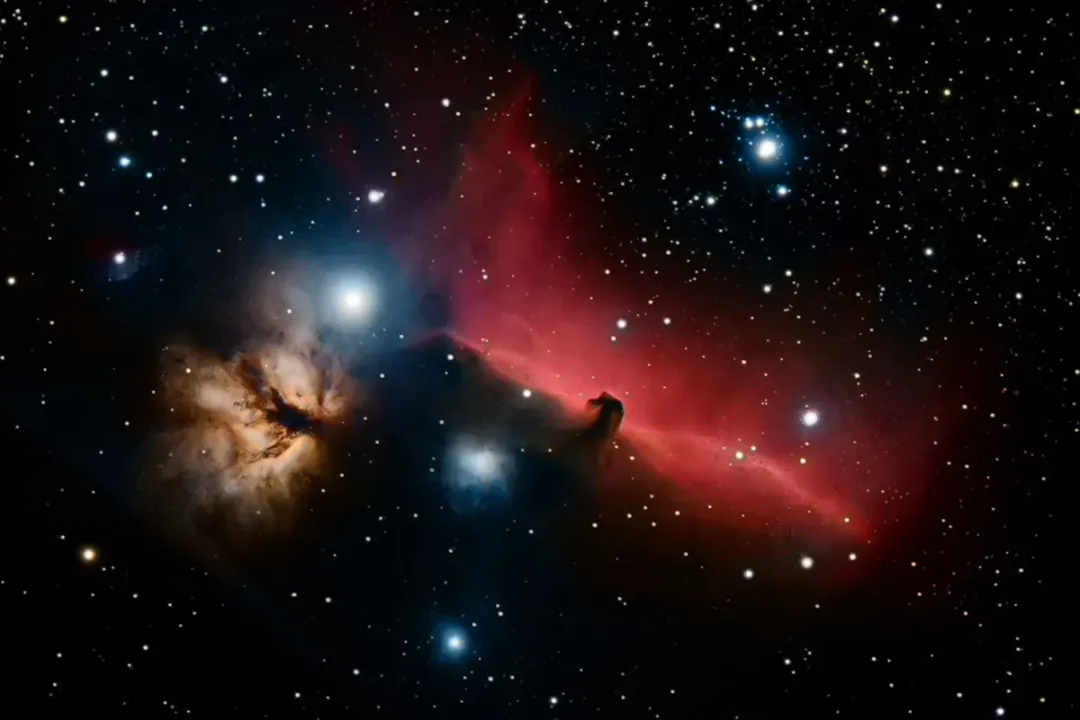
Understanding how the human eye works is key to managing expectations when looking at faint astronomical objects. [10] Our retinas possess two main types of light-sensitive cells: rods and cones. [10] Cones are responsible for high-resolution vision and, critically, color perception, but they require a relatively bright level of light to become activated. [10] Rods, on the other hand, are far more sensitive to low light levels, allowing us to see shapes and movement in near darkness, but they do not perceive color. [10]
When observing a dim nebula, even through a moderate telescope, the light hitting your eye is below the threshold needed to stimulate the cones significantly. [10] Consequently, the object is registered almost entirely by the rods, resulting in a monochromatic, grayish, or pale white view. [10][3] This is why even through a good eyepiece, a nebula known for its striking pinks and blues in long-exposure photography will often present itself as a subtle, ethereal structure lacking vibrant hues. [10] The eye adapts to the darkness, becoming highly sensitive, but sacrifices color information in the process. [3]
# Telescope Views
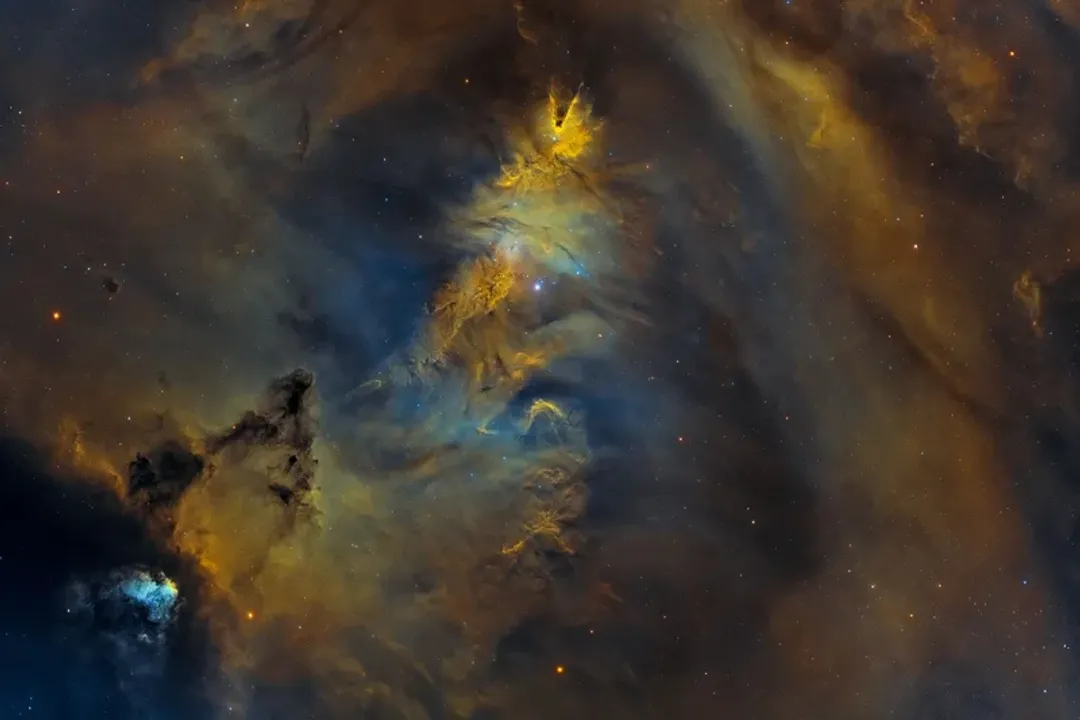
Using a telescope dramatically increases the amount of light collected, allowing fainter objects to become visible. [9] This is the main advantage of optical aid. An amateur telescope essentially gives your eye a much larger aperture, or opening, to gather those scarce photons. [9] For instance, comparing the area of the pupil—roughly 7 millimeters in diameter in the dark—to the aperture of even a modest 8-inch (20 cm) telescope shows that the telescope gathers light over 800 times more effectively. [9] This immense boost in light-gathering power reveals structure and shape that is completely invisible to the naked eye. [9]
However, magnification itself does not magically create color where there is insufficient light. While a larger scope might show a faint, greenish tint to certain emission nebulae, this is often at the very edge of perception for the human eye, or it might be an artifact of the eye adapting to the specific wavelength of light being presented. [10] Generally, professional astrophotography achieves its stunning results through long-exposure imaging. [10] These cameras collect light continuously for minutes or even hours, accumulating photons to the point where the cones can register the color, or specialized filters are used to isolate specific chemical signatures, which are then digitally mapped to visible colors. [10]
For an amateur observer, seeing the structure of the Veil Nebula or the core of the Lagoon Nebula at all through a small telescope is an achievement, even if it's grayscale. [7] It is seeing the object as it truly appears to a human sensory system operating under those low-light conditions.
# Faint Structure
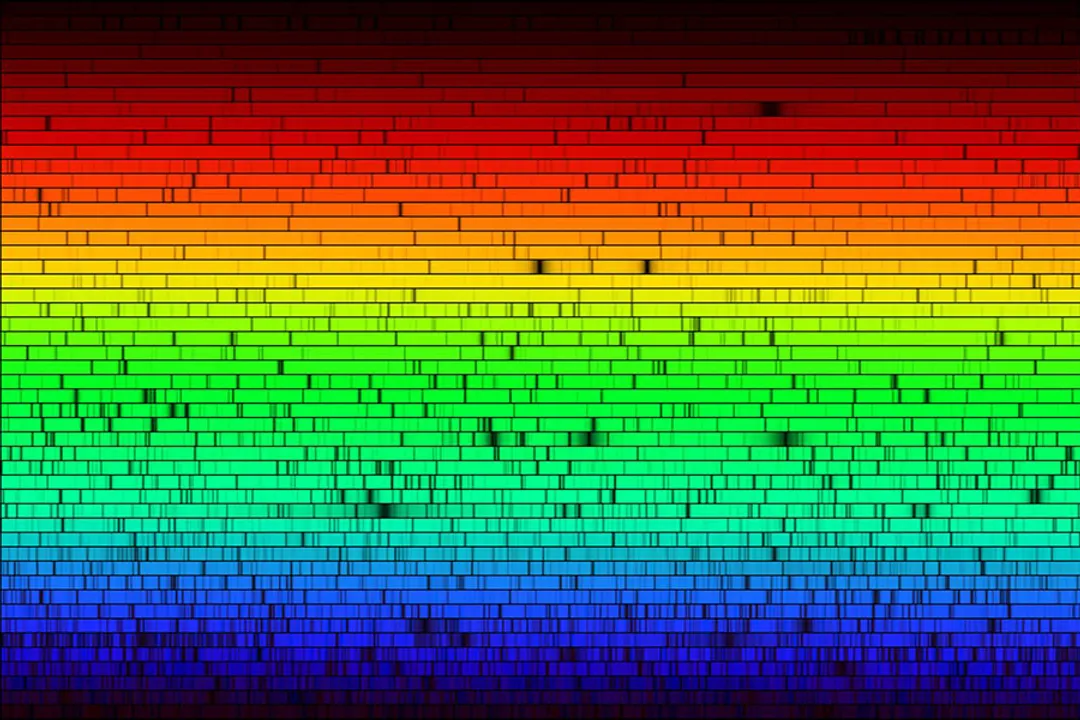
It is helpful to classify nebulae by how their light interacts with the surrounding space. Emission nebulae, like those rich in hydrogen, glow from light emitted by nearby hot stars, and are often the most promising targets for amateur observation. [6] Reflection nebulae, conversely, shine by reflecting the light of nearby stars, sometimes appearing blueish. [6] Dark nebulae, composed of thick dust clouds, do not emit or reflect light but are visible only as silhouettes against a brighter background star field or brighter nebula behind them. [6][7]
When viewing a dark nebula, like the Coalsack Nebula, the visibility depends entirely on what lies behind it. If you were floating freely in space, assuming you were distant enough from any bright nearby stars or galaxies, the deep space background would be profoundly black, making the obscuring dust clouds stand out starkly against the backdrop of more distant, pinpoint stars, provided the dust cloud itself didn't block all light. [1] In that vacuum, the contrast would be absolute, without the slight atmospheric scatter we experience even from the darkest terrestrial locations. [1]
An interesting comparison arises when considering objects of similar apparent brightness but different types. A small, distant galaxy might present as a similarly faint, fuzzy oval, but a planetary nebula, being much closer, often possesses a more defined, circular, or ring-like structure that betrays its true nature, even if the color is absent. [7]
# Finding Visibility
To maximize the chance of seeing any color or detail in a nebula, several factors must align perfectly. Beyond owning adequate equipment, site selection is paramount. [9] Light pollution washes out the faint glow of nebulae much faster than it dims the light from stars. [9] A very dark location, perhaps far from city lights, is essential for detecting the faintest naked-eye targets or bringing out the subtle details in smaller scopes. [9]
If you are seeking color, you must look for the brightest nebulae, such as M42. [6] Even here, some observers report faint hints of green or subtle hints of red/pink under perfect dark skies and using high-quality eyepieces designed to maximize light transmission. [10] The key is realizing that the human eye’s color sensitivity drops off so quickly that unless the object is exceptionally bright, you are relying on the rods. [10]
If you find yourself using a high-quality telescope and still only seeing gray, don't be discouraged. Practice makes a significant difference in how your eye adapts and how you mentally process the faint light. The trick is often to look slightly beside the object—a technique called averted vision—which engages the more sensitive rod cells located slightly away from the very center of your eye. [3] This simple technique can sometimes turn a near-invisible smudge into a faintly visible patch of structure.
# Perception Across Distances
The question of seeing a nebula close up leads to an interesting thought experiment about scale and light. If you were magically transported near the Ring Nebula, for example, and it filled a significant portion of your view, it would absolutely be visible, likely dominating your vision with its structure and color, as you would be immersed within the light source. [3] However, this contrasts sharply with the conditions astronomers observe from Earth.
When we look at a nebula from millions of light-years away, we are always dealing with the light that has traveled vast distances, making it incredibly diffuse by the time it reaches us. Even from the vantage point of the International Space Station, you are still observing objects millions of light-years away, meaning the light remains faint, though the absence of atmospheric turbulence might offer slightly crisper stellar points. [1] The atmospheric interference on Earth is a separate optical challenge that slightly blurs and dims everything, but the fundamental problem with nebulae—their low surface brightness—persists regardless of whether you are on Earth or in orbit. [1] For objects outside our solar system, the vacuum of space simply provides clearer skies; it doesn't make the distant object inherently brighter.
Ultimately, seeing a nebula means accepting the visual reality of extremely faint, diffuse light. The photographs are maps of accumulated light energy; your eye is a real-time, low-light detector that trades vibrant color for the ability to perceive shape in the near-total darkness between stars. [10][3] The gray cloud you see through your eyepiece is the nebula, seen as only the human eye can see it.
#Videos
Can You See Nebulae With the Naked Eye? - Physics Frontier
Related Questions
#Citations
If i was hypothetically floating freely in space near the pillars ... - Reddit
How can I see a nebula? - Astronomy Stack Exchange
Would the human eye see a Nebula like we see in the pictures from ...
Lighting Up the Universe - Bell Museum
Can You See Nebulae With the Naked Eye? - Physics Frontier
Not often I get to see a naked-eye visible nebula, but this one is ...
5 amazing planetary nebulae: how to find the hourglass, the ring of ...
What is a nebula? Cosmic clouds and how to see them
Can we really see nebula with our eyes on a telescope ?
Do Nebulas actually have visible colour? - Stargazers Lounge