What visual quality is lost when viewing nebulae through a telescope versus seeing Hubble photographs?
Color
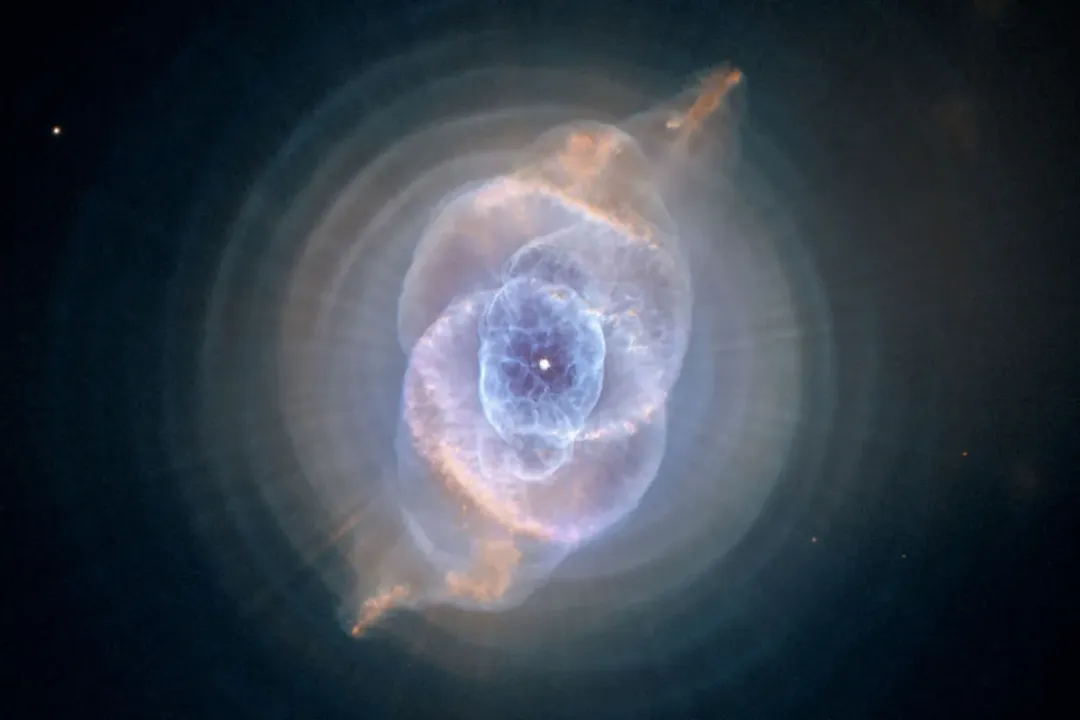
The fundamental difference between the vibrant images captured by instruments like the Hubble Space Telescope and direct viewing through an eyepiece lies in the perception of color. Human vision relies on two main types of photoreceptors in the retina: cones and rods. Cones are responsible for sharp, high-resolution vision and perceiving color, but they require a relatively high level of light intensity to activate effectively. When observing faint astronomical objects like nebulae, the light gathered is spread thinly over a wide area, resulting in a low surface brightness that falls below the threshold needed to stimulate the cones significantly. Consequently, the observation is registered almost entirely by the rods, which are highly sensitive to dim light, enabling the detection of shape and structure in near-darkness, but these cells do not transmit color information. This leads to the view being monochromatic, often appearing as a grayish or pale white cloud, even though specialized photography reveals the underlying hues.
#Videos
Can You See Nebulae With the Naked Eye? - Physics Frontier