Under perfect conditions, how does the Orion Nebula (M42) typically appear to the unaided eye?
A faint, fuzzy patch or grayish cloud
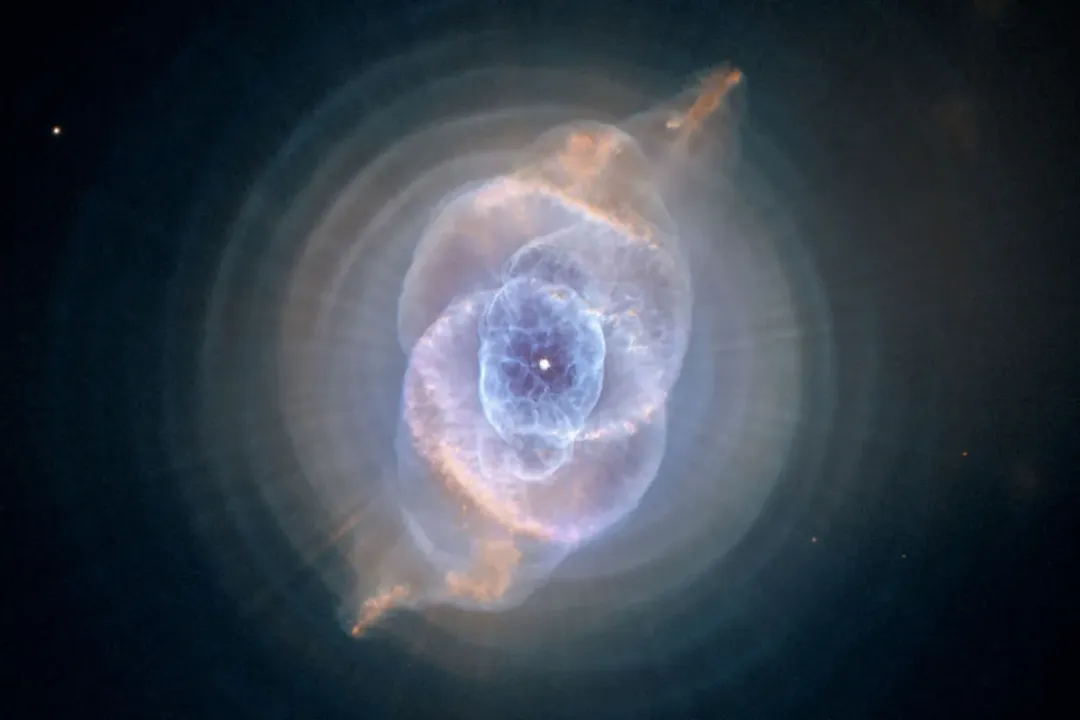
The Orion Nebula (M42) is one of the few large nebulae close enough and intrinsically bright enough to potentially be spotted with the naked eye under perfectly dark and clear atmospheric conditions. Despite its spectacular appearance in photographs, direct observation without optical aid reveals it quite differently. Because the light is spread out, resulting in a low surface brightness, the cones in the eye are not adequately stimulated to perceive color. Instead, the light is registered by the more light-sensitive rods, causing the nebula to manifest as merely a faint, somewhat fuzzy patch of light or a grayish cloud against the black backdrop of the sky, lacking the dramatic explosion of color seen in long-exposure images.
#Videos
Can You See Nebulae With the Naked Eye? - Physics Frontier