Why do nebulae appear as faint smudges of grey or white visually rather than colorful spectacles?
The light is diffused across a vast angular area, resulting in extremely low intensity hitting the retina.
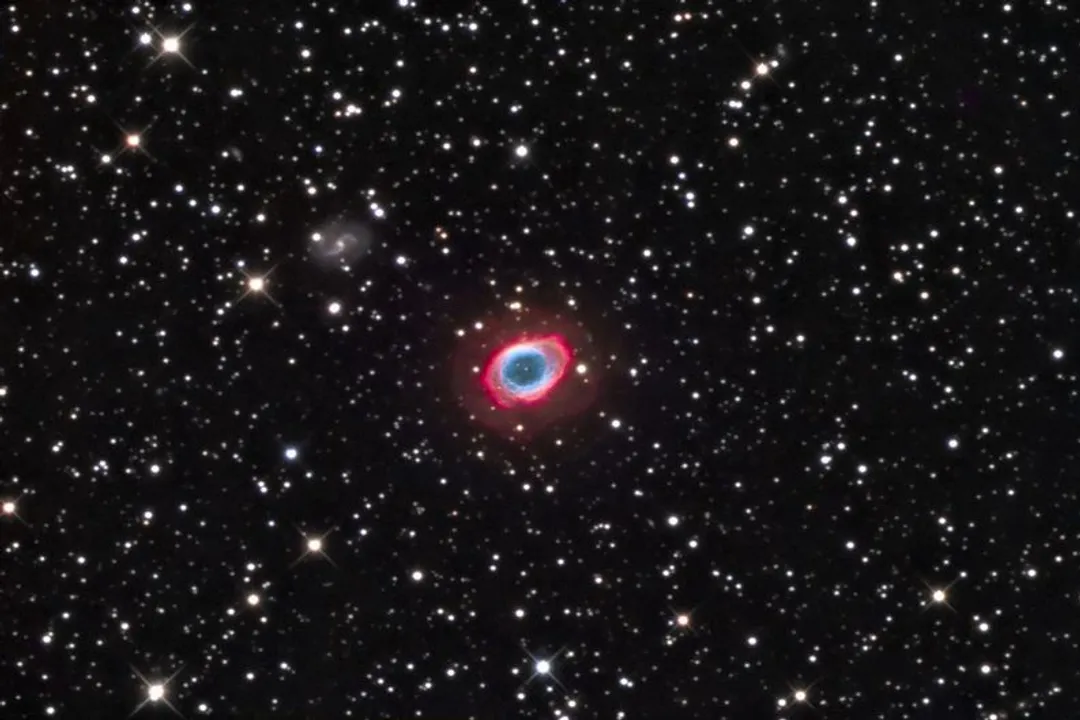
The fundamental reason visual observation of nebulae yields disappointing, monochrome views is due to their extremely low surface brightness. Unlike a star, which concentrates all its light into a single point source, a nebula is a massive cloud of gas and dust spread over many square light-years. Even if the total light output is significant, this light energy is spread thinly over a large patch of sky. The intensity, which is the amount of light falling onto a single square arcsecond of the observer's retina, becomes far too weak for the eye to register as a bright, colorful object. This is comparable to taking a total amount of light equivalent to a low-wattage bulb and spreading it thinly under a white sheet, making it appear much dimmer than the same total light concentrated in a single point.
#Videos
NASA's Images of Nebulae Have a Glaring Problem - YouTube