Why are some nebulas hard to see?
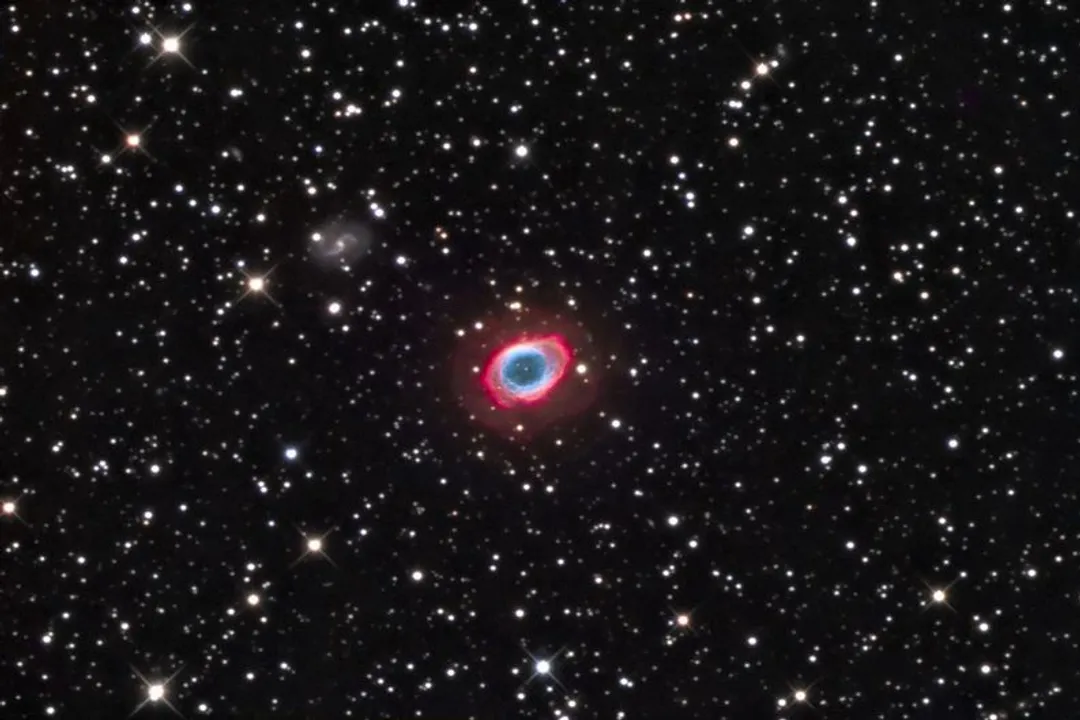
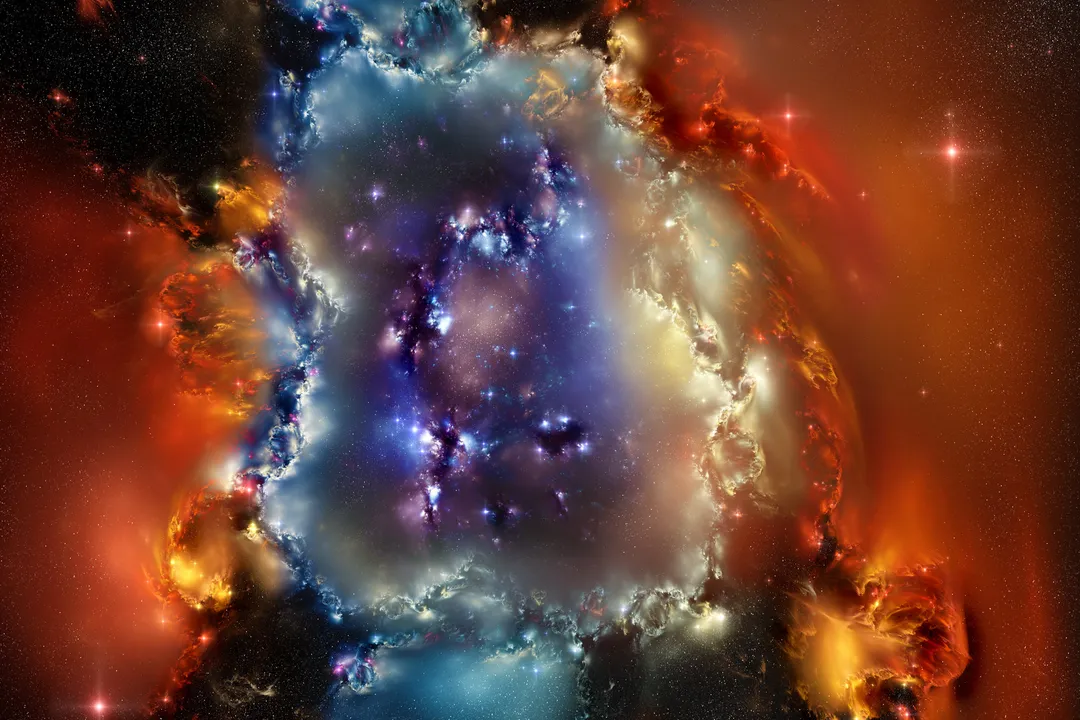
Visualizing the cosmos can sometimes lead to a quiet sense of disappointment, especially when looking for objects that appear so spectacular in astrophotography: the nebulae. We see stunning images of the Orion Nebula or the Ring Nebula bathed in vivid hues, and naturally, we anticipate a similar spectacle when peering through our own telescope. The reality, however, is often a faint, ghostly smudge of grey or white, leading many amateur astronomers to wonder if they are doing something wrong. [1][4][8] The reason some nebulas are hard to see boils down to fundamental physics, the limitations of human biology, and the conditions of our observing environment.
# Faintness Barrier
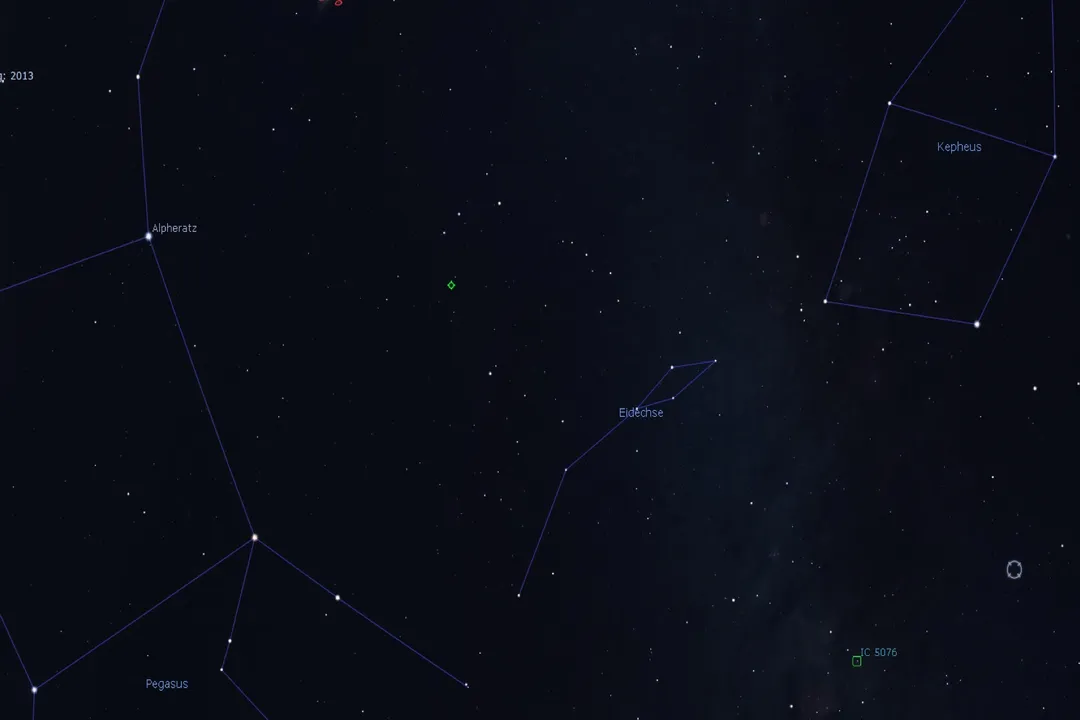
The primary hurdle in visually observing most nebulae is their incredibly low surface brightness. [1][3] A nebula, unlike a star which emits light from a tiny point, is an enormous cloud of gas and dust spread across many square light-years. [1] While the total light output of a large nebula like the Orion Nebula might be substantial, that light is diffused across a vast angular area in the sky. [1] When this light is spread thinly over a large patch of sky, the intensity—the light falling on a single square arcsecond of your retina—is far too weak for the eye to register as a bright, colorful object. [1][3] This contrasts sharply with the Moon or a planet, which are relatively small but intensely bright, or a star, which is a point source concentrating all its light into one spot.
Consider the difference between looking at a single candle in a dark room versus looking at a bare, low-wattage light bulb completely covered by a sheer white sheet; both might emit the same total light, but the covered bulb's light is spread out, making it appear far dimmer. [1] This concept is essentially what happens when observing a faint nebula. Even if a nebula has a moderate magnitude, its surface brightness might be so low that it effectively vanishes against the background sky glow, which is why dark skies are so often recommended. [2][4] Some extremely large, faint targets might have a magnitude that sounds encouraging, but because they span degrees across the sky, their actual visibility plummets. [1]
# Eye Limits
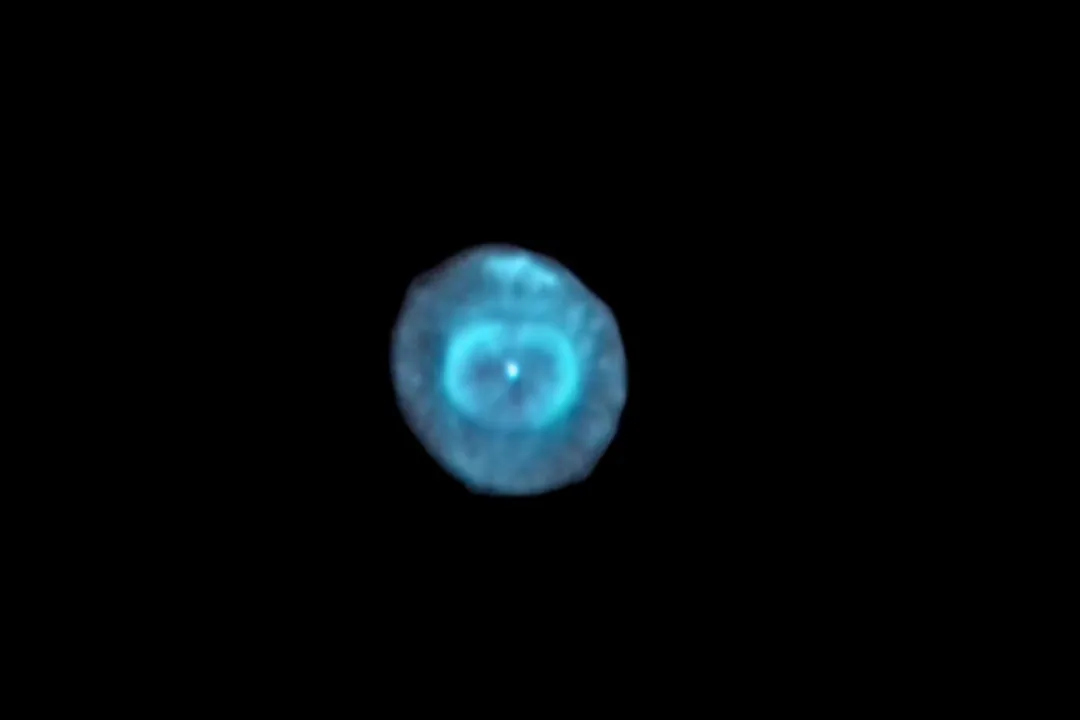
Beyond the object's intrinsic faintness, the workings of the human eye play a critical role in why nebulae often appear monochromatic through the eyepiece. [1] Our eyes possess two main types of photoreceptor cells: cones and rods. [1] Cones are responsible for color vision and function best in bright light, requiring a significant amount of incoming photons to activate. [1] Rods, conversely, are far more sensitive to low levels of light, making them the workhorses for night vision, but they lack the ability to distinguish between different wavelengths of light, thus perceiving the world only in shades of grey. [1]
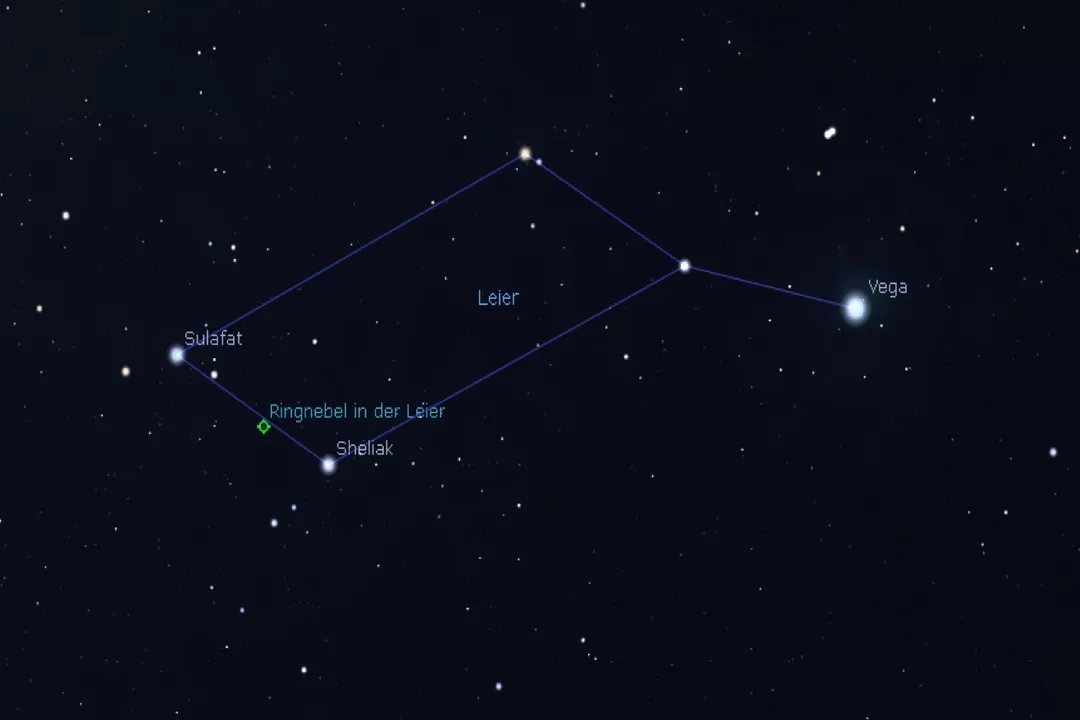
Since nebulae are inherently dim targets, the light gathered is insufficient to stimulate the cones. The view defaults to the rods, which is why the subtle reds of hydrogen-alpha emission or the greens of doubly ionized oxygen appear completely washed out to the naked eye. [1] This phenomenon is consistent across all observers; it is a biological limitation, not a fault of the equipment. [1] This is a crucial point of comparison: photographic images capture light over minutes or hours, accumulating enough photons to fully engage the cones (or a digital sensor), whereas the human eye must process everything instantaneously or near-instantaneously. [4] If you are observing something like the Ring Nebula, visually it might appear as a pale, smoke-ring-shaped disc, but a long-exposure photograph reveals the distinct blue and green tones that the eye simply cannot perceive under dim conditions. [4]
# Light Power
When visual astronomy is the goal, the single most important piece of equipment for seeing faint nebulas is the aperture of the telescope. [1][5] Aperture is the diameter of the main light-gathering lens or mirror, and its ability to collect photons directly correlates with how faint an object can be detected. [1] More aperture means more light gathered, which effectively boosts the surface brightness of the target object as it appears to the eye, making the faint gas clouds stand out from the background darkness. [5]
For instance, moving from a 4-inch telescope to an 8-inch telescope doesn't just double the light-gathering power; it increases it fourfold. This jump can be the difference between seeing a completely blank field and resolving the faint structure of a nebula like M27, the Dumbbell Nebula. [1] While observers often discuss eyepieces or filters, these modifications primarily affect the magnification or contrast at a given light level, but they cannot compensate for a lack of initial light collection. [5] An eyepiece that magnifies 300x on a small telescope will dim the image so severely that the already faint nebula will disappear entirely, even if it made the star field look sharper. [5]
It is interesting to compare the practical results achievable based on aperture size when trying to view some of the fainter Messier objects. For example, an experienced observer in truly dark skies might distinguish the faint halo of M33 (Triangulum Galaxy) with a modest 4-inch refractor, but for the average observer under suburban skies, the same object becomes realistically visible only through a 10-inch or larger aperture. The required light threshold for visual detection scales non-linearly with the object’s faintness and the sky’s darkness. [2]
# Atmospheric Obstacles
Even with a large telescope and excellent dark adaptation, the atmosphere above us can severely hamper the view of delicate, low-contrast nebulas. [2] This interference comes in two main forms: light pollution and poor seeing.
Light pollution is the artificial skyglow from cities, streetlights, and industry scattered by dust and moisture in the air. [2] This scattered light raises the background sky brightness, directly opposing the low surface brightness of the nebula. [1][2] If the sky background is bright grey, a pale grey nebula cannot be distinguished from it; the contrast is lost. [3] The best way to combat this is physical location—traveling to truly dark sites where the Milky Way is visible overhead makes a monumental difference in nebula observation. [2][4]
Poor seeing refers to the atmospheric turbulence caused by varying air temperatures and wind currents at different altitudes. [2] While this primarily affects planetary observers by causing stars to twinkle violently, it also degrades the view of extended objects like nebulae by blurring the image and slightly washing out contrast. [2] Even on a "good" night, subtle turbulence can prevent the eye from resolving the finest details in a faint cloud of gas, making it appear softer and harder to define than it truly is. [2]
# Observation Technique
Since we cannot change the laws of physics regarding light gathering or human biology, successful nebula viewing relies heavily on refined technique and patience. [4][5] Mastering averted vision is perhaps the most fundamental skill. [1][3][5]
Averted vision means intentionally not looking directly at the object but focusing your gaze slightly to the side of it. [1][5] As mentioned earlier, the rod cells, which are more sensitive to low light, are concentrated in the periphery of the retina. [1][3] By placing the faint nebula in your peripheral vision, you maximize the number of photons captured by these highly sensitive cells, allowing the eye to register the object’s presence even when the cones cannot pick up any color or detail. [1][5] It often takes a moment for the object to "pop" into view once you stop looking directly at it. [3]
Another critical, though often overlooked, element is dark adaptation. [4] The human eye requires time—often 20 to 30 minutes—to achieve its maximum sensitivity in the dark. [4] During this period, one must avoid all bright light, including looking at a cell phone screen or even a dim red flashlight without proper filters. [4] Furthermore, objects should be approached slowly. Instead of instantly snapping to the target, one might first locate the area, let the eye adjust, and then slowly increase magnification only after the object is tentatively visible at lower power. [5]
Here is a quick checklist summarizing the visual approach for faint targets:
| Step | Action | Purpose |
|---|---|---|
| 1 | Dark Adaptation | Allow rods to reach peak sensitivity (20+ minutes). [4] |
| 2 | Low Power Scan | Locate the target field using the lowest practical magnification. [5] |
| 3 | Averted Gaze | Look slightly beside the object to engage peripheral vision (rods). [1][3] |
| 4 | Patience Wait | Hold the gaze steady for several seconds; the nebula may "flash" into view. [4] |
| 5 | Magnification Increase | Only if visible, slowly increase magnification, balancing detail vs. faintness. [5] |
When you finally see that faint cloud, remember that the visual experience is one of perception rather than registration. [9] You are detecting the presence of light, not recording an image. The joy comes from knowing you have succeeded in gathering enough photons from a distant cloud of interstellar matter to paint a pale shade on your retina, a feat entirely independent of the camera sensor’s ability to record color. [9] This subjective experience, earned through effort and technique, holds a unique place in astronomy that colorful photographs cannot entirely replicate. [4]
#Videos
NASA's Images of Nebulae Have a Glaring Problem - YouTube
Related Questions
#Citations
Why can't I see anything from a nebula whereas I can get a pretty ...
Why can't I see nebulas? - Beginners Forum (No Astrophotography)
Why can't I see nebulas on the night sky? - Quora
Faint Orion Nebula... what am I doing wrong? - Stargazers Lounge
How can I see a nebula? - Astronomy Stack Exchange
5 amazing planetary nebulae: how to find the hourglass, the ring of ...
NASA's Images of Nebulae Have a Glaring Problem - YouTube
What do nebula really look like? | Frontier Forums
Observing Nebulae - Popular Astronomy - Technica Curiosa