Are nebulae like clouds?
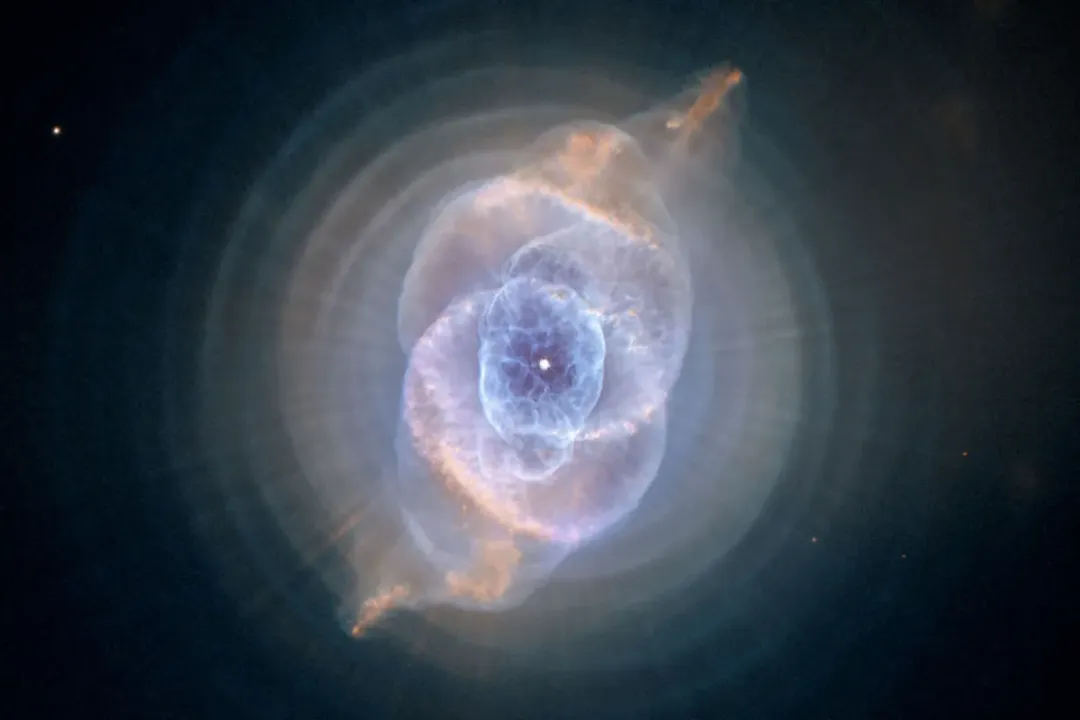
The initial comparison between nebulae and terrestrial clouds is instantly understandable; both appear as vast, amorphous structures suspended against a darker background. Yet, while the visual analogy captures the shape and diffuseness of these cosmic objects, the underlying physics, scale, and composition separate them entirely. An Earth cloud is a localized phenomenon involving condensed water vapor, whereas a nebula is an interstellar cloud of gas and dust, often spanning hundreds of light-years. [2][4][5][8] The human mind reaches for the familiar—the billowing white structure overhead—to contextualize something so far removed from daily experience. [4]
# Atmospheric Analogy
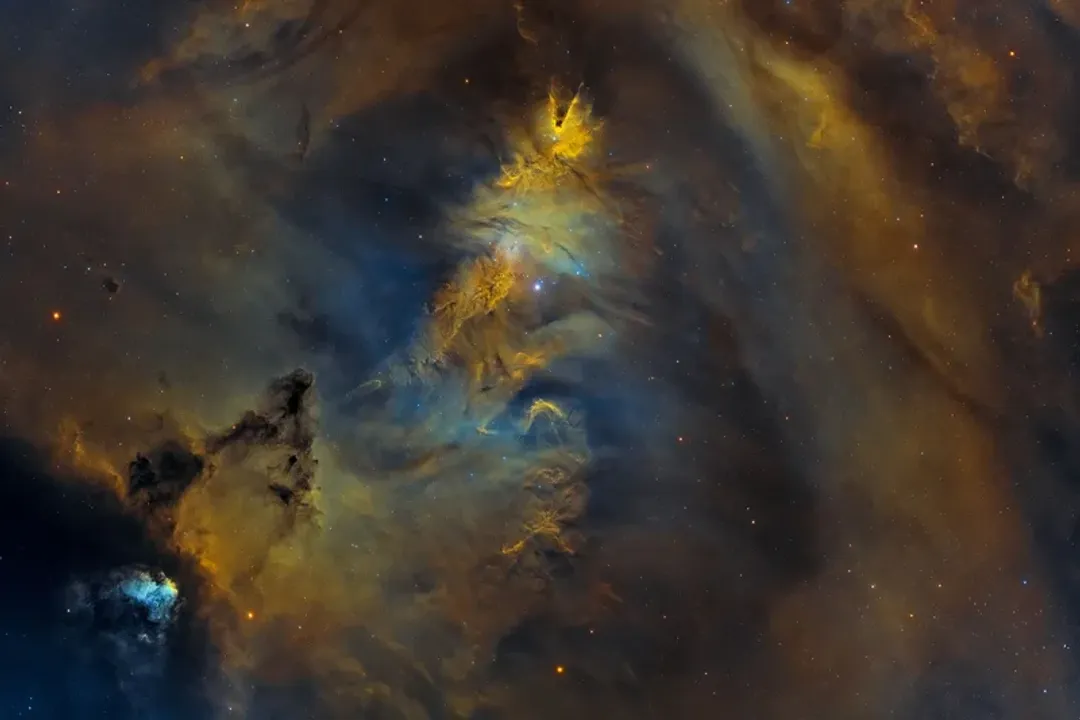
The reason the cloud metaphor sticks is rooted in appearance. Both systems involve matter distributed unevenly through a volume of space, creating textures of varying opacity and brightness. [8] On Earth, weather involves water droplets or ice crystals suspended in the atmosphere, scattering sunlight to create the familiar white or grey forms we see daily. [2][4] Nebulae, however, exist in the near-vacuum of the interstellar medium (ISM). [5] They are not suspended in an atmosphere; they are the tenuous material between stars. [5]
The term "nebula" itself means "mist" or "fog" in Latin, a linguistic inheritance from early telescopic observations when these objects appeared as fuzzy, indistinct patches of light, long before their true nature as stellar nurseries or remnants was known. [5][8] While the analogy aids in visualization, it breaks down immediately when considering density and behavior. An Earth cloud contains far more mass per cubic meter than the emptiest parts of a nebula. [1] If one were to compress the material of a typical dark nebula down to the atmospheric pressure found near sea level on Earth, the resulting volume would still be staggeringly huge, easily eclipsing the orbit of the farthest planets. [1] The "cloudiness" of a nebula is less about density and more about the sheer, overwhelming volume the material occupies. [1]
# Cosmic Composition
The material constituting these two phenomena dictates their behavior and eventual fate. Terrestrial clouds are fundamentally composed of water in its liquid or solid state. [2][4] Their dynamics are governed by atmospheric pressure, temperature gradients, and gravity over relatively short timescales. [2]
Nebulae, conversely, are the building blocks of stars and planets. [4] They consist overwhelmingly of hydrogen and helium gas, mixed with trace amounts of heavier elements created in previous stellar generations, alongside microscopic solid particles known as cosmic dust. [2][5] These dust grains, though tiny—often smaller than the wavelength of visible light—are responsible for scattering and absorbing starlight, which makes the nebulae visible to us. [2][5] This process is crucial; without the dust, many nebulae would remain invisible, merely subtle variations in the interstellar gas density. [5]
If we consider the composition and energy involved, the differences become stark. An emission nebula, for instance, is actively energized, with gas heated and ionized by nearby young, hot stars, causing it to glow intensely in specific colors dictated by its elemental makeup. [3] This active light production is absent in a simple water cloud.
# Immense Scale
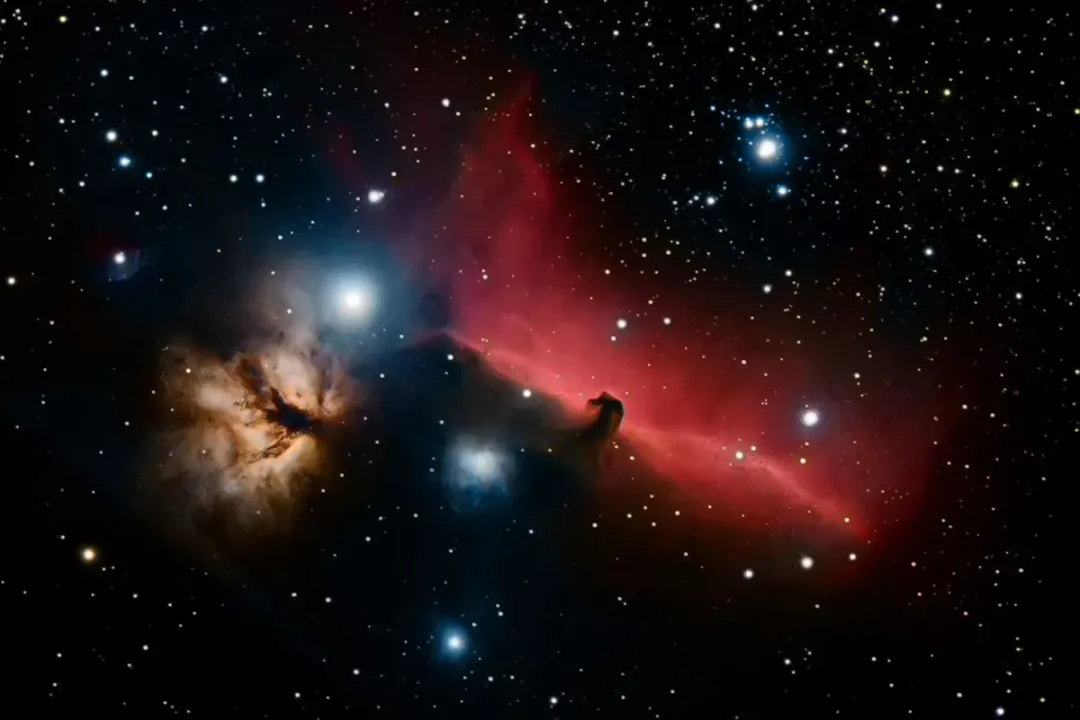
The scale differential between an Earth cloud and a nebula is difficult to grasp without context, making the initial comparison almost humorous when examined closely. [1] An average cumulonimbus cloud might stretch a few kilometers across and contain the mass equivalent of several hundred thousand tons of water. [1]
Nebulae operate on a scale measured in light-years. Objects like the Orion Nebula are easily hundreds of light-years across. [1] Structures like giant molecular clouds, the precursors to star formation, can measure hundreds of light-years in diameter and possess masses equivalent to millions of times the mass of our Sun. [1]
To put this into perspective using an analogy often used by astronomers: if an Earth cloud were scaled up to the size of the entire North American continent, a typical nebula would still be larger than the Earth itself. [1] The sheer volume of space occupied by these stellar nurseries means that the matter within them is spread incredibly thin, though its total mass remains astronomical. [1]
# Nebula Types
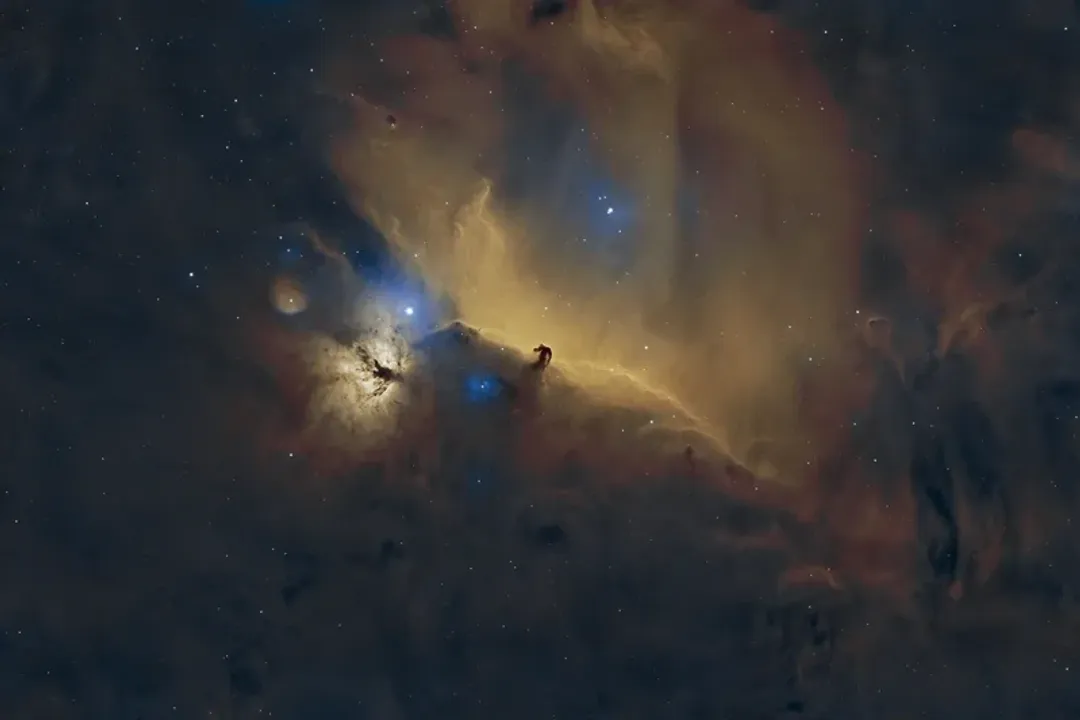
Unlike the relatively straightforward classification of weather clouds (cirrus, stratus, cumulus), nebulae are categorized based on how they interact with light, reflecting their physical processes rather than just their shape. [3]
There are generally four main categories that demonstrate the diversity underlying the single term "nebula": [3]
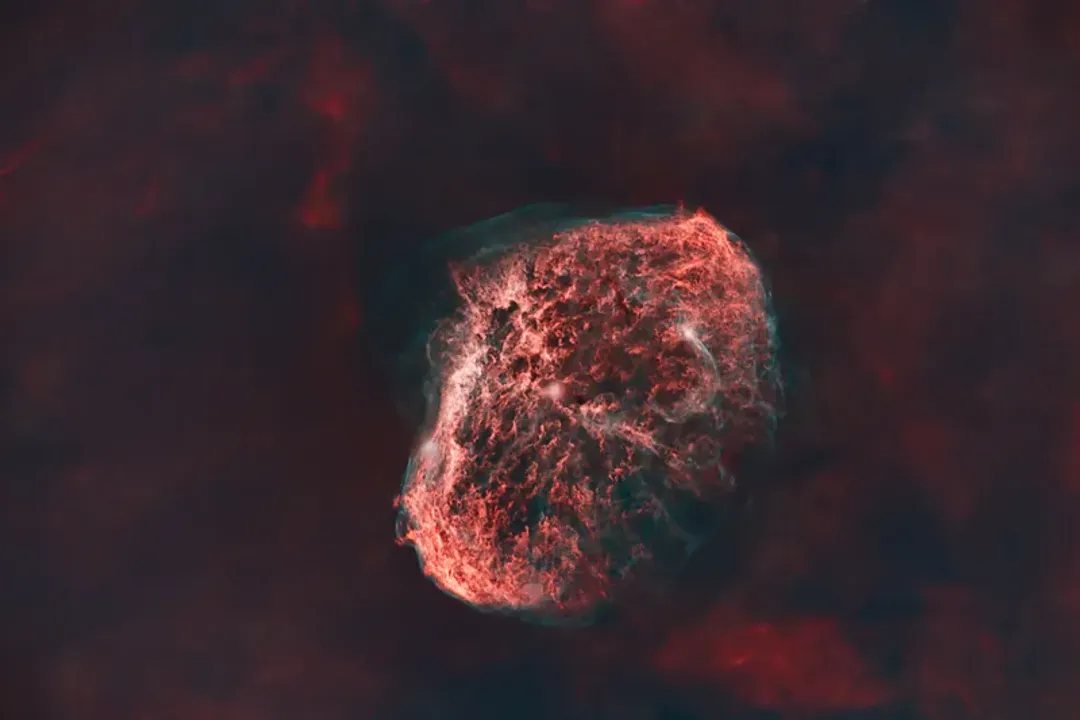
- Emission Nebulae: These clouds are composed of ionized gas that emits its own light, typically appearing red due to hydrogen alpha emission, though other elements contribute different hues. [3] They are the signature of active star formation regions.
- Reflection Nebulae: These do not generate their own light but instead scatter the light from nearby bright stars. [3] They often appear blue because, much like Earth's sky, the fine dust particles scatter blue light more efficiently than red light.
- Dark Nebulae: These are dense clouds of gas and dust that effectively block the light from stars or brighter nebulae located behind them. [3] They appear as dark patches silhouetted against the brighter background sky.
- Planetary Nebulae and Supernova Remnants: These are the death throes of stars, not stellar nurseries. Planetary nebulae are shells of gas ejected by dying sun-like stars, while supernova remnants are the expanding clouds resulting from catastrophic stellar explosions. [3]
This functional categorization highlights that "cloud" only describes the appearance; it does not describe the object's energy state or its place in the stellar life cycle. [3][9]
# Visual Appearance
The visual similarity that fuels the common comparison is striking, especially in deep-sky astrophotography. [8] Images of the Pillars of Creation in the Eagle Nebula, for example, show towering columns of gas and dust that possess the same wispy, filamentary structure one might observe in high-altitude cirrus clouds. [8]
This is because the movement of gas, the influence of stellar winds, and the uneven distribution of density create structures that mimic fluid dynamics seen on Earth. [8] In space, magnetic fields and radiation pressure sculpt the material into these dramatic shapes. [8] The difference lies in the medium: on Earth, turbulence is air moving against air; in a nebula, it is radiation and magnetic fields shaping diffuse gas and microscopic solids. [2][5]
The high-resolution imaging achieved by modern telescopes often captures colors that are artificial—created by assigning specific wavelengths of light to the red, green, and blue channels of a digital sensor—but these colors represent real physical phenomena, such as specific atomic emission lines. [3] Even so, the resulting image evokes a sense of soft, ethereal structure reminiscent of terrestrial moisture.
# Terminology Nuance
Historically, the term "nebula" was applied broadly to any fuzzy patch in the sky that wasn't a distinct star or planet. [5] This early usage meant that many objects we now know to be distant galaxies, like the Andromeda Galaxy, were classified as nebulae. [5] As observing technology improved, astronomers began to distinguish between true interstellar clouds and distant stellar collections. [5][9] Today, precise terminology distinguishes between a stellar cloud (nebula) and a stellar island (galaxy). [9]
When speaking informally, calling a nebula a "cloud" is acceptable shorthand for general audiences, serving as a useful initial point of contact. [8] However, for astronomical accuracy, terms like "interstellar medium complex," "molecular cloud," or specific types (e.g., "emission nebula") are preferred because they convey the physical processes at work. [9] The analogy is a helpful bridge, but the scientific reality requires specificity. [4]
# Synthesis
The comparison between nebulae and clouds serves as a powerful, if fundamentally inaccurate, descriptive tool. We see the form—the suspended, illuminated, or shadowed structure—and map it onto the closest Earth equivalent: a cloud. [8] This likeness is superficial, however, resting entirely on visual texture and diffuse boundaries. [4]
Earth clouds are dynamic systems of water vapor operating on scales of kilometers, governed by meteorology. [2][4] Nebulae are immense, multi-component structures of plasma and dust operating on scales of light-years, governed by gravity, radiation pressure, and stellar evolution. [1][3][5] While both represent transient states of matter within their respective environments, one forms the weather we experience, and the other forms the stars we observe. [4] The true distinction lies not in their appearance, but in the physical laws that create and govern them. [9]
Related Questions
#Citations
Just how massive are nebulae? Nebulae are giant clouds of ... - Reddit
Decoding Nebulae - NASA Science
Nebula - Wikipedia
What is a nebula? Cosmic clouds and how to see them
Nebula Which is an interstellar cloud of dust and gas in space
Space Place in a Snap: What Is a Nebula? - NASA+
Nebulae – Clouds in Space (2011) - Astronomical League
What's the proper terminology for nebula clouds?