What is the difference between a planetary and a diffuse nebula?
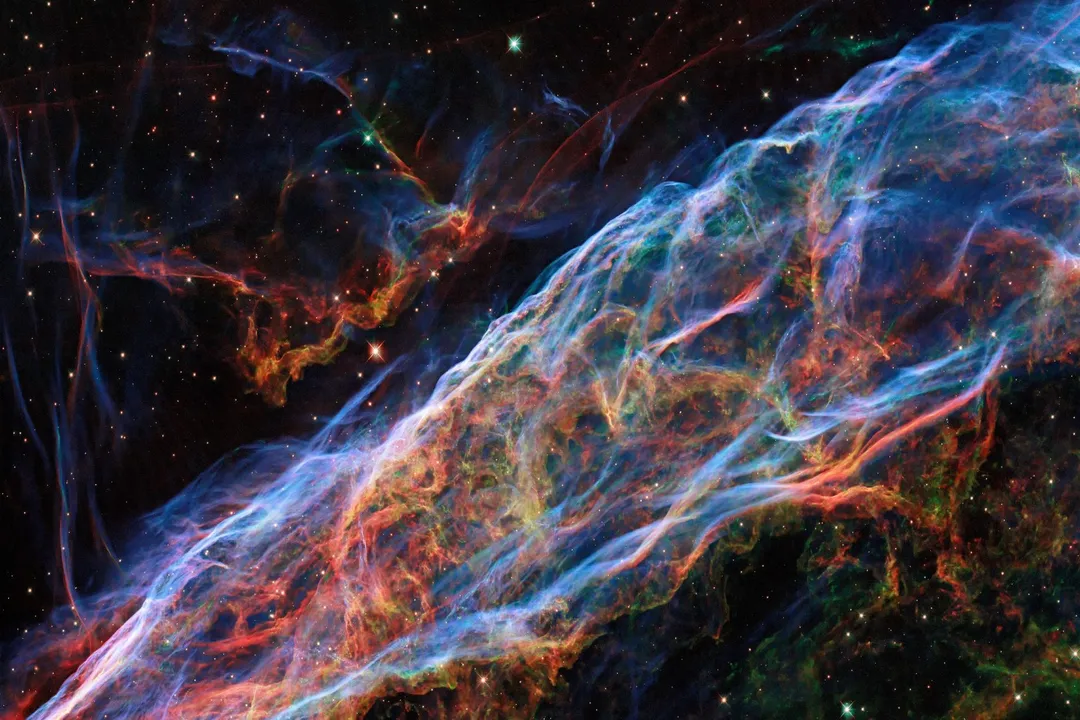
Nebulae, those magnificent clouds of gas and dust scattered across the cosmos, represent the raw material and the dramatic endpoints of stellar life cycles. While the term "nebula" broadly applies to any such interstellar cloud, not all are created equal. Two categories often cause confusion for those beginning their exploration of deep-sky objects: the planetary nebula and the diffuse nebula. Though both are clouds illuminated by stars, their origins, lifespans, and what they represent in the grand scheme of galactic evolution are fundamentally different.[3][9]
# General View
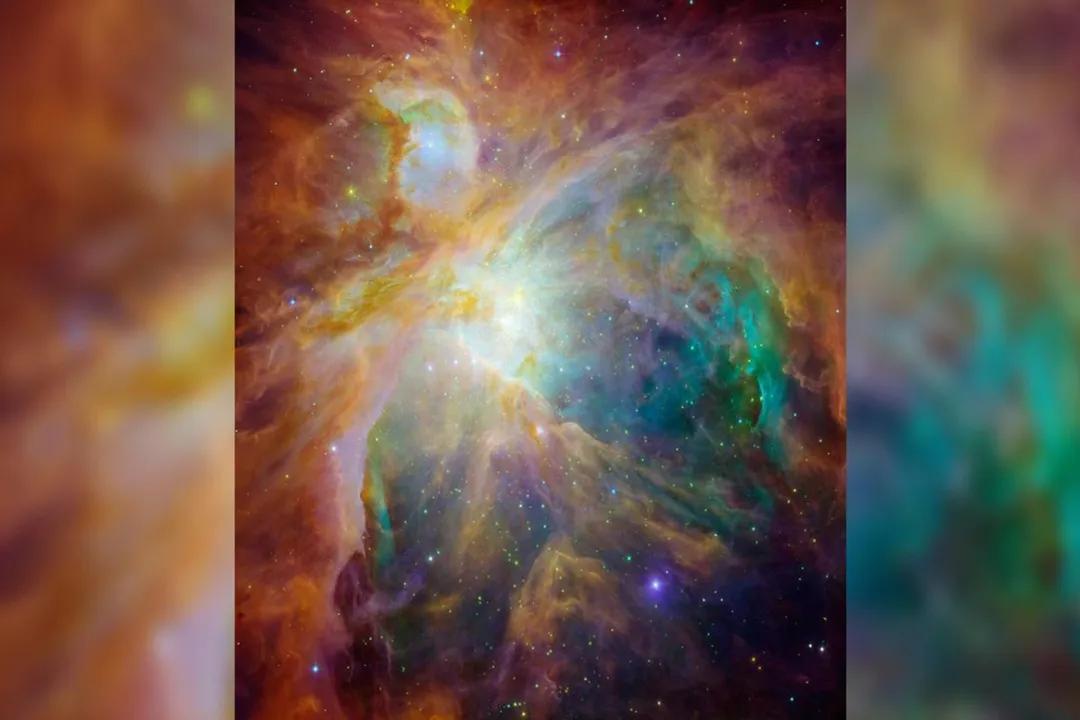
At its most basic, a nebula is simply a vast, sparse cloud of interstellar matter—mostly hydrogen and helium, along with traces of heavier elements and dust grains. [5][10] These clouds are the nurseries where new stars are assembled from collapsing material, or they are the ethereal remnants left behind when stars have finished their active lives. [5][9] Astronomers classify nebulae based on their appearance, how they interact with light, or their specific formation mechanism, leading to types like emission, reflection, or dark nebulae. [3][9] The distinction between a planetary nebula and a diffuse nebula hinges almost entirely on whose star is involved and what stage of life that star is currently experiencing. [1]
# Stellar Endpoints
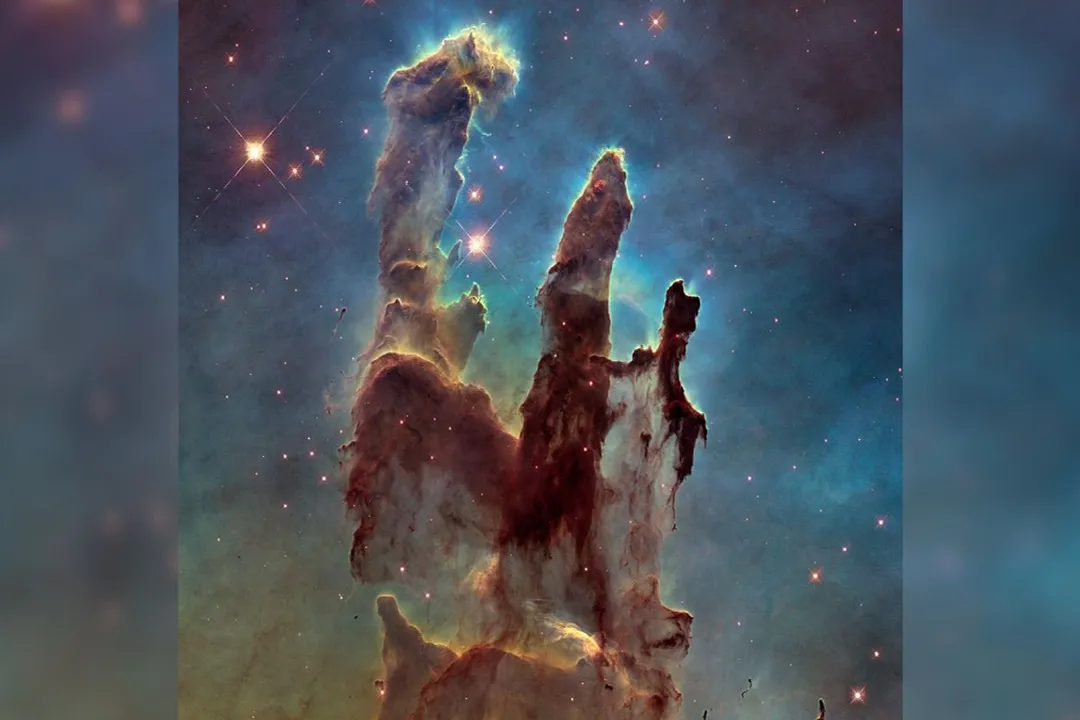
The planetary nebula () stands as a final, beautiful flourish from a dying, relatively low-to-intermediate mass star, comparable in size to our own Sun. [1][4][9] When a star like the Sun exhausts the fuel in its core, it swells dramatically into a red giant. Eventually, this star sheds its outer layers into space in a series of intense stellar winds, creating an expanding shell of glowing gas around its former core. [1][9] This expelled material is what we observe as a planetary nebula. [1]
The name itself is a historical accident, leading to much potential confusion. [4] When viewed through early, small telescopes, these objects often appeared round and featureless, resembling the disc of a planet like Uranus. [1][4] In reality, they have absolutely no connection to planets. [4] The object at the center of this expanding shell is the star's ultra-hot, incredibly dense remnant: a white dwarf. [1][9] This white dwarf emits powerful ultraviolet radiation, which then excites the surrounding gas, causing it to glow, often in vibrant colors, making PNs some of the most visually arresting objects in the night sky. [1][9] Examples like the Ring Nebula or the Dumbbell Nebula showcase this characteristic shell structure. [1]
# Star Nurseries
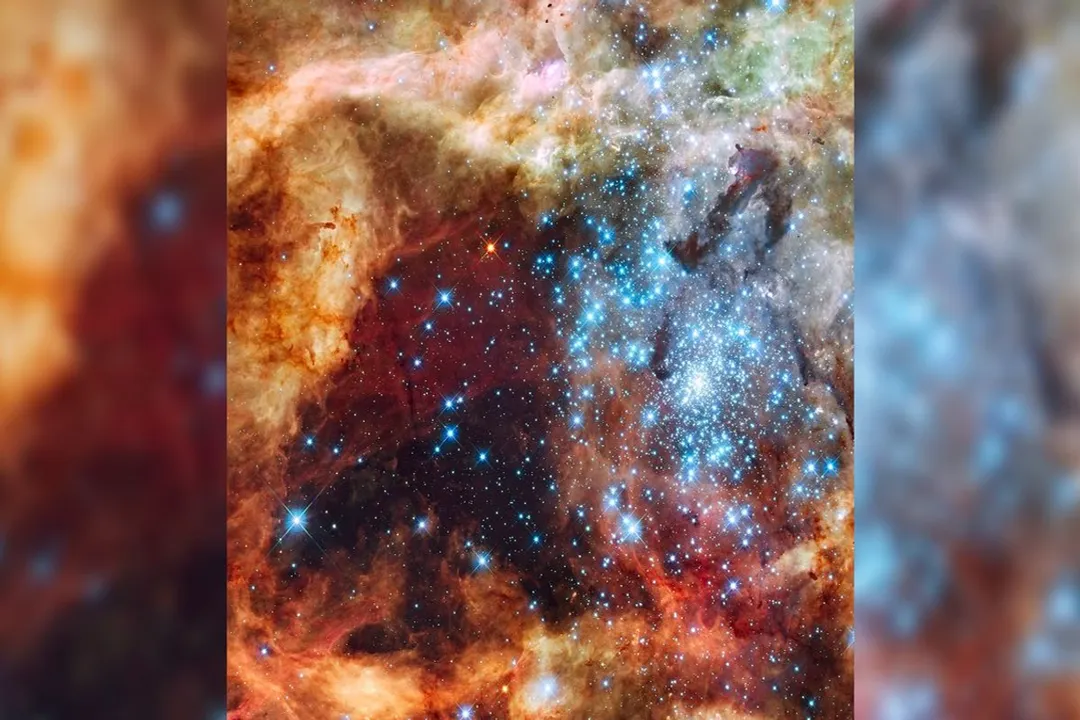
In sharp contrast to the dying embers of a PN, the diffuse nebula, when discussed in contrast to PNs, generally refers to the vast, sprawling clouds associated with star formation—often specifically large emission nebulae (or H II regions). [1][9] These are the cosmic cradles where density fluctuations allow gravity to pull interstellar gas and dust together to ignite fusion in newborn stars. [9]
These nebulae are truly immense, spanning many light-years, and they are defined by the presence of newly formed, extremely hot, massive stars. [1] These young, brilliant stars (often O or B type) radiate enormous amounts of energetic ultraviolet light. [1] Similar to the white dwarf ionizing a PN, this UV light strips electrons from the hydrogen gas in the cloud, causing it to re-emit light, usually manifesting as a characteristic deep red glow—the signature of ionized hydrogen. [1][9] The famous Orion Nebula is a perfect example of this type of massive, star-forming diffuse nebula. [9] They are large, often irregular in shape, and represent the beginning of the stellar story, not the end. [9]
# Key Distinctions
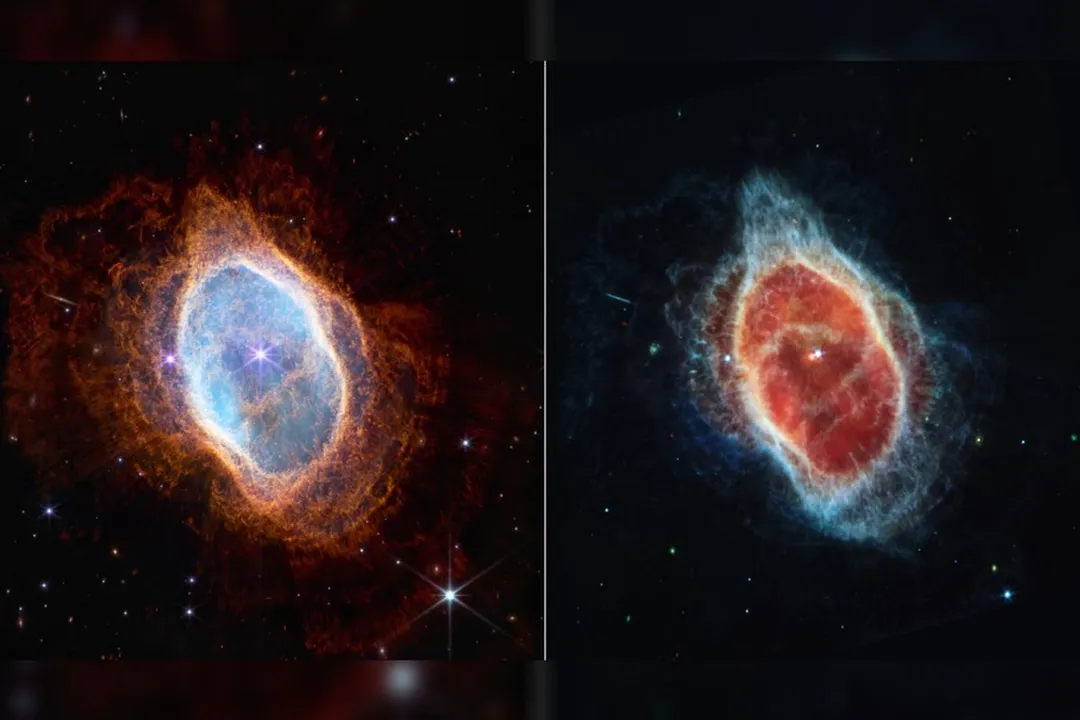
The fundamental differences between these two classes can be boiled down to their source and scale. A simple comparison helps illustrate the gap between stellar death and stellar birth:
| Feature | Planetary Nebula () | Diffuse Nebula (Emission Type) |
|---|---|---|
| Origin | Material ejected by a dying, low/mid-mass star | Vast cloud collapsing to form new stars |
| Central Object | Hot, compact White Dwarf | Several Young, Massive Stars |
| Typical Size | Relatively small (often a few light-years across) [1] | Immense (tens to hundreds of light-years) [1] |
| Lifespan | Extremely brief (a few thousand years) [1] | Very long (millions of years) [1] |
| Visual Structure | Often symmetrical, shell-like, defined boundaries | Irregular, mottled, vast, sprawling |
The timescale difference is particularly striking. A star ejecting its layers to form a PN does so relatively quickly—the expanding shell becomes too diffuse to be excited by the white dwarf in perhaps years. [1] This is an astronomical blink of an eye. Conversely, the massive regions that form diffuse nebulae persist for millions of years while they are actively feeding their massive inhabitants. [1] If you consider the entire age of the Milky Way, finding a planetary nebula actively glowing is statistically rare simply because they fade so fast; most of the nebulae we see are either the long-lived nurseries or the much older, dispersed remnants of previous PNs, now just cold gas clouds. [1]
# Appearance and Naming
The visual contrast is often the first thing a sky-watcher notes. Planetary nebulae tend to exhibit a degree of symmetry—rings, bubbles, or bipolar lobes—because the expulsion is often driven by a central object pushing material outward in a somewhat uniform fashion. [1] You can often trace the boundary of the excited gas quite clearly. [1] This organized structure strongly points to a single, recent event—the death throes of one star. [9]
Diffuse nebulae, especially the star-forming giants, rarely have such clean edges. They are vast, often appearing textured or clumpy because the gas distribution within the original molecular cloud was never perfectly uniform. [3] Furthermore, the illumination comes from multiple, massive, energetic stars scattered throughout the region, leading to a more complex light profile. Observing a diffuse nebula means looking at a region where complex physics involving gravity, radiation pressure, and magnetic fields are all actively sculpting the environment over vast stretches of space. [3]
# Scale Implications
The sheer difference in scale between a few light-years (PN) and potentially hundreds of light-years (Diffuse Nebula) has implications for how we study them. For the planetary nebula, we are essentially examining the immediate aftermath of a single star's demise, allowing us to study the specific chemical composition of a star's outer layers just before it turns into a white dwarf. [1][9] This gives astronomers direct insight into nucleosynthesis events that enrich the galaxy with heavier elements. [1]
For the diffuse nebula, we are looking at a star factory. The complexity comes not from a single ending event, but from the ongoing, competitive relationship between the massive, illuminating stars and the gas cloud that is both giving them birth and being destroyed by their radiation. [9]
From a practical observing standpoint, a novice using a small telescope might mistake a brighter, smaller PN for a distant, faint reflection nebula if they focus only on the perceived fuzziness. However, checking an object's catalog designation often reveals the truth: if it is cataloged as a (like or ), its story is about stellar death. If it's cataloged as an or object known for star birth (like the complex), it's a stellar nursery. [9] Recognizing that one object is a brief, localized event while the other is a sprawling, long-term structure dramatically changes the context of observation.
# Interpreting the Light
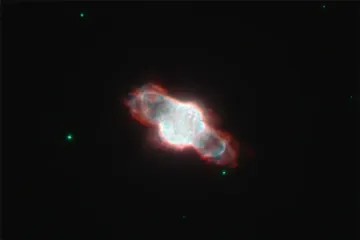
The color signature itself offers another point of contrast, stemming directly from the central energy source. While both types are emission nebulae, the dominant emission lines often differ due to temperature and gas density. [1] Planetary nebulae often show strong emission from ionized oxygen (green/blue) and nitrogen, driven by the extreme UV flux of the exposed white dwarf. [1] Diffuse nebulae, dominated by massive young stars, almost always feature the prominent, reddish glow of ionized hydrogen (), which is the most abundant element in the star-forming cloud. [1][9] While there is overlap—a young star can form near a dying one—the dominant light source dictates the overall appearance, separating the tight, hot glow of a from the broad, reddish illumination of a massive region. [9]
Ultimately, the difference between these nebulae isn't just aesthetic; it is a fundamental difference in cosmic timescales and stellar evolution. One is the gentle, luminous exhale of a star completing its long life, and the other is the turbulent, fiery inhale of the galaxy preparing for the next generation of suns. [9]
#Videos
The 5 Types of Nebulae | Star Gazers - YouTube
Related Questions
#Citations
Observing Planetary and Diffuse Nebulae - Minute of Space
The 5 Types of Nebulae | Star Gazers - YouTube
Decoding Nebulae - NASA Science
What is the difference between a nebula and a planetary ... - Quora
Nebula: Definition, location and variants - Space
Planetary vs Emission Nebulae - Cloudy Nights
What are the different types of nebulae in space? - Facebook
Types of Nebulae | Emission, Reflection & Dark - Lesson - Study.com
Astronomy 101: Nebulae
Nebula