What is the shape of the planetary nebula?
The glowing shells of gas we call planetary nebulae present some of the most visually stunning objects in the night sky, often appearing as intricate, colorful masks or cosmic butterflies. Despite the slightly misleading name, these objects have nothing to do with planets; they are instead the final, visible exhalations of Sun-like stars nearing the end of their lives. [4][5] The central mystery regarding their appearance is not if they have a shape, but rather how so many wildly different shapes arise from the death of stars that start out looking much like our own Sun. [2]
# Naming Confusion
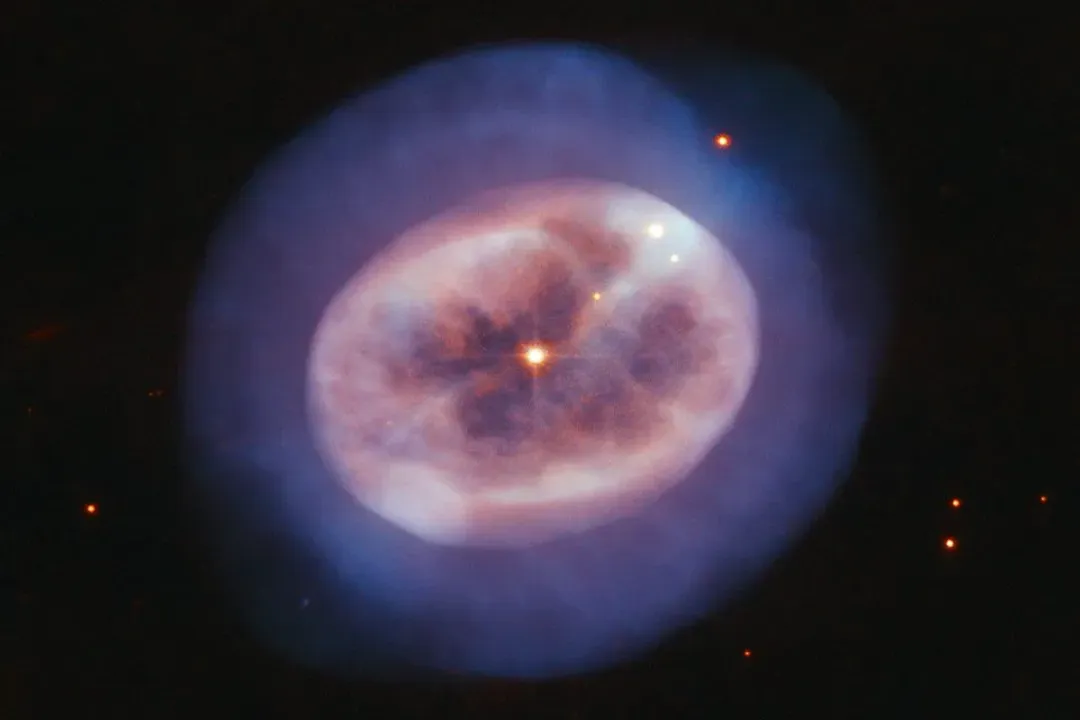
The term "planetary nebula" is an artifact of early telescopic observation. When William Herschel first cataloged these objects in the late 18th century, he noted their small, round, greenish appearance through his instruments, which reminded him of the newly discovered planets Uranus and Neptune. [4][5] In reality, a planetary nebula is the ejected outer atmosphere of a dying star, illuminated by the extremely hot, dense stellar remnant—a white dwarf—left behind at the center. [5][9] This ejection process results in an expanding cloud of gas and dust that can persist for tens of thousands of years. [1]
# Geometric Diversity
While the initial visual impression might suggest simplicity, detailed study reveals an enormous range of geometries. The classification of planetary nebulae shapes is typically organized around a few primary categories, though many fall into complex or irregular groupings. [1][2]
# Simple Forms
The most straightforward category is the spherical shape. If a star sheds its mass in a perfectly uniform manner in all directions, the resulting nebula should expand as a perfect sphere. [2] However, observations suggest that truly spherical nebulae are relatively rare compared to the vast majority of observed forms. [1][2]
# Common Structures
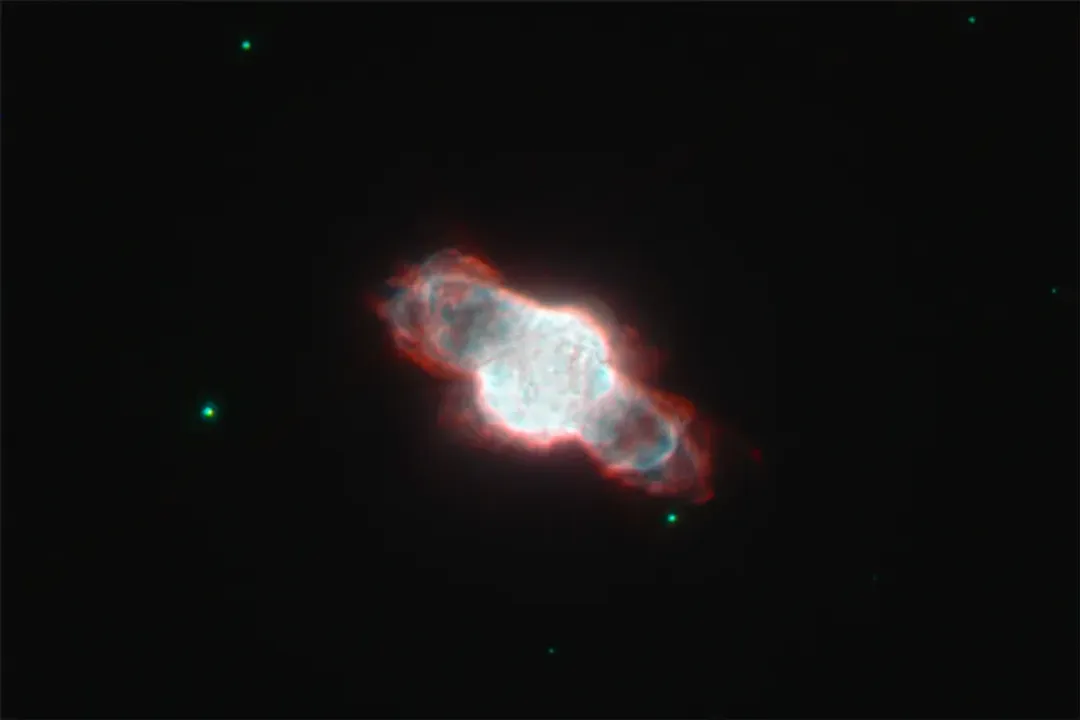
By far, the most common shapes observed are not spheres but rather structures exhibiting some degree of asymmetry or elongation. Bipolar nebulae are very frequent, characterized by two opposing lobes of gas, giving them shapes reminiscent of an hourglass or a bow tie. [1] These are often incredibly striking, with features like knots, jets, and tight waistlines. [6]
Other common forms include:
- Elliptical: Structures that appear flattened or elongated in one primary dimension.
- Bimorph: Nebulae that display two distinct, yet connected, components. [1]
- Irregular: Nebulae lacking any obvious symmetry or repeatable structure. [1]
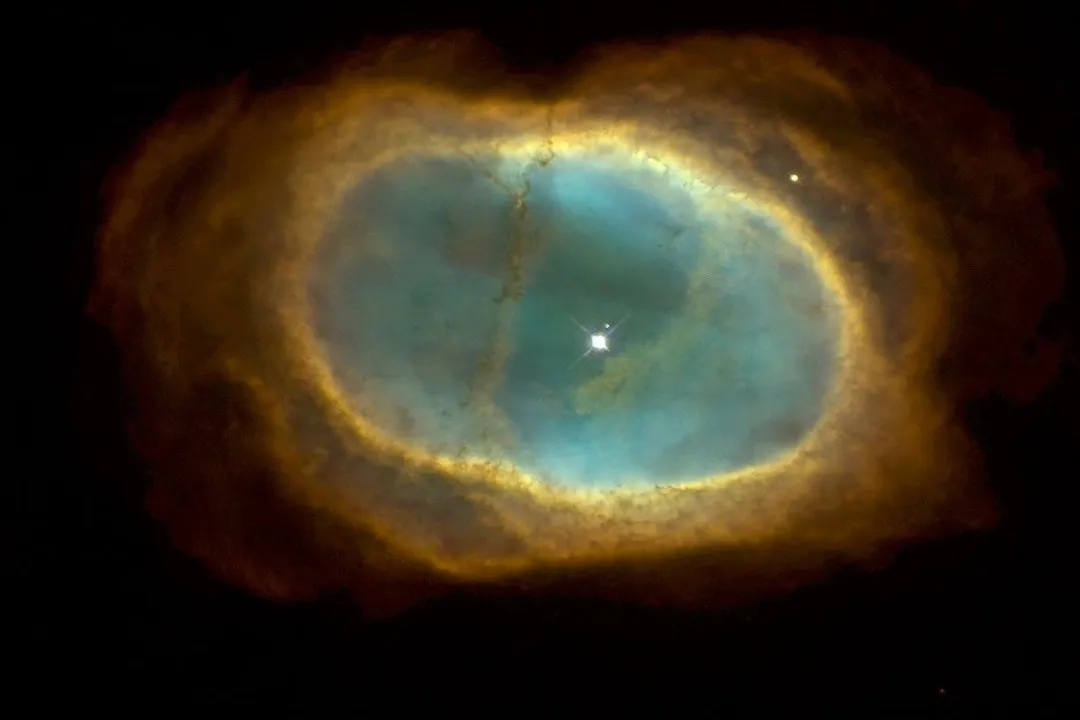
For instance, the nebula known as NGC 3132, often called the Eight-Burst Nebula or the Southern Ring Nebula, showcases intricate structures that were initially revealed by the Hubble Space Telescope, showing complex arcs and shells of gas. [3] The clarity provided by newer instruments, like the James Webb Space Telescope, continues to resolve these apparent complexities into even finer detail. [6]
# Shaping Mechanisms
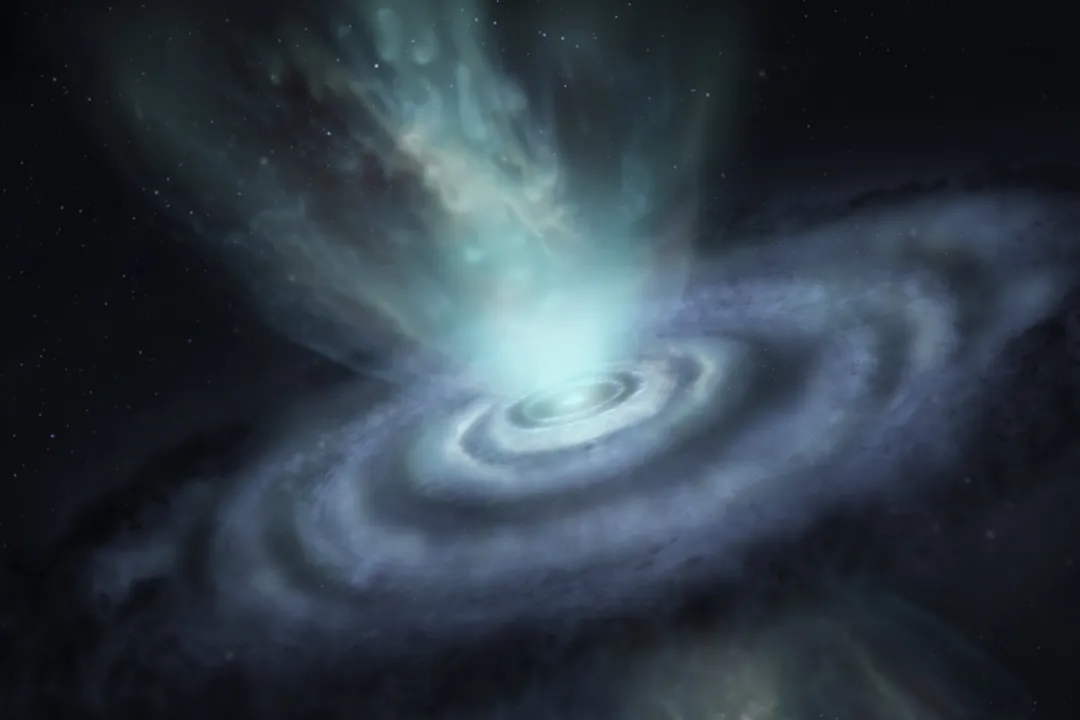
The incredible variety in planetary nebula shapes is a direct result of the complex physics governing the mass ejection from the central star and the subsequent interaction of that ejected material with the surrounding interstellar medium and magnetic fields. [2] It is an ongoing area of research to precisely model which parameters dominate the final form. [2]
# Stellar Winds Interaction
The mass loss from a star evolves significantly as it becomes a white dwarf progenitor. Initially, the star generates a slow wind, which carries away mass relatively gently over a long period. Once the core becomes hot enough, it emits a much faster, high-velocity wind. [2] The interaction between this fast wind sweeping up the previously ejected slow wind material is what primarily creates the visible glowing shell. [2] The resulting shape is strongly influenced by how that material was initially distributed by the slow wind.
# External Influences
If the mass ejection were the only factor, we might expect more spherical shapes. The deviation from this simple model points strongly to external influences shaping the outflow.
A leading candidate for explaining the common bipolar shapes is the presence of a binary companion star orbiting the dying primary star. [2] If a secondary star is close enough, gravitational interactions or the formation of an accretion disk around the white dwarf progenitor can collimate (or focus) the outward flow of gas, forcing it out along the path of least resistance—the poles—creating the characteristic hourglass shape. [2]
Another major sculpting agent is the magnetic field of the central star. [2] A strong, rotating magnetic field can channel the escaping gas into jets or toroidal (doughnut-like) structures before the fast wind carves out the final morphology. [2] The inclination of this field relative to our line of sight significantly alters how we perceive the final shape from Earth.
Consider the contrast here: A perfectly spherical nebula implies a clean, unperturbed ejection event from a single, non-rotating star with negligible magnetic influence during the crucial fast-wind phase. In stark contrast, a highly knotted, bipolar nebula implies significant interaction, likely involving disc formation from a binary companion or a strong, guiding magnetic field. [2] These different formation pathways explain why we see such a massive diversity rather than a single common form.
# Observational Depth
Our understanding of these shapes has been revolutionized by space-based observatories. Telescopes like Hubble and Webb allow astronomers to penetrate the dust and gas clouds in ways ground-based instruments cannot, capturing light across the infrared and visible spectra. [3][6] This capability allows scientists to distinguish between different layers of ejected material that formed at different times, revealing complex shells within shells, or "nested structures". [2]
It is often the case that what appears as a simple "bipolar" shape when viewed in one light spectrum is revealed, upon closer inspection in another, to be much more complex, perhaps consisting of multiple shells generated by periodic ejections rather than one continuous event. [2] The data gathered by Webb, for example, allows for much better characterization of the warm dust components that trace these older, slower ejection events that formed the outer boundaries of the nebula. [6]
When evaluating the shape of any given planetary nebula, an astronomer is essentially trying to solve a three-dimensional puzzle based on a two-dimensional projection, factoring in the star's mass, its rate of mass loss over time, the presence of companions, and the magnetic field configuration—all while accounting for the angle from which we are viewing the event. [2] The diversity we measure is a direct measure of the complexity of stellar evolution near its end stage.
Related Questions
#Citations
Planetary nebula - Wikipedia
How a Planetary Nebula Gets its Shape - CosmoQuest
A Glowing Pool of Light: Planetary Nebula NGC 3132 - NASA Science
Planetary nebula guide | BBC Sky at Night Magazine
Planetary Nebula - ESA/Hubble
Webb traces details of complex planetary nebula
What causes the hourglass shape of planetary nebulae? - Facebook
NASA on Instagram: "Eye see you… Back in 1996, @NASAHubble ...
Glossary term: Planetary Nebula