Are planetary nebulas rare?
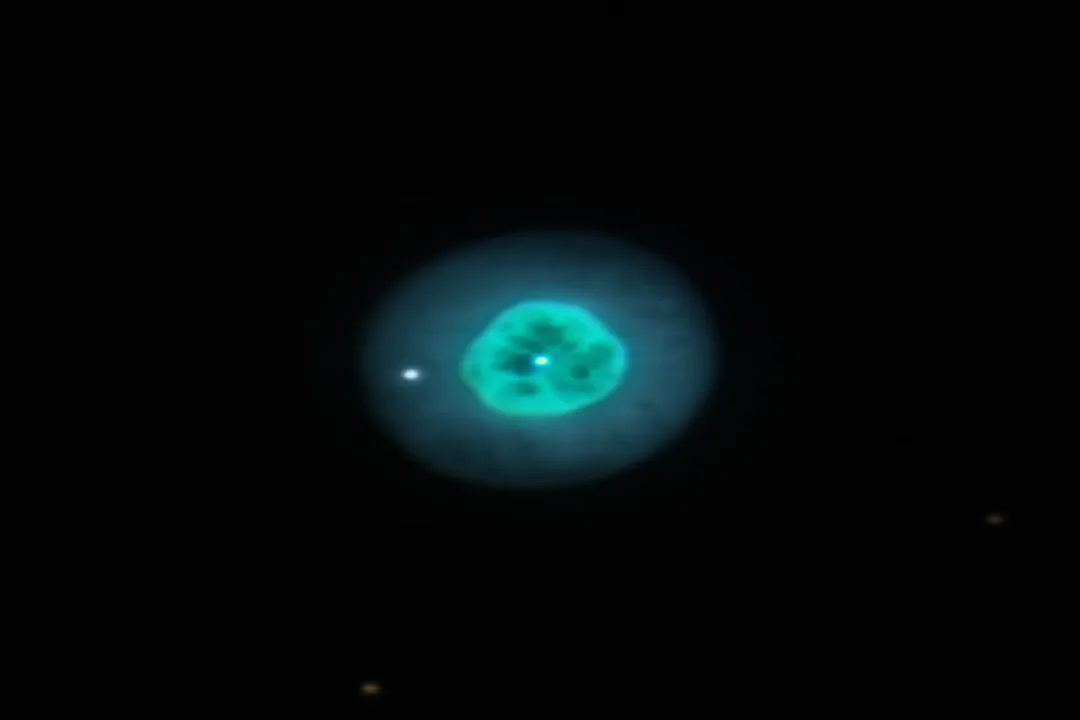
The appearance of a glowing shell of gas drifting in space, often displaying vibrant colors and intricate shapes, immediately captures the imagination. These beautiful objects, known as planetary nebulae (PNe), are formed during a crucial, but surprisingly brief, phase in the life cycle of certain stars, specifically those similar in mass to our own Sun. [1][5] Despite their spectacular visibility in images captured by observatories like the Hubble Space Telescope, the question of how common they truly are requires a look at cosmic timescales rather than just instantaneous observation. [2] They are not related to planets in any way; the term is a historical artifact from early telescopic observations where they often appeared as small, round, disc-like objects reminiscent of planets. [1][5] A planetary nebula marks the transition stage after a star has exhausted the hydrogen fuel in its core and expanded into a red giant, finally shedding its outer layers into space. [1] The remaining stellar core contracts dramatically, becoming a white dwarf. [1][5]
# Brief Existence
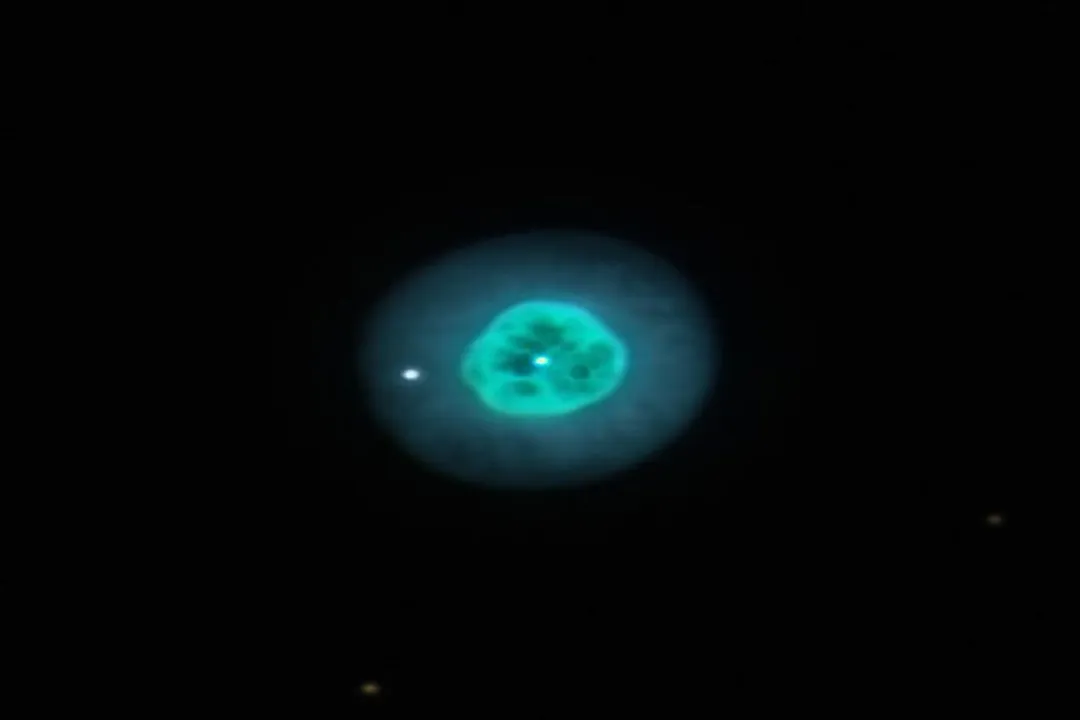
The key factor determining the perceived rarity of planetary nebulae lies in their incredibly short active life compared to the billions of years stars spend on the main sequence. [2] A star like the Sun spends approximately 10 billion years fusing hydrogen in its core. [5] The subsequent phase that results in a planetary nebula—the expulsion of those outer layers driven by intense stellar winds—is fleeting. [1] Astronomers estimate that a star will only display this luminous shell for about 50,000 years, or perhaps slightly less, before the gas disperses too thinly to be easily seen. [1][2][5]
This short duration means that while many stars will eventually form a planetary nebula, only a small fraction of the total stellar population will be undergoing this process at any single moment in time. [5] If we consider the timescale: a $50,000$-year event within a history spanning billions of years means these objects are inherently temporary features of the galactic landscape. [1] For instance, the oldest planetary nebula ever identified by astronomers is estimated to be only about $10,000$ years old, underscoring just how quickly even the brightest examples fade from our view. [9]
# Milky Way Count
To put a number to the phenomenon within our own galactic backyard, estimates suggest that the Milky Way galaxy harbors approximately 50,000 planetary nebulae at any given time. [1] Considering the Milky Way contains hundreds of billions of stars, this number represents a tiny fraction of the total stellar population. [1]
If we take the estimate of $50,000$ PNe existing now, and assume an average active lifetime of $50,000$ years, we can calculate the average rate of formation. Over the entire history of the galaxy, this implies that the rate of PN formation is roughly one per year across the entire Milky Way volume. However, these nebulae are not evenly distributed in space or time within the galaxy. They tend to be found predominantly in the galactic disk where star formation, especially of intermediate-mass stars, is most active. [1]
This leads to a key distinction for sky-watchers: while the formation rate is steady, the observation rate is dependent on distance and brightness. An amateur astronomer attempting to view PNe from Earth is primarily observing those that formed relatively recently and are close enough to appear resolved, rather than just a fuzzy patch of light. [8] The cataloged population visible to ground-based telescopes is thus a smaller, brighter subset of that total $50,000$ estimate. [8]
# Observational Limits
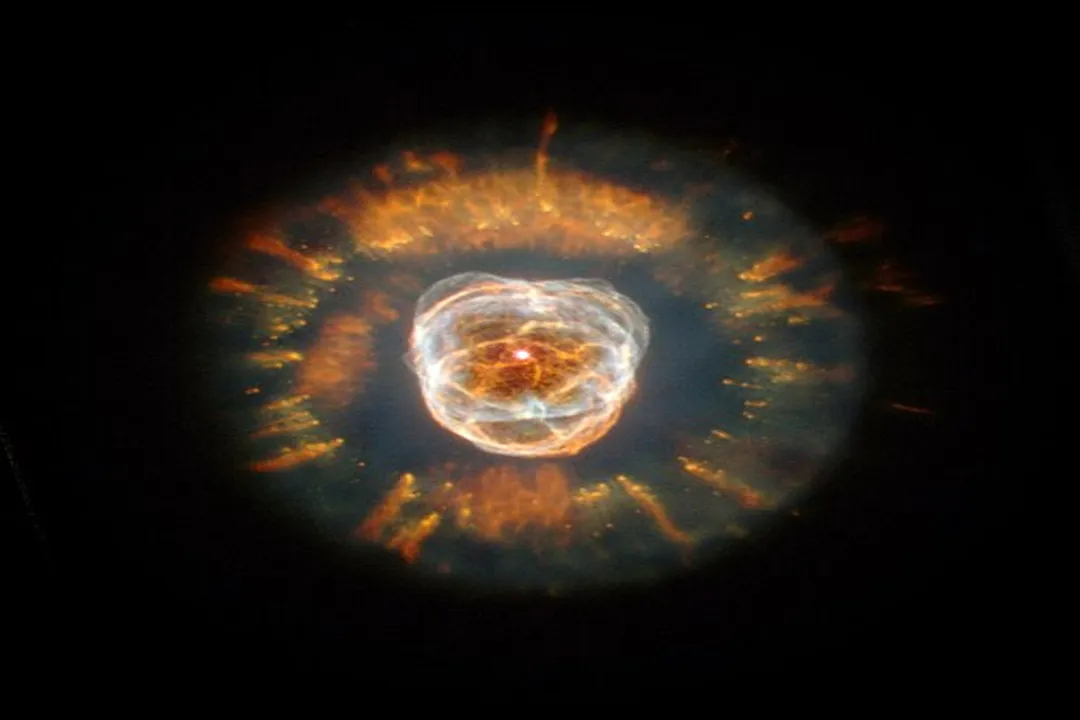
The challenge in confirming the total count of planetary nebulae is fundamentally observational. Detecting these faint, expanding shells becomes exponentially harder the further away they are. [7] While we might have a reasonably complete census of the brightest, closest examples within a few thousand light-years, finding fainter or more distant ones is exceedingly difficult. [7]
One fascinating area of research involves searching for these stellar remnants in other galaxies. This is often described as an endeavor akin to finding a needle in a haystack, even for powerful instruments like the Hubble Space Telescope. [7] Astronomers look for the tell-tale spectral signatures of the ionized gas or the highly concentrated light from the central white dwarf star against the backdrop of millions of other stars. [7] The successful detection of PNe in distant galaxies serves as a vital tool for measuring distances to those galaxies, using the PNe as "standardizable candles" based on their known physical characteristics and maximum possible brightness. [7] The sheer difficulty in detecting them in external galaxies reinforces the idea that many are simply too dim or too far away for current technology to regularly identify within the Milky Way itself.
# Shape Variety
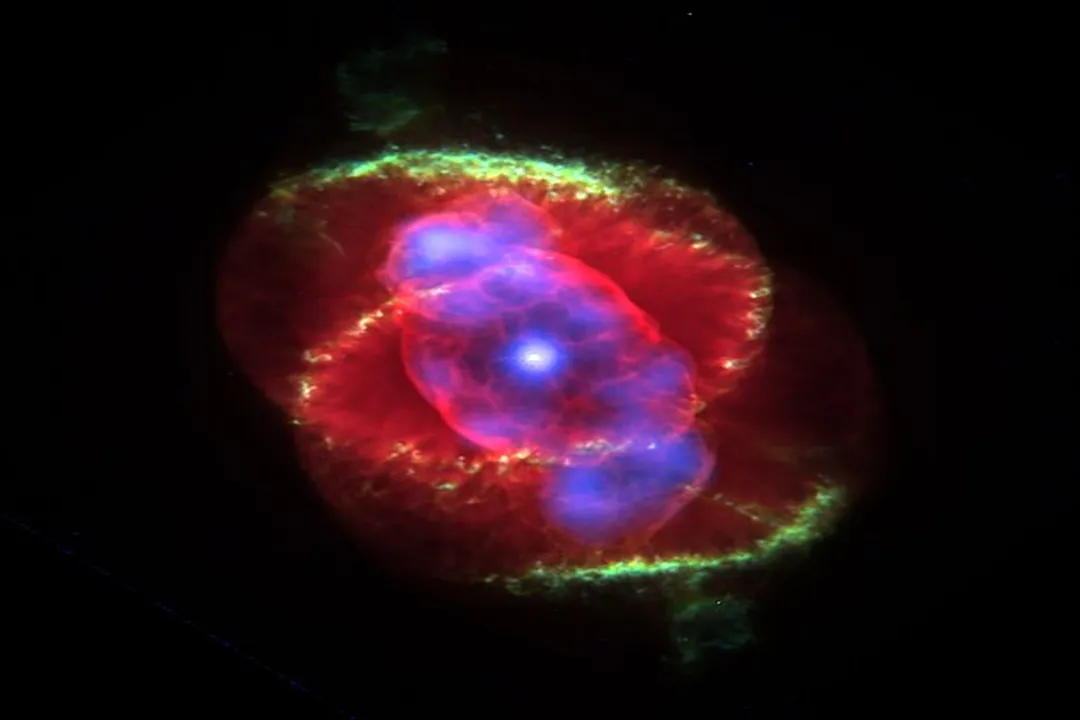
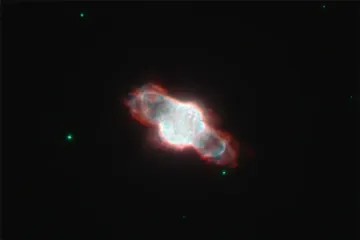
Planetary nebulae are far from being uniform spheres of gas; their shapes offer deep insights into the physics of the dying star and the presence of companion stars or magnetic fields. [1] While the name implies roundness, very few are perfectly spherical. [2] Common shapes include bipolar structures (hourglass or peanut shapes), elliptical forms, and more complex, often symmetrical patterns. [1] These diverse morphologies suggest that the process of ejection is complex, likely influenced by factors beyond just the simple expansion of the atmosphere. [1][3] The ejection phase, though brief, is violent and highly structured.
If you are using observational software or a star-charting program, you might notice that many PNe are cataloged with descriptive names related to mythology or geometry—the Ring Nebula, the Cat's Eye Nebula, or the Dumbbell Nebula—which are visual descriptions rather than classifications based on physical mechanism. [2] This descriptive naming convention highlights how visual appearance strongly dictates initial identification before detailed spectroscopy or analysis can take place.
# Forming Complexity
The structure of the expelled shell is deeply tied to the star's final moments. The central star sheds its outer layers over time, often in distinct shells or pulses of material ejected at different speeds and stages of heating. [1] The intense ultraviolet radiation emitted by the hot, exposed white dwarf then ionizes the previously ejected gas, causing it to glow brightly. [1] This interaction between the hot central star and the slower, cooler material ejected earlier creates the intricate shells and bubbles we observe. [1]
The geometry can be significantly shaped by the environment around the star just before the final mass loss. For example, the presence of a close binary companion star can strip away material in a disk shape, leading to the common bipolar or hourglass forms when the outflow is constrained along the rotational poles. [1] These complexities mean that studying PNe is not just studying a pretty cloud; it is studying a momentary snapshot of how intermediate-mass stars interact with their immediate surroundings during their final death throes. [3]
# Practical Observation
For those interested in observing these objects firsthand, their fleeting nature presents a challenge that is slightly different from cataloging galaxies or distant stars. [8] In amateur astronomy contexts, especially within space simulation games, discovering an undiscovered planetary nebula is a major goal, implying that in the real sky, most bright ones are already mapped. [8] However, for visual observers using personal telescopes, the goal shifts from discovery to identification. Due to their typically low surface brightness, planetary nebulae require dark skies and often benefit from high-magnification views through narrow-band filters that isolate the specific wavelengths of light emitted by the ionized oxygen and hydrogen found in these objects. [8] Unlike the sprawling view of a galaxy, a planetary nebula is a point source of structure that rewards patience and steady viewing conditions, a true test of an observer's skill to resolve faint details against the darkness of space. [2]
#Videos
JWST Shows Planetary Nebulae Are Way Weirder Than We Thought
Related Questions
#Citations
Planetary nebula - Wikipedia
Planetary Nebula - ESA/Hubble
Planetary nebulae are very interesting objects to view. Such will be ...
JWST Shows Planetary Nebulae Are Way Weirder Than We Thought
Planetary Nebula | Definition, Facts & Structure - Lesson - Study.com
What causes bright planetary nebulae in unexpected locations?
Needle in a haystack: Finding planetary nebulae in distant galaxies
Astronomers Find the Oldest Planetary Nebula - Universe Today